


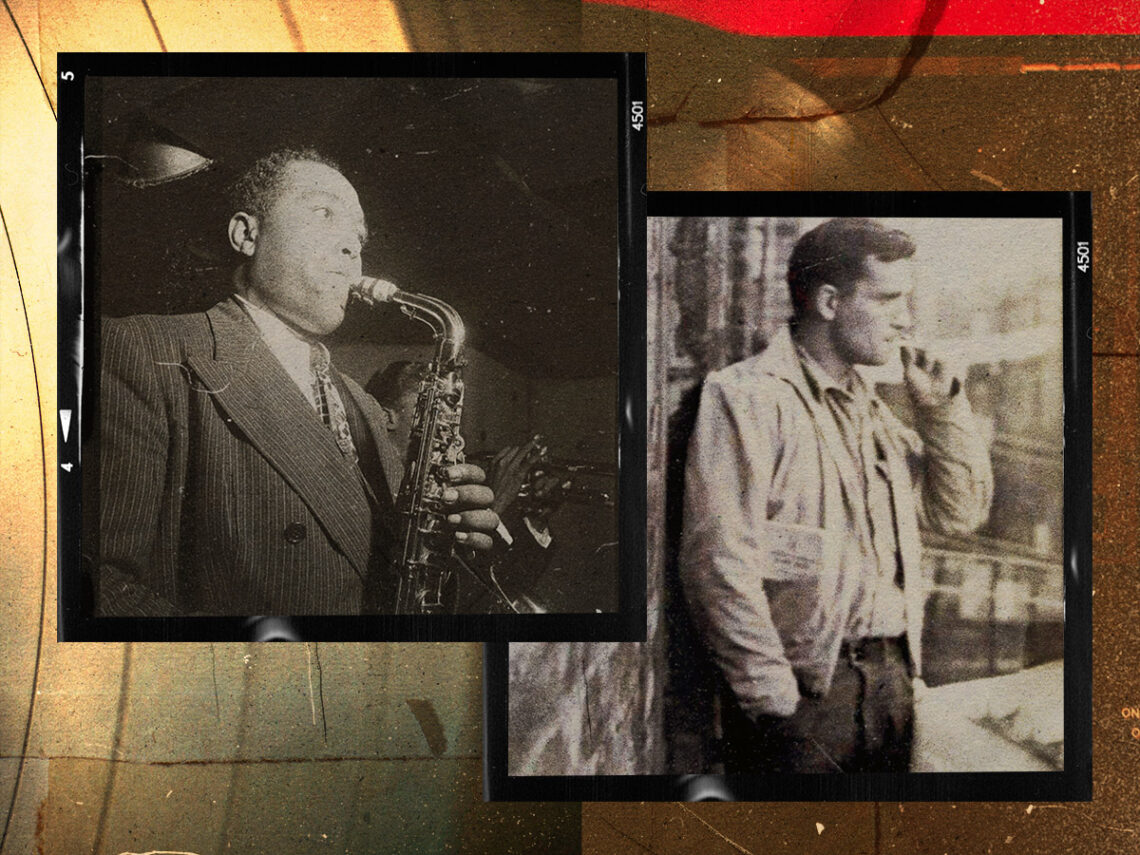
Charlie Parker: the musician Jack Kerouac said was “as important as Beethoven”

The pop music revolution of the 1960s may have screamed louder, but these cogs had begun turning earlier in the 20th century in the realms of fine art and literature. For the latter, the Dada movement brought new life to the written word, collapsing the barriers of convention and allowing ultimate freedom of expression. Prominent exponents of this avant-garde movement within literature included Jack Kerouac, Allen Ginsberg, William S. Burroughs, and Herbert Huncke, a group often dubbed as the ‘Beat Generation’.
We have salient names as such to thank for the emergence of some of our most beloved musical stars and songwriters, including David Bowie, Bob Dylan and Kurt Cobain. In one of the most direct and noteworthy handovers, Dylan, who had been endeared to folk music by Woody Guthrie in the late 1950s, injected his revered songwriting with avant-garde intrigue in the 1960s. At the time, he was outspoken regarding the influence of Beat writers like Kerouac and his new friend, Ginsberg.
Dylan had been aware of Ginsberg and his fellow Beat Generation writers long before they met in person, and this had been one of the magnets that attracted the aspiring troubadour to New York City in 1961. In 1963, Dylan was introduced to Ginsberg for the first time by New York Post journalist Al Aronowitz. He subsequently met a few of his friends.
“I came out of the wilderness and just naturally fell in with the Beat scene, the bohemian bebop crowd, it was all pretty much connected,” Dylan told The New Yorker in 1985. “It was Jack Kerouac, Ginsberg, Corso, Ferlinghetti… I got in at the tail end of that, and it was magic… it had just as big an impact on me as Elvis Presley.”
Kerouac, famed most for his 1957 novel On the Road, wrote prolifically of America’s youthful spirit, often set to the rhythm of contemporary bebop jazz music. While the Beat Generation would grow to enjoy areas of the 1960s pop-rock explosion, especially that framing Dylan’s lyrics, Kerouac remained loyal to jazz up until his premature death, aged 47, in 1969.
Throughout his various essays and novels, Kerouac mentioned some of his favourite jazz musicians. In Desolation Angels, he described Dizzy Gillespie’s sound as coming “on in waves of thought, not phrases,” and in Subterraneans, he praised Thelonious Monk as “the monk and saint of bop”.
Receiving the highest praise from Kerouac, though, was the virtuosic American saxophonist Charlie Parker. The revered jazz musician was born in 1920, but, like Kerouac, his life was cruelly stunted; Parker was just 34 years old when he died. In his logform 1959 poem Mexico City Blues, Kerouac described Parker as “musically as important as Beethoven/Yet not regarded as such at all.”
Watch Charlie Parker perform with Coleman Hawkins in 1950 below.
