


Music vs. AI: Is Weyes Blood’s shunning of technology the start of a new age?

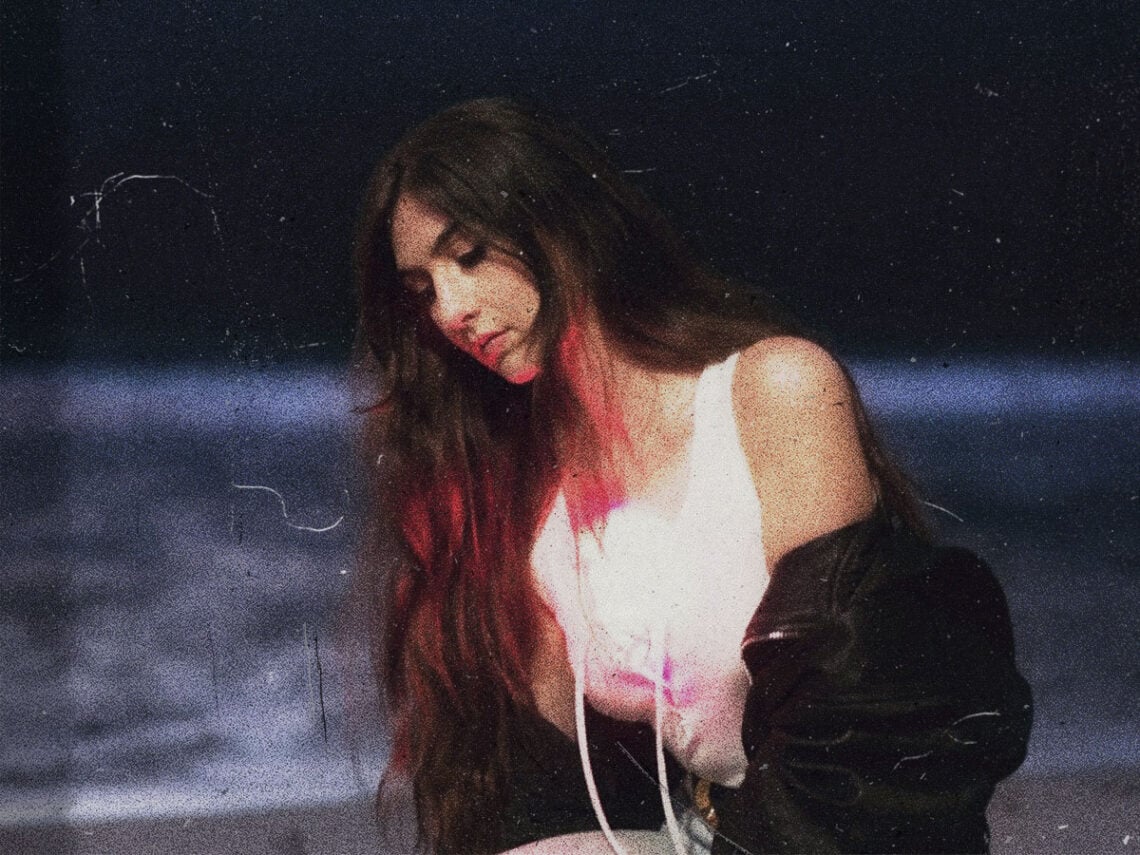
With AI rising, it seems like we’re living in the flashback scene of a post-apocalypse movie where a compilation of cautionary voices adds context to the catastrophe. Weyes Blood should surely soundtrack this scene in a serene juxtaposition to the hysteria, after all, her music has been one of the most measured voices in the debate.
AI godfather Jaron Lanier recently quelled the flames of fear by telling the Guardian: “This idea of [AI] surpassing human ability is silly because it’s made of human abilities. It’s like saying a car can go faster than a human runner. Of course it can, and yet we don’t say that the car has become a better runner.” However, our fear of being overtaken is one thing, and the debate of where we stand amid the rampant rise of technology is quite another. This is where Weyes Blood’s music takes stock.
Constant connection has made us lonelier than ever. In a recent UK survey, 40% of young people said that they felt lonely “often or very often”. As Natalie Mering (Weyes Blood) sings on the opening track of And in the Darkness, Hearts Aglow, “Living in the wake of overwhelming changes, we’ve all become strangers,” crooning with casual verity, “It’s not just me, it’s everybody.”
Up until the present, music has looked to mimic the world around it. In the days of old, concert halls would be home to movements called things like ‘Spring by Strings’ and ‘Wind in the Mountains’ whereby dwellers in these new-fangled things called cities tried to hark back to the country of old. Then as the industrial age truly got moving, the loud new world wormed its way into music. Heavy Metal, for instance, was literally inspired by the bleak heavy metal industry in Birmingham where the pioneers Black Sabbath and Led Zeppelin hailed from.
Once again, as the 1980s moved away from industry of old and became tech-driven, bands began to work with synths, drum machines and other computerised sounds. Alas, now we find ourselves overwhelmed, uncertain and utterly bewildered by what that world has become. So, Weyes Blood has taken a step back. Rather than sing of ghosted texts and supercharging her music with AI-beats, she has shunned tech and ventured towards a spiritual tact. She has, in essence, hit pause on postmodernism and posited, ‘If tech is making us miserable, should we really incorporate it into our art?’
That is not to say that she has gone full Amish. Her albums have some of the finest production flourishes in modern music, but she is the master of anything synthetic—it serves to purely bolster her spiritual message. This measured pause is somewhat unique. Unlike punk or other musical revolutions, she’s not putting any noses out of joint with her style, she is simply asserting a message with gentle beauty and happily regressing into an age that is not upholding to tech: “Living in a lost time.” In the process, is she spawning a new age for art?
AI has already entered music. In 2022, established indie band Everything Everything even used it to write their new album, “abandoning the human brain”. But this enthusiasm about a “fresh start” is not shared by everyone. “Since its launch in November last year many people, most buzzing with a kind of algorithmic awe, have sent me songs ‘in the style of Nick Cave’ created by ChatGPT. There have been dozens of them. Suffice to say, I do not feel the same enthusiasm around this technology,” Nick Cave recently mused.
He brutally continued: “I understand that ChatGPT is in its infancy but perhaps that is the emerging horror of AI – that it will forever be in its infancy, as it will always have further to go, and the direction is always forward, always faster,” he added. “It can never be rolled back, or slowed down, as it moves us toward a utopian future, maybe, or our total destruction.”
Fortunately, as the aforementioned Lanier explained” “From my perspective, the danger isn’t that a new alien entity will speak through our technology and take over and destroy us. To me, the danger is that we’ll use our technology to become mutually unintelligible or to become insane if you like, in a way that we aren’t acting with enough understanding and self-interest to survive, and we die through insanity, essentially.”
This is exactly how Cave fears it will infect art. “Songs arise out of suffering,” he says, “by which I mean they are predicated upon the complex, internal human struggle of creation and, well, as far as I know, algorithms don’t feel. Data doesn’t suffer. ChatGPT has no inner being, it has been nowhere, it has endured nothing, it has not had the audacity to reach beyond its limitations, and hence it doesn’t have the capacity for a shared transcendent experience, as it has no limitations from which to transcend.”
Concluding: “What makes a great song great is not its close resemblance to a recognizable work. Writing a good song is not mimicry, or replication, or pastiche, it is the opposite. It is an act of self-murder that destroys all one has strived to produce in the past. It is those dangerous, heart-stopping departures that catapult the artist beyond the limits of what he or she recognises as their known self.”
Weyes Blood’s music articulates this point. She pines for connectivity by cherishing the beauty that we can share. She is one of the few artists to truly address this point within her work. Whether that says, ‘No, I will not push forever forward into a future that is not fit to serve us,’ and falls back on authentic music in the truest sense, or it is merely a beauteous pause of spiritualism remains to be seen, but we can certainly be thankful for her mindfulness amid the mindless melee of art and an AI. As her music urges: Let’s get the band back together and not get ahead of ourselves guys.
