


“The muse, inspiration, and the namesake” behind Jane’s Addiction

When Jane’s Addiction formed from the depths of Los Angeles’ underground music scene in 1985, their particular brand of alternative rock would set the precedent for every rock act that followed in their footsteps.
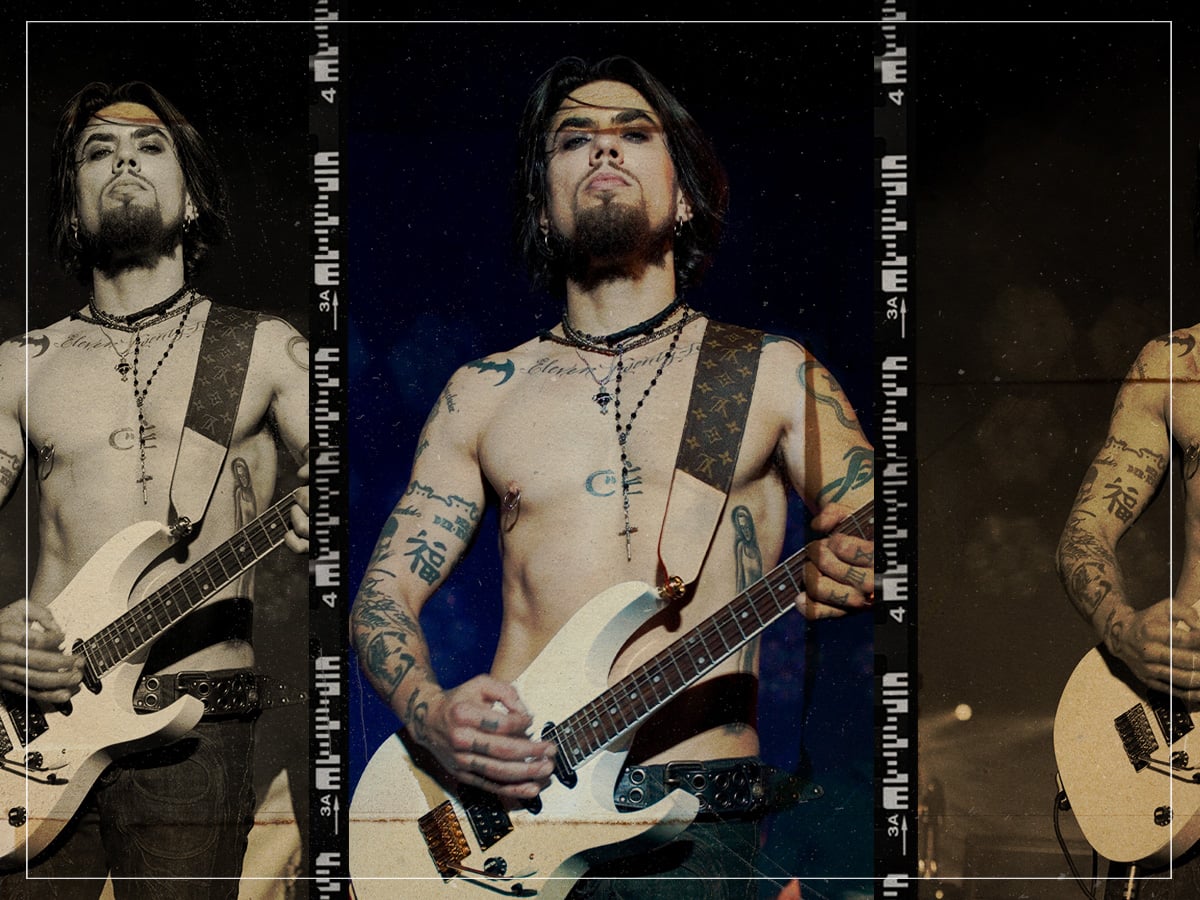
Without vocalist Perry Farrell’s captivating stage presence, guitarist Dave Navarro’s virtuosity, the power behind Eric Avery’s bass and the adrenaline behind Stephen Perkins’ drums, the future of metal, garage rock, psych rock and more would not exist with the same force that they do today. Each musician operated in their own world, forming Jane’s Addiction’s sound from an array of influences and tastes that, with no exaggeration, redefined alternative rock.
But, before they were the progenitors of their rock ‘n’ roll niche, Jane’s Addiction formed from the remnants of Farrell’s former band, when he met Avery and the two moved into an infamous group house on Wilton Place in Hollywood, California.
It was in this home that Farrell wrote ‘Jane Says’, as an ode to his housemate, Jane Bainter. Living alongside over a dozen musicians, Bainter was described as a “mercurial presence” in the house, as she struggled with addiction and was in a volatile relationship. Hence, where the band sourced their name: when the dynamic in the household went awry, “Jane’s addiction” would be blamed. Bainter did not take their choice as a tribute, but immortalised in the band’s name and their defining single, her story became legend.
“I think we picked a great subject, because Jane is a very beautiful woman (in her heart),” Farrell explained as quoted in Jake Brown’s Jane’s Addiction: In the Studio. “She could also be called ‘Plain Jane’ – thick glasses, very outcast, very insecure, a lot like us here. I look at her like a tragic figure.” Farrell explains that Bainter is a college-educated woman, having graduated from the renowned Smith College, though she remained unlucky in love, which he felt a kinship towards.
“Every time I see Jane, she’s just not quite right, but she’s always hopeful that something great is about to happen,” he describes. “‘I’m gonna kick tomorrow.’ Every time I see her, I just feel like I wanna cry.”
Speaking with the Los Angeles Times in 2001, Bainter admitted that she rarely reveals that she is the muse behind one of rock’s greatest bands and the song that defined their legacy. “It’s a little awkward,” she explains. “It’s a hard life being an addict, and it feels now like the song is about another person. It’s not something I’ve really spoken about much.”
The lyrics to ‘Jane Says’, sung by Farrell’s unmistakable wail and soundtracked by Navarro’s stirring acoustic guitar, are rooted in Bainter’s gritty reality. She did, indeed, have an abusive partner named Sergio, who lived with her and Farrell in the group home.
While faced with unfortunate circumstances, her sensitive demeanour shone through, even when moments became turbulent: “She take [sic] a swing that she can’t hit / She don’t mean no harm, she just don’t know… What else to do about it.” And, she often spoke of running away to Europe: “Jane says, ‘I’m goin’ away to Spain when I get my money saved / Gonna start tomorrow.’” (She later revealed that she did, eventually, get to Spain.)
“She’s one of these people that lives slightly out of linear time,” Farrell describes. “There’s us, and then there’s Jane. She can talk to you, and she can see you, but she’s always slightly somewhere else.”
A photo of Bainter appears in the vinyl insert of their debut album, 1988’s Nothing’s Shocking, which produced posters adorned with her face worldwide. The sudden recognition was a shock for Bainter and her family, as she, at the time, worked a day job while balancing a nightlife in Los Angeles’ music scene.
Eventually, Bainter achieved sobriety, and as of 2024, per Ear Candy Update, she volunteers at halfway houses and women’s shelters, turning the pain of her past into something positive.
“The story of Jane,” she told the Los Angeles Times, “Has a happy ending.”
