


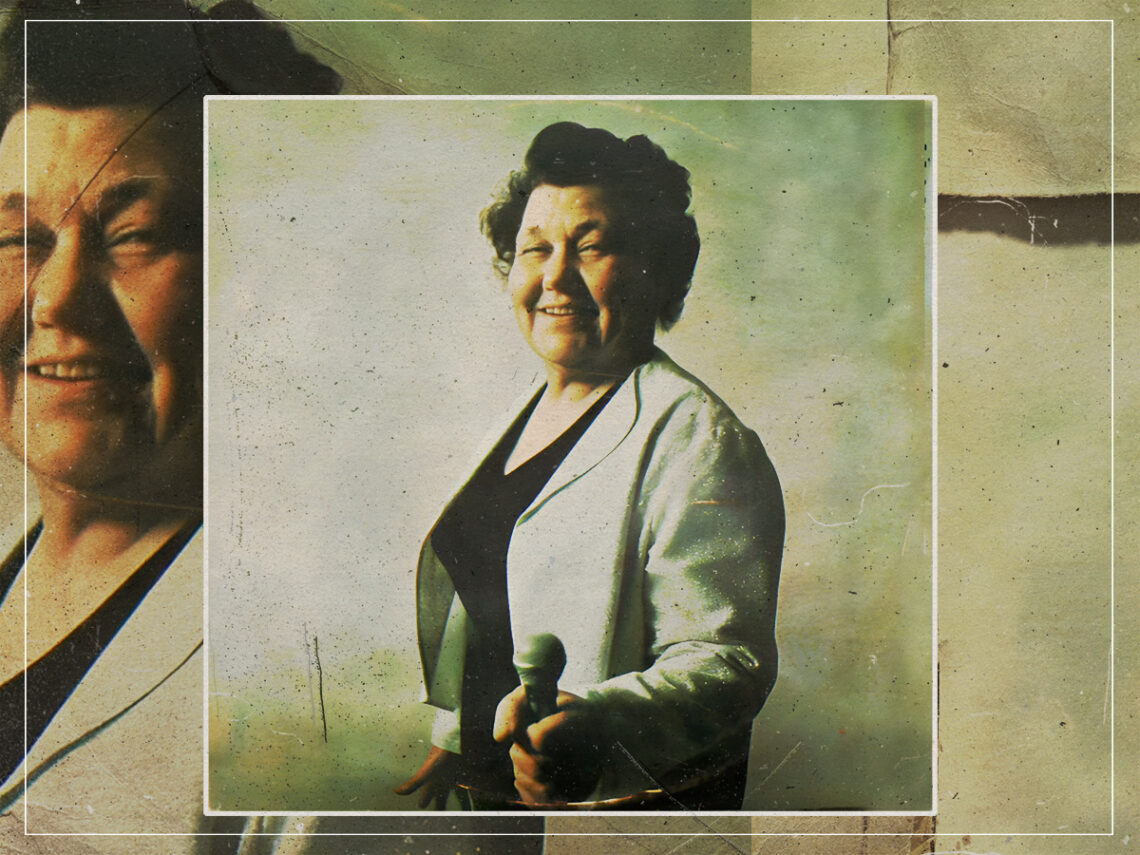
The magic of Mrs Elva Miller and the art of bad karaoke

Oscar Wilde once said, “imitation is the sincerest form of flattery” but anybody who has found themselves in a late-night karaoke bar can attest that is not always the case. Karaoke rose in popularity in the UK during the 1980s, with pubs and clubs across the land installing cassette-based karaoke machines so that Friday nights could be soundtracked by drunken screeches vaguely resembling current pop tunes. One artist, however, had already pioneered such a genre decades prior.
Elva Miller, who usually went by the stage name Mrs Miller, was an outsider artist who spent much of the 1960s recording bizarre karaoke versions of popular pop hits. Starting out by recording self-financed tracks for children, which she then distributed to local orphanages, Mrs Miller was encouraged by composer Fred Bock to take on a more modern sound. Her versions of well-known songs were noted for being generally out of time, accompanied by Miller’s slightly unsettling way of singing in a low, almost sinister fashion. Over the course of her career, she covered everyone from The Beatles to Audrey Hepburn, giving her unique vocal treatment to a wide range of notable pop hits.
After being discovered by notable radio DJ Gary Owens, the nearly 60-year-old singer was signed to Capitol Records in 1965. Miller released various singles with Capitol, including covers of Nancy Sinatra’s ‘These Boots Are Made for Walking’ and Petula Clark’s ‘Downtown’. Her most successful release, however, came in the form of her debut album, the sarcastically titled Mrs. Miller’s Greatest Hits. Surprisingly, the album was a huge success, reaching number 15 on the US album charts.
It seemed as though Miller expertly toed the line between bad karaoke and interesting listening, as her records enthralled audiences. Rather than being panned for her lacklustre singing ability, Miller was celebrated for her charmingly strange cover songs. In fact, it was said that the tracks that ended up being released were the worst takes from each studio session.
Such was the success of her debut record that the singer was invited to perform on various television variety shows and talk shows, she even appeared in Vietnam to give a performance to US troops – think the Playboy scene in Apocalypse Now but with an elderly woman blasting out ‘Yellow Submarine’ in an off-beat tempo.
Sadly, Miller’s career was short-lived. Such is the nature of novelty acts that their schtick tends to get old pretty quickly, with the karaoke pioneer being dropped from Capitol in 1968. Although she did make further releases on the little-known Amaret record label, she never eclipsed the success she had found with her early recordings. Do not worry, though; Miller’s story has a happy ending.
After self-releasing her last EP in 1971, Miller spent the rest of her life working for various charities in California. Living until the age of 89, Miller survived long enough to watch karaoke take the world by storm in the 1980s and become much more widespread in the 1990s. She must have felt like something of a pioneer in the field and, even today, her records are sought out by collectors of outsider music.
