


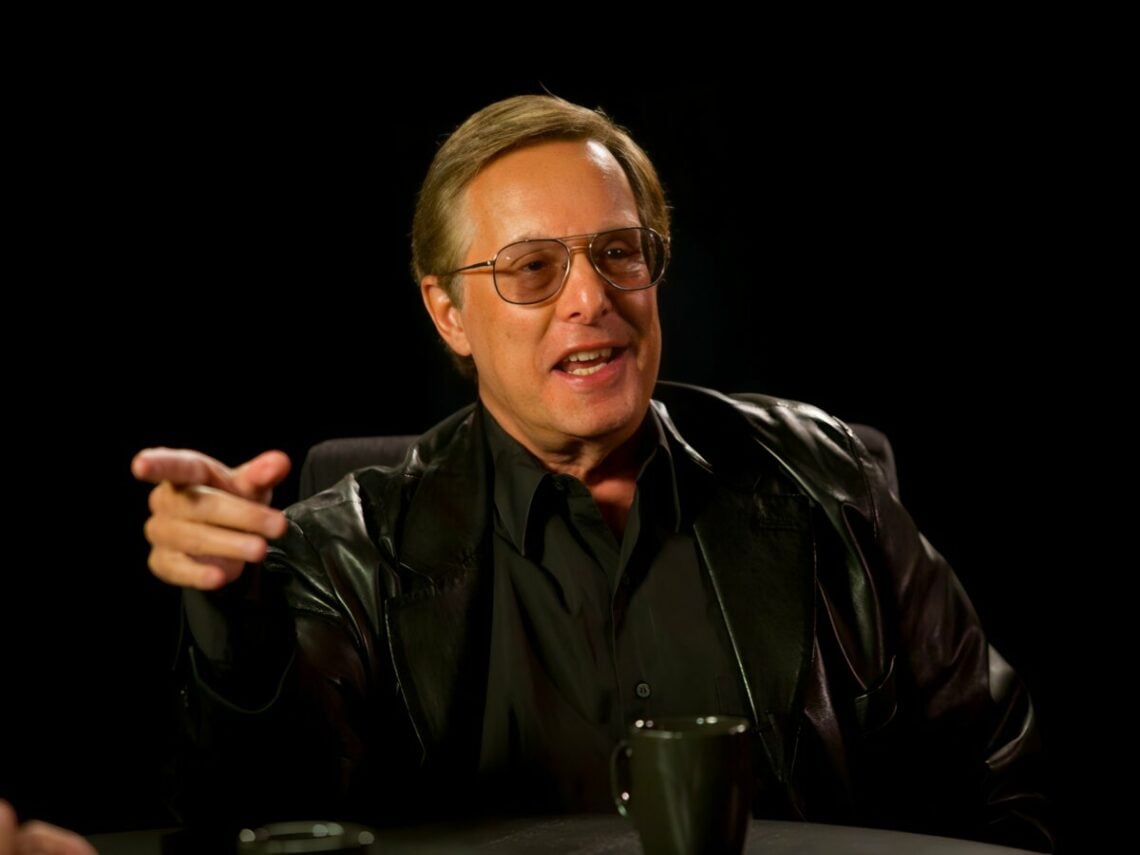
The deep problem William Friedkin had with modern Hollywood

One of the key players in the New Hollywood film movement of the 1970s, William Friedkin, has made several important contributions to the world of cinema. Of course, it’s hard to think of Friedkin and not immediately recall his legendary horror movie The Exorcist, widely considered one of the best works of the genre.
But Friedkin had also tackled many other film genres, including neo-noir with his 1971 work The French Connection, which won five Academy Awards, including ‘Best Picture’ and ‘Best Director’. Elsewhere Friedkin had also made strides in queer cinema with The Boys in the Band, comedy with The Brink’s Job and thriller with the likes of Sorcerer, To Live and Die in L.A. and Cruising.
As a true legend of Hollywood, it’s fair to say that Friedkin was well-placed to assess the environment and culture of American cinema. However, it appeared that he had grown incredibly distasteful of what had become of popular entertainment, which he had called “hateful”.
In an interview with a Dutch magazine, Friedkin had explained that he had made his 2011 Southern Gothic crime film, Killer Joe, starring Matthew McConaughey and Emile Hirsch, as a “Fuck you” to the kind of movies that had been coming out of Hollywood since the beginning of the 21st century.
Friedkin admitted that such films might be considered “great”, but he rather thinks they’re mostly “shit”. Marvel movies and the like, “based on comic books and video games,” are just movies for kids, according to the director, who harked back to his time when children and adult entertainment had more distinction.
“Now the adult films are comic books and video games!” he said. “They may work very well, but it’s nothing that I’m interested in, that’s all.” Friedkin continued to note that he’d never watch anything in the “Hollywood mainstream”, before pointing out the kind of films he considered “stupid”.
“Transformers and The Wrath of the… [sic]”, he said. “Star Wars one, two, three, four, five, and six!” God knows what Friedkin thought of the subsequent Star Wars movies that are well into the numerical tens now because, clearly, Hollywood franchise cinema was not his cup of tea.
The problem for the director when it came to such films, though, was that he’s a lover of mythology and “acts of heroism”, but the likes of Star Wars and Transformers lacked the texture of such themes to really land them in the realms of true cinema. “I don’t find that in those pictures,” he said, “to me, they’re stupid.”
Friedkin signed off by explaining how when he’d first become interested in cinema, “films weren’t stupid” and possessed a degree of intelligence. “You had great American filmmakers like Joseph Mankiewicz, Richard Brooks and Elia Kazan,” he said. “You had great foreign filmmakers like Antonioni, De Sica, Fellini and Kurosawa. What do we have now? I don’t know.”
Indeed, when Friedkin started watching films in the 1940s, through the 1950s and 1960s, he’d been treated to a very different kind of cinema than the one we find today. It’s well known that the Hollywood machine continues to churn out franchise movie after franchise movie, laden with CGI, green screens and low-quality scripts.
Friedkin’s comments revealed a director who had an undying passion for the cinematic medium, one who believed in the deep power of storytelling, a far cry from the Marvel, Lucasfilm and Sony movies that he so detested.
