


Three movies that made Ron Howard want to become a director: “I began to fall in love”

The world of cinema may be the playground of Hollywood stars, but it is the people who sit in the chair, perched back from the action and pull the strings, that can have the most effect on the art of filmmaking. Ron Howard, former child star and now one of the more acclaimed directors in the business, can attest to having lived lives both in front of and behind the camera.
Starting out as a child star in the Andy Griffith Show, Howard would catch the attention of casting directors looking for America’s very own boy next door. With a polite, charming, and naturally cheeky demeanour, Howard would gain a role in The Waltons before finding worldwide fame as Richie Cunningham, the central figure of the hit show Happy Days. While Henry Winkler’s ‘The Fonz’ is often regarded as the pivotal figure in the production, the show simply wouldn’t have achieved its huge popularity without the ballast of Howard’s performance.
The directors of that first appearance would help to shape Howard into the diligent creator he would become. When speaking with the Harvard Business Review, Howard revealed how the directors of The Andy Griffith Show were monumental in his business upbringing: “One director on that show, Bob Sweeney, expected a lot of me and, in a very loving, respectful way, would take me to task. He was teaching me, at age eight or nine, the power of concentration and focus.”
The spotlight can be an alluring prospect, but for Howard, there was nothing quite as exciting as pulling the strings of a project, something he learned early on. It was at the same show that he first got a taste for directing: “When I was ten, one of the directors on The Andy Griffith Show said, ‘I see the way you’re looking at the camera and following rehearsals even when you’re not in the scenes, and I have a feeling you’re gonna be a director.'”
But, like many creative people, Howard’s real sense of urgency around directing wouldn’t come until his adolescent years stoked a fire inside him, and three movies, in particular, would convince him of his path forward: “Then, when I was around 12, I began to fall in love with the movies. The Graduate, Romeo and Juliet, Bonnie and Clyde—those films were a bit neorealist, borrowing from Europe, and had an anarchy and rebellion that was beginning to emerge in American cinema. It was a kind of cinematic revolution.”
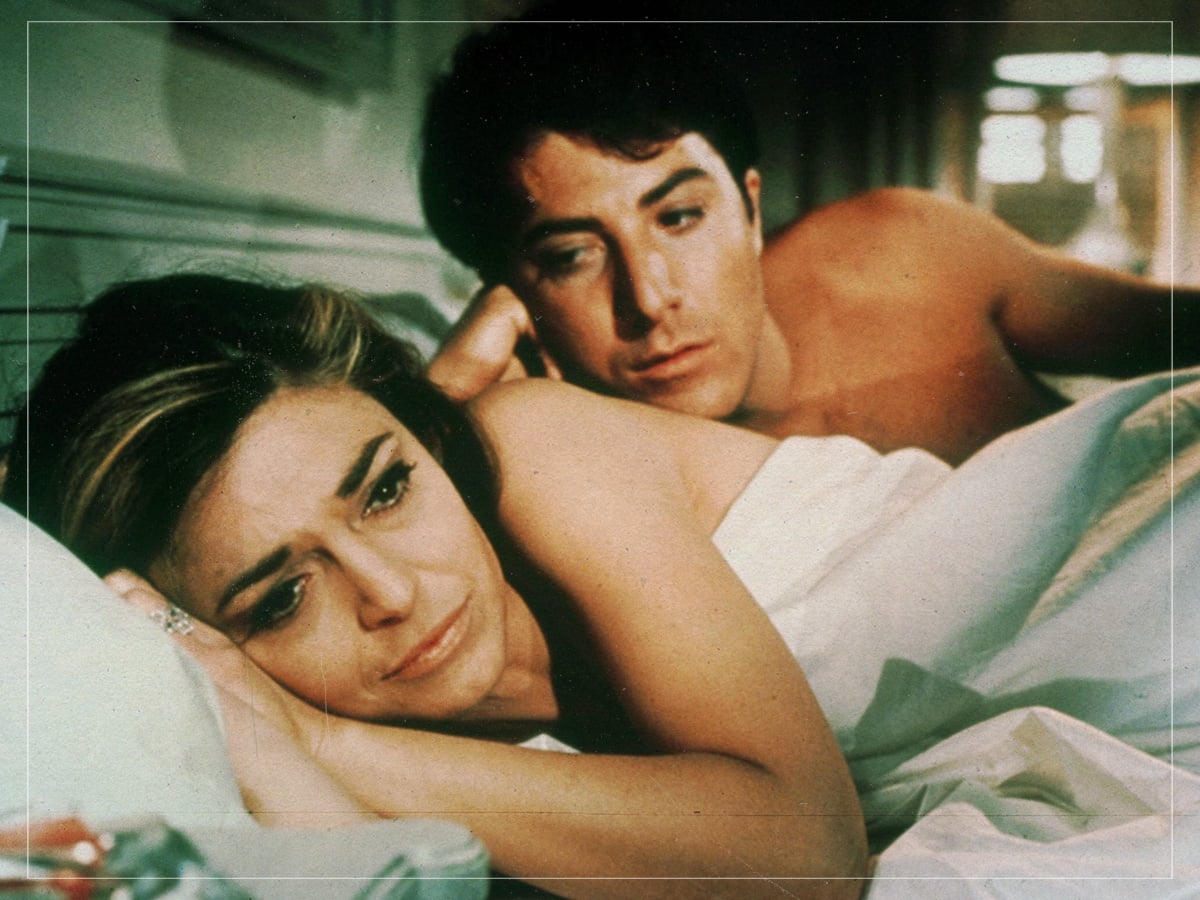
The movies all have their place in the pantheon of cinematic history. While Romeo and Juliet naturally leaned on the work of William Shakespeare, it was presented with a flashing virility that energised a generation. Bonnie and Clyde was another movie that seemed to buzz with the hope of a new set of teenagers growing into adults, now guided by the sexy sheen of Faye Dunaway and Warren Beatty as the archetypal bandits on the run.
But it might well have been the Graduate which changed the spectrum of cinema most greatly. Dustin Hoffman is the vibrant hero in a tale of love, but perhaps its finest moment came at its end. As the film closes, with the pair of lovers having escaped matriomony, the realisation of their victory and how quickly it could fall into simple domesticity soon creeps across their faces. Though nobody knew it, it acts as a perfect allegory for the 1960s.
1967 to 1968 would prove to be a pivotal year for Howard. While the ‘Summer of Love’ raged on, he would be bitten by the bug of filmmaking and the opportunities it provided for his own rebellion. The chance at making full-length pictures suddenly became a real proposition: “I related to it, and I loved it, and I began to understand that there was this other thing beyond half-hour sitcoms. And the person behind that filmmaking was, first and foremost the director. I wanted to play in that sandbox.”
Howard notes that his dreams were met with “patronising pats” on the head as the siloed world of Hollywood didn’t often let its actors make the transition behind the camera. However, Howard was determined to achieve his dream and went to film school before Happy Days would derail his studies. However, he finally got his chance thanks to a legend of the industry: “That ultimately led me to an opportunity with Roger Corman, who was famously king of the B movies but very influential. He launched Martin Scorsese, Francis Ford Coppola, Peter Bogdanovich, Jim Cameron, Jonathan Demme, Joe Dante, and me. In 1977 he let me act in and direct a movie called Grand Theft Auto. Well, first, I had to bribe my way in by acting in another of his movies. I told him, ‘I will only do Eat My Dust if you give me a chance to direct’.”
Determination and a great eye would help Howard to make standout pictures like Apollo 13, A Beautiful Mind and Frost/Nixon. But none of that would have been possible without the spark of three movies hitting his creative touch paper.
