


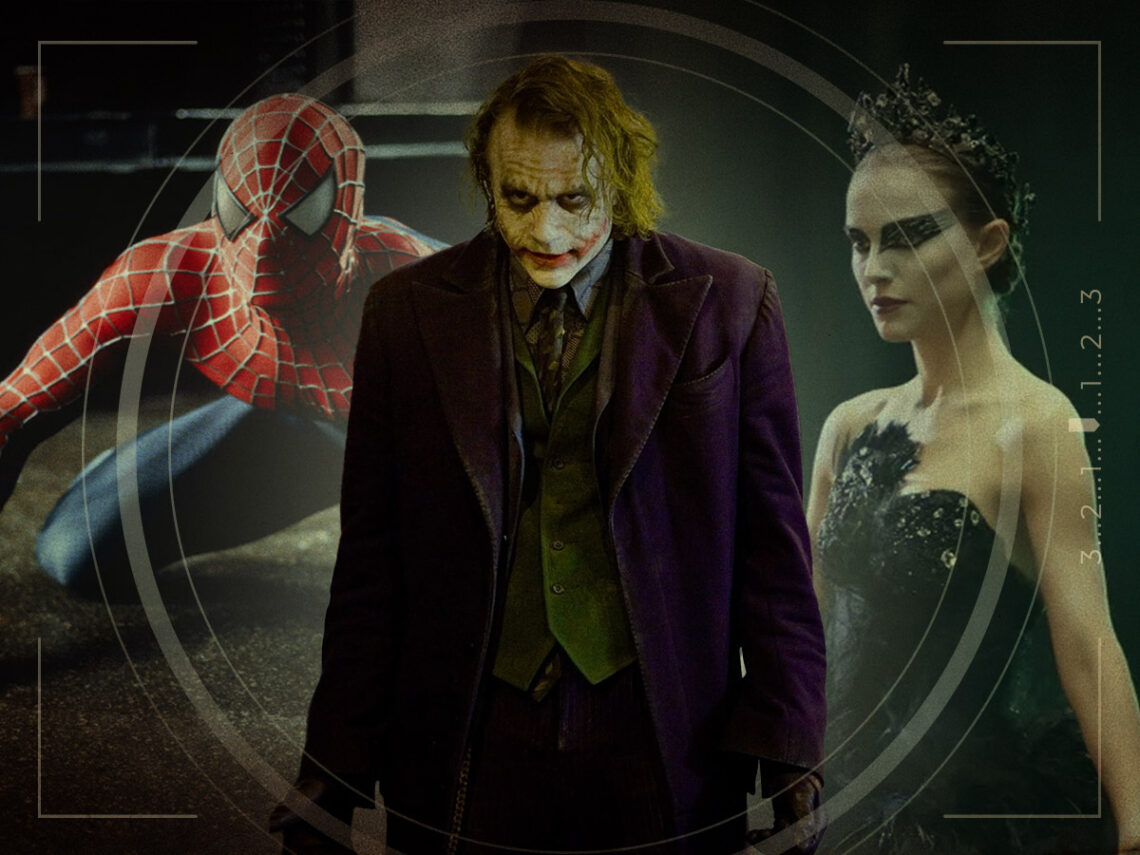
Five beloved movies that don’t stand up under scrutiny

Some movies seem impervious to criticism. They appear time and time again in lists and retrospectives on the very best that cinema has to offer, and if you have anything bad to say about them, you’d best be prepared for a world of hurt.
While some of these films deserve their places in the pantheon, others just seem to be there because that’s where they’ve always been. Take off the rose-tinted glasses and look at them for what they are; you’ll find more holes than you were expecting.
These five movies are all regarded as triumphs by a large number of people. However, bad character development, poor plot structuring, and severely outdated ideas render them far more vulnerable than they previously have been.
Of course, this sort of thing is highly subjective. If you feel personally offended by anything on this list, then maybe close your phone or your laptop and take a step back. The perspective might do you some good.
Five movies that don’t stand up under scrutiny:
Spider-Man (Sam Raimi, 2002)

Without the success of Sam Raimi’s first ‘Spider-Man’ movie, cinema would look very different today. Tobey Maguire’s transformation into the web-slinger helped prove that marquee superhero movies could draw money, laying the groundwork for Disney’s eventual purchase of Marvel Studios and everything that followed suit. For many, Peter Parker’s battle against the Green Goblin (Willem Dafoe) and attempted romancing of Mary-Jane Watson (Kirsten Dunst) is a staple of their childhood, which might be why they can’t admit that it’s actually a bit wonky.
Most of the acting in Spider-Man is dreadful. The younger leads constantly give off ‘deer in headlights’ vibes, delivering their dialogue like it’s the first time they’ve ever seen written English. It doesn’t help that some of that dialogue is atrocious – the scene in which Spider-Man refers to his green nemesis as ‘Gobby’ comes to mind. Maybe it’s because the Spidey origin story feels very played out, but the first half of Spider-Man isn’t that interesting, except for the incredible cameo from ‘Macho Man’ Randy Savage. Once all that stuff is out of the way, though, Raimi really gets to spread his wings with Spider-Man 2, a far superior film.
The first instalment deserves a lot of credit for what it led to, but on its own merit, it fails to land.
10 Things I Hate About You (Gil Junger, 1999)

You’re entitled to feel a tiny slither of sympathy for 10 Things I Hate About You being on this list because so many of its late-1990s/early-2000s comrades have also suffered the same fate. So much of Gil Junger’s modern re-telling of The Taming of the Shrew is ghastly by modern standards. The discriminatory language, the attitudes towards sex, the scene where a minor exposes her breasts to a teacher at her school… yeah, it’s safe to say you wouldn’t get away with that stuff these days.
It’s not just the trappings of the era that make this romcom a bust. Kat (Julia Stiles) and Patrick (Heath Ledger, who’s taking a real drubbing on this list) are dreamy when they finally get together, but the process feels rushed and a little forced. Their love story is badly structured—surely Patrick’s rendition of ‘Can’t Take My Eyes Off You’ should come at the end of the movie, not halfway through? That guitar he gives her at the end feels measly by comparison. Combined with a weak supporting cast and a nauseating volume of Shakespeare references, it’s enough to leave even the Bard’s biggest fan crying, ‘My kingdom for a decent plot!’
Aliens (James Cameron, 1986)

Released seven years after Ridley Scott’s game-changing extra-terrestrial horror, James Cameron’s Aliens does exactly what it says on the tin: gives the audience more Xenomorphs. Following the tragic events aboard the Nostromo, Ellen Ripley (Sigourney Weaver) wakes up in the far future. As an expert on the acid-spewing monsters, she joins a crew of Colonial Marines on a mission to exterminate a large group of them on a human mining colony. Cue blood, screams, and lots and lots of shooting.
The genius of the original Alien is how terrifying a single Xenomorph is made out to be. Intelligent, tough, and vicious, it toys with its prey and rips through them one by one, leaving the audience in no doubt that this one creature poses an existential threat to the entire universe. What does Cameron do in his movie? He turns the Xenomorphs into mindless cannon fodder. This is because he was making an all-out action flick, whereas Scott was going for something more cerebral, but nevertheless, it does the fictional race no end of harm. Chuck in a bunch of interchangeable jarheads with badly-aged, pre-programmed ‘soldier banter’, and Aliens becomes a real chore to get through.
Black Swan (Darren Aronofsky, 2010)

Starring Natalie Portman as ballerina Nina Sayers, Darren Aronofsky’s Black Swan is meant to be an exploration of the folly of perfection, of how pressure to be the best almost always leads to tragedy. The film follows Sayers’ attempts to earn the lead role in a production of Tchaikovsky’s Swan Lake, which brings her into conflict with a fellow dancer (Mila Kunis), a corrupt director (Vincent Cassel) and her oppressive mother (Barbara Hershey). Portman’s performance, which won her ‘Best Actress’ at the Oscars, is very strong, and the rest of the movie has its charms… until it goes completely bonkers at the end.
On the night of the performance, Nina attempts to stab one of her competitors with a piece of broken glass but ends up impaling herself in a fit of hallucinatory rage. This isn’t how hallucinations work. There’s also the utterly ridiculous moment where Nina physically transforms into a giant swan, complete with shonky CGI. All previous subtlety surrounding her connection to the main character of the ballet is chucked out the window. Aronofsky might as well have appeared on screen himself and yelled, ‘Do you get it?’ at the audience. Finally, there’s the ending, which sees Nina complete the show before presumably bleeding to death. This would be a fine finale had the director not ended his previous film, The Wrestler, in almost exactly the same way.
The Dark Knight (Christopher Nolan, 2008)

The midpoint and highlight of Christopher Nolan’s trilogy of Batman movies, The Dark Knight is widely regarded as one of the best superhero films ever made. Bruce Wayne (Christian Bale) once again has two threats to deal with: his friend-turned-enemy Harvey Dent (Aaron Eckhart) and The Clown Prince of Crime, the Joker, brought to life by the late, great Heath Ledger. The Aussie’s performance is the most heralded part of the movie, earning him a posthumous ‘Best Supporting Actor’ Oscar, and while there’s no denying how great it is, the rest of the film is more flawed than most people would care to admit.
Some of the issues are with the entire trilogy. All three films take themselves way too seriously and treat their female characters woefully; Maggie Gyllenhaal’s Rachel Dawes is spectacularly fridged halfway through the runtime. None of the other performances stack up to Ledger’s, and then there’s the real kicker – the stupid cellphone sonar sequence. How anyone can defend this nonsense beggars belief. The Dark Knight isn’t a bad movie by any stretch, but it isn’t the unimpeachable great most people would have you believe.
