


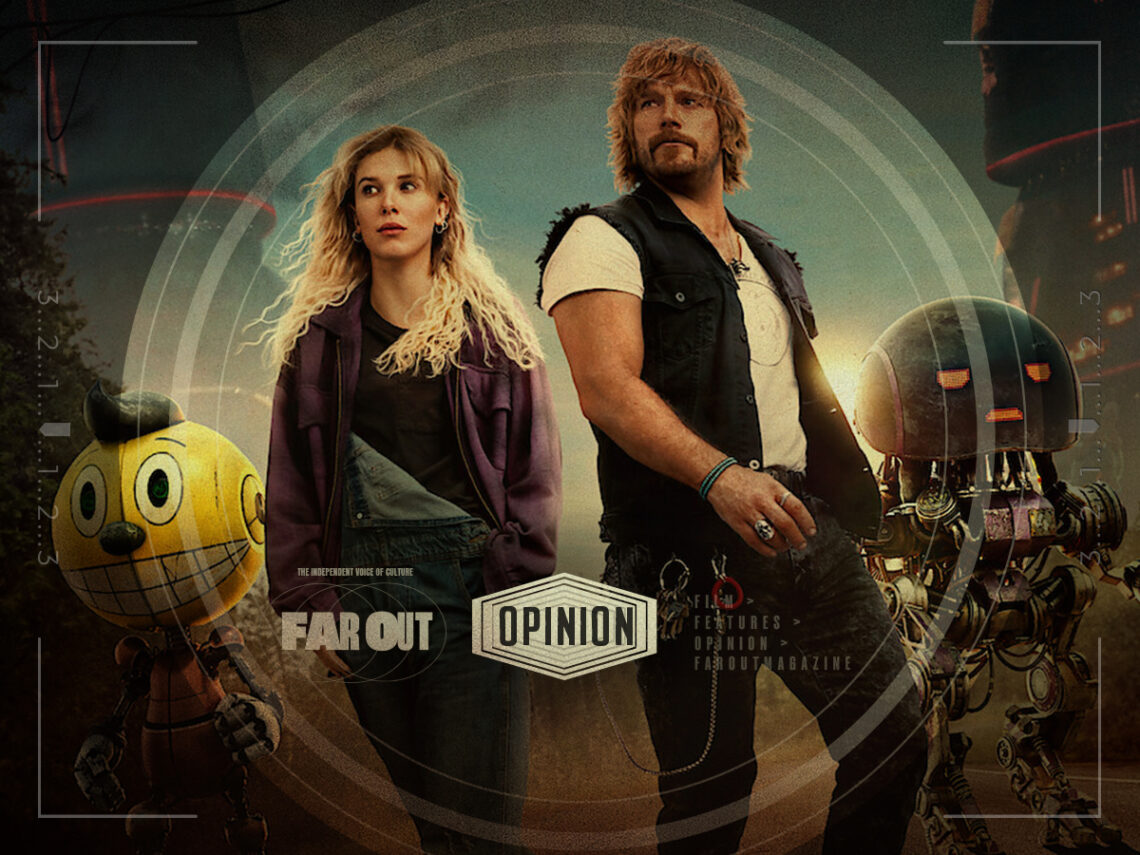
Hear Me Out: Movies don’t get worse than ‘The Electric State’

Every year sees the release of a few great films, a lot of mediocrity, and a couple of titles that miss the mark entirely. Not every disappointing movie deserves to have its feet held to the fire, but the latest science fiction epic from the Russo brothers represents everything that is wrong with contemporary cinema.
It’s hard to imagine any modern filmmakers who have lost as much goodwill as Anthony and Joe Russo, the brothers and directing duo who helmed four of the most successful films in the Marvel Cinematic Universe. Although the Russos unquestionably helped the first era of the MCU end on a high note, they’ve spent their next few years making streaming releases of declining quality, including the misguided PTSD drama Cherry and the generic action thriller The Gray Man.
There’s the possibility for great films to exist on streaming, as The Irishman and The Power of the Dog have proven. However, the Russo style has seemingly made it possible for viewers to scroll through their phones while watching, as there was clearly no attention paid to story, themes, or narrative consistency. Although they’re responsible for a few duds now, their latest film, The Electric State, is the type of disaster that the industry hasn’t seen in quite some time.
What’s most disappointing is that The Electric State is based on an imaginative, clever graphic novel that examined the realities of a dystopian future where machines were locked in combat with one another. The Russos reimagined this story in the dullest way possible, with lighting and staging that would make the worst of network television look artful. The nuances of the graphic novel are eroded to tell a painfully generic story about the teenage girl Michelle (Millie Bobby Brown), who teams up with the former soldier John D Keats (Chris Pratt) to find her brother.
Despite being one of the most needlessly expensive films ever made, The Electric State has a message about showing respect for robotic creatures that feels both misguided and dubious. On a metaphorical level, it’s an outdated and regressive allusion to the mistreatment of marginalised groups that feels unnecessary when so many films have made thoughtful critiques of race relations and bigotry, and on a literal level, it feels as if The Electric State is endorsing the use of artificial intelligence, a scary prospect considering how many people in the industry seem to share those sentiments, including the Russo brothers.
There’s no reason to complain about the use of visual effects if there is a talented filmmaker like James Cameron or Ridley Scott putting them to good use, but The Electric State makes it painfully obvious that actors were walking around on green screens with no idea what they were supposed to be interacting with.
Neither Pratt nor Bobby Brown is necessarily the best actor to begin with, but they turn in career-worst performances in The Electric State; even actors who can usually save an otherwise bad movie, such as Woody Harrelson and Stanley Tucci, felt completely lost.
The most depressing aspect of The Electric State is that Netflix and the Russos clearly see it as the future; as streaming services work harder to ensure that the theatrical window is eradicated, it’s more important than ever to celebrate grandiose blockbusters that remind us how exciting it can be to see movies on the big screen.
The Electric State is what movie fans could look forward to should the theatrical market implode; it’s not just a distressing work of anti-cinema, but a commercialist scam that has no respect for its audience.
