


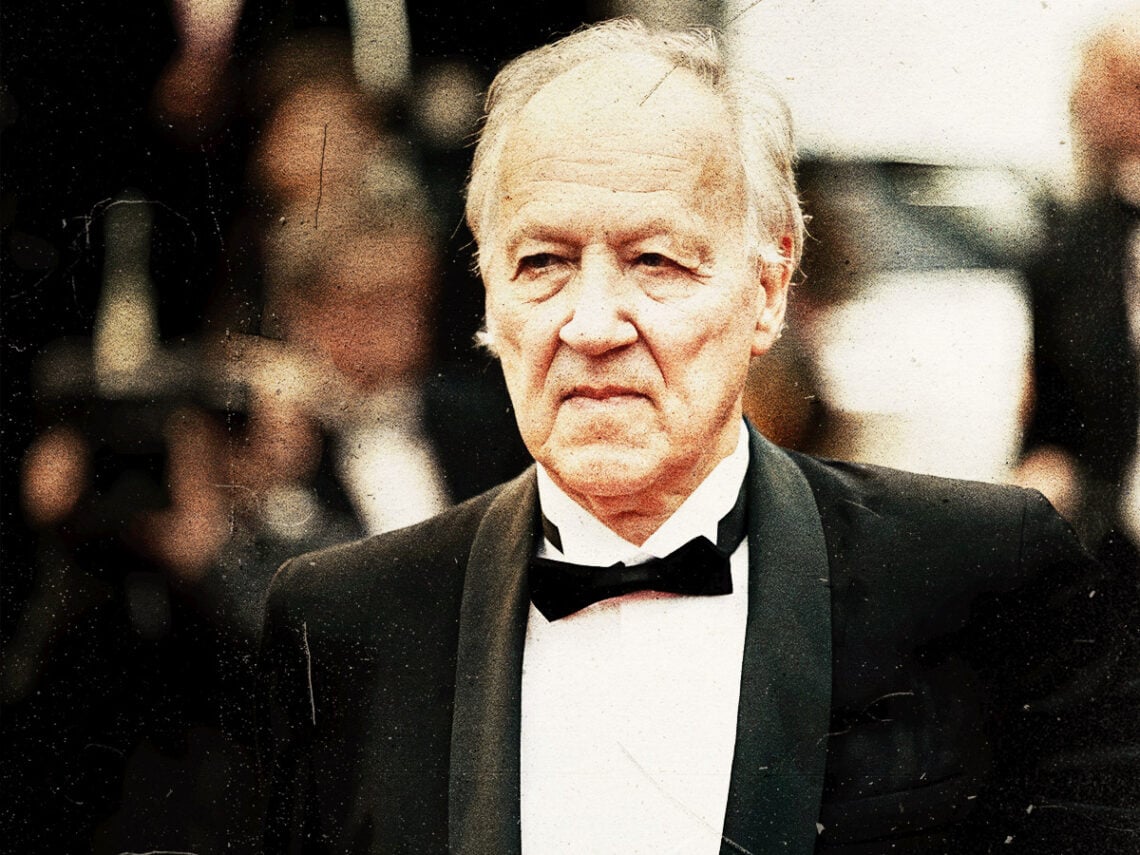
The movie Werner Herzog can’t watch without fainting: “Blood is spurting out”

When Werner Herzog talks, the world listens. This isn’t only because the seasoned German filmmaker, author, documentarian and actor has one of the most distinctive, ominous voices in the world but also because he so often has a unique and intriguing perspective to offer.
Even those unfamiliar with Herzog’s groundbreaking body of work – which includes 20 feature films, 34 documentaries and eight short films – are likely to have seen one of his memorable turns as an actor in such perhaps unlikely fare as Jack Reacher, The Mandalorian and Rick and Morty. Once heard, Herzog’s rasping tones are never forgotten. Combine that with his steely, inexpressive gaze, and Herzog can easily come off as somewhat sinister.
This perception of Herzog as a scary guy is only enhanced by stories from the sets of his films, not least due to the director’s notoriously volatile relationship with lead actor Klaus Kinski. Both men were rumoured to have threatened one another at gunpoint during the shoot of the first collaboration, 1972’s Aguirre, the Wrath of God, though this didn’t stop them from making four more similarly arduous films together. This ended with 1982’s acclaimed yet infamous Fitzcarraldo, on which deaths and serious injuries occurred among the crew and the extras, which some have partially blamed on the director’s demanding, obsessive approach to the film.
With all this taken into account, it’s easy to imagine Herzog as an almost entirely unflappable man and certainly not someone who would ever have an adverse physical reaction to anything he sees on screen. Even so, Herzog has admitted to going light-headed at one particular moment in a film that some might not have expected.
Herzog tells Filmmaker, “I do not cry in movies. I laugh in movies. But I do faint. I keep fainting in Dreyer’s The Passion of Joan of Arc, the wonderful great silent film. There’s a moment where they cut the elbow vein of Joan, and blood is spurting out, and that’s when I faint.”
Directed by Carl Theodor Dreyer in 1928, the French silent production The Passion of Joan of Arc stars Renée Jeanne Falconetti in the title role and draws directly from official historical records of the trial and execution of Joan of Arc in the 15th century. While Dreyer’s film was immediately praised by critics, it proved a commercial failure, not helped by heavy censorship owing to the film’s provocative subject matter.
Over the decades, Dreyer’s film has come to be regarded by critics as one of the greatest works in cinematic history, noted both for the director’s groundbreaking technique (including heavy use of close-ups), and for Falconetti’s remarkable performance, which some have declared one of the greatest feats of acting ever put on film.
Joan of Arc’s story is one that Herzog has a vested interest in, for in 1989, he directed a stage production of Giuseppe Verdi’s opera Giovanna d’Arco (AKA Joan of Arc). This was Herzog’s third opera production, and he has since directed more than 20 more, including a Giovanna d’Arco revival in 2001.
