


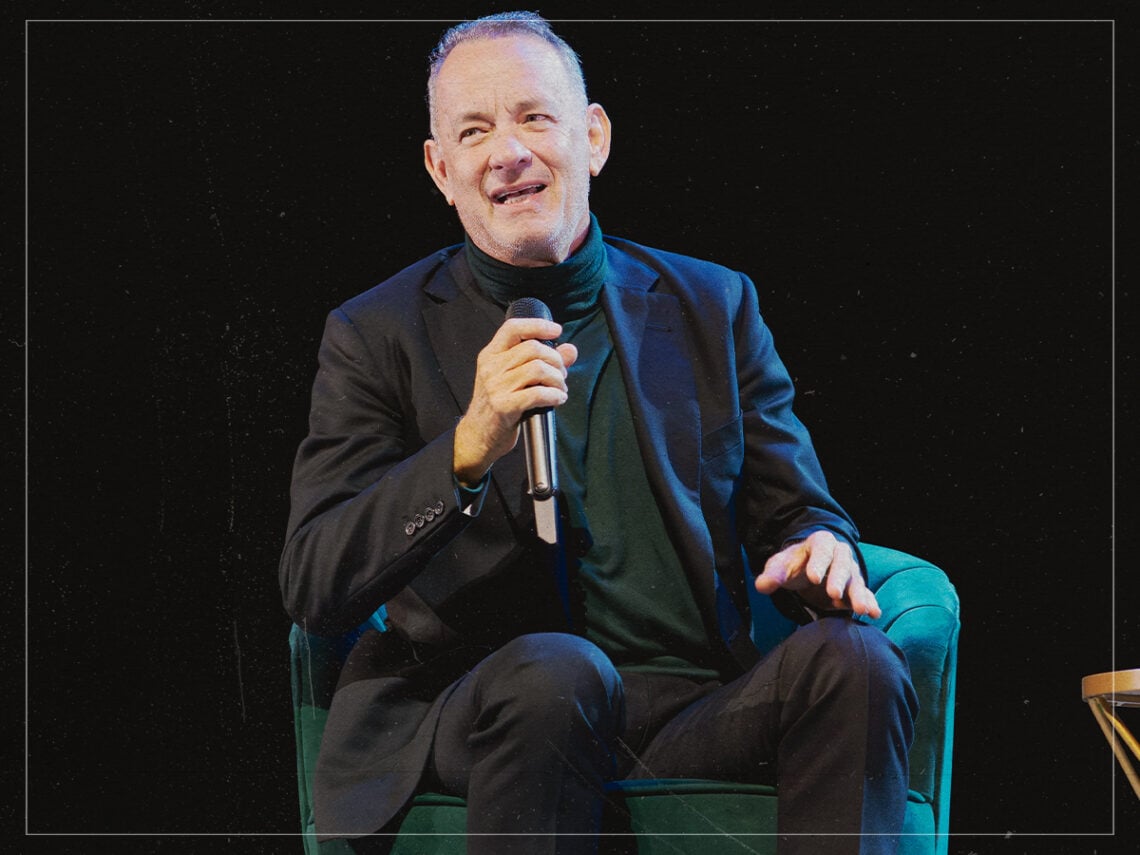
The 1968 movie Tom Hanks could watch again and again: “I watch it a couple of times a year”

Every movie lover, or otherwise, has a film they repeatedly come back to for comfort or nostalgia.
Maybe it’s a movie that you saw at a pivotal moment in your life when you really needed it most, and whenever you’re feeling a bit low, you press play and hope for the same sense of reassurance and calm, or you might be a bit more deranged and find comfort in some grotesque or violent film that completely sucks you in and distracts you from your problems. Regardless, we’ve all got our own taste for rewatches.
Tom Hanks, of course, has his own go-to comfort movie, although it’s not exactly Finding Nemo or Singin’ in the Rain or Life of Brian. For the Hollywood star, it’ll always be 2001: A Space Odyssey that does it for him, and he even admitted to Letterboxd that he “still watches it a couple of times a year”.
He picked it as one of his four favourites alongside the likes of The Best Years of Our Lives, A Hard Day’s Night, and Midnight Cowboy, although Stanley Kubrick’s sci-fi epic seems to take the number one spot. Released in 1968, when Hanks was 12, the movie had a profound impact on him, as it did for many other future actors and filmmakers.
Everyone from Christopher Nolan to Gaspar Noé has gushed about the film’s importance, and it’s not hard to see why it’s so popular. Kubrick’s project was ambitious, incredibly so, and it seemed, back then in the late 1960s, before humans had even reached the moon, that making a movie set in space could never look all that realistic. But Kubrick’s impeccable attention to detail brought space to life in a way that it had never been depicted in cinema before.
This wasn’t some low-budget campy space drama but a transcendent journey through human evolution and technological advancements, with striking visuals that really made it seem like Kubrick had taken a whole crew up to space for the sake of his film.
In fact, the whole thing feels so otherworldly, from the interactions between the evil artificial intelligence robot Hal and Keir Dullea’s David Bowman, to the hypnotic light tunnel sequence and that final, bizarre scene with the white room and the floating baby.
“I also just go to it and hit the main specific points,” Hanks said, although he didn’t elucidate on which scenes he frequents. From that incredible opening sequence in which the tribe of hominins discover a monolith, which subsequently inspires them to use bones as tools, to when Hal reveals that he knew Bowman was going to disconnect him, so he refuses to open the pod bay doors, truly, there are too many good sequences to choose from.
“I could walk you through 2001: A Space Odyssey and not stop talking once during the entire film. I don’t know if you wanna have that experience,” he said, summing up just how much he loves it.
