


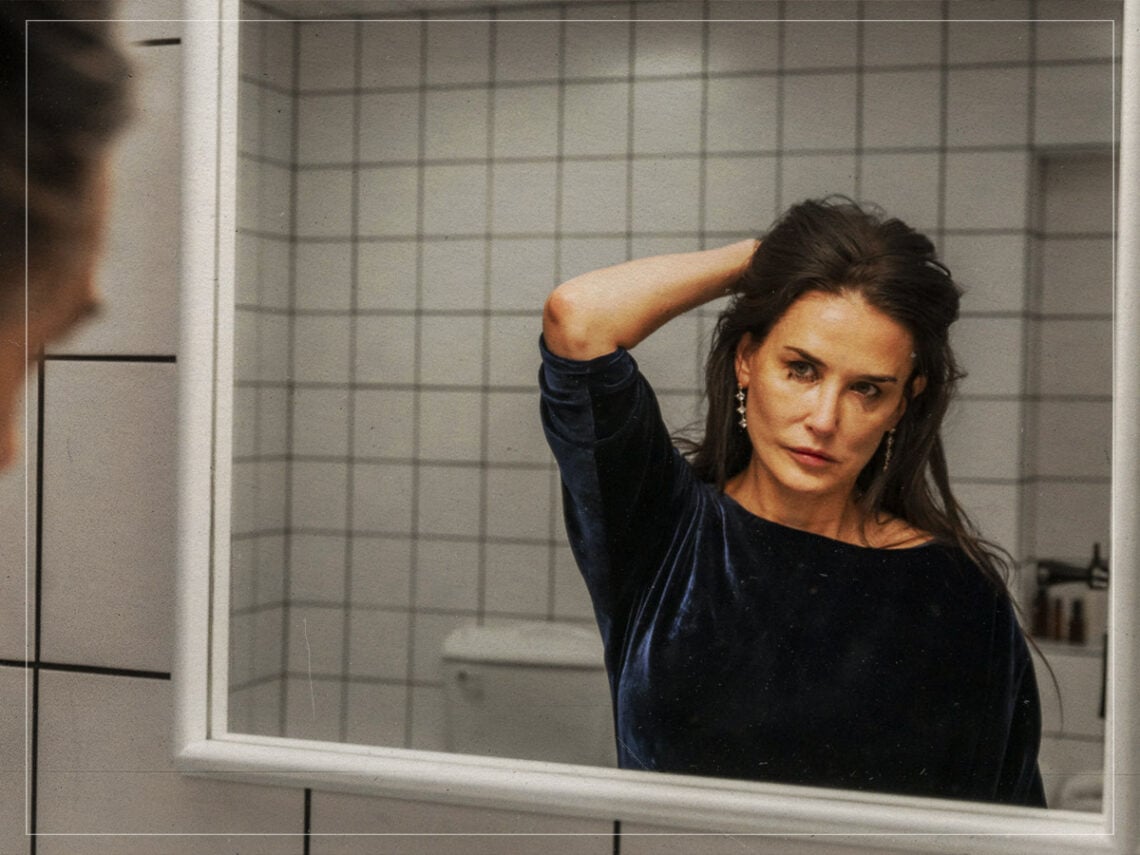
The movie that saved Demi Moore’s life: “I really feel like it was divine intervention”

Everyone loves a good comeback story, and cinema is full of them. From John Travolta emerging from nowhere to play the hitman in Pulp Fiction to Brendan Fraser winning countless awards for The Whale after years in the doldrums, Hollywood has a history of actors who refuse to know when they’re done. Demi Moore is certainly an exceptional example of this. After her global success in the late 1980s and early ‘90s, she was only seen in bit part roles in minor movies for almost 30 years, until her staggering performance in 2024’s The Substance.
It’s difficult to sum up just how astonishingly committed and fearless she is in the film, which is a body horror that tells the story of an ageing TV fitness star who will stop at nothing to retain her looks, even down to sucking the very life out of her own self to produce a younger version and injecting herself into her.
Moore not only bares her body and soul but in parallel to the film’s themes, seems to take all of her Hollywood experience and years of being hounded by the press and the expectations of physical perfection and just vomits it all back onto the screen in a glorious statement of “I don’t give a fuck anymore, take it or leave it”.
Alongside an equally committed performance from Margaret Qualley, the movie was written and directed by French filmmaker Coralie Fargeat, who caught industry attention with her brilliantly bloody movie Revenge in 2017. The jaw-dropping finale of that film gave some hint of what was to come with The Substance, but nobody really could have predicted the absolute assault on the senses that the director delivered. If you have seen the film, especially the ending in the theatre, you’ll know exactly what we mean.
Moore, who was once the highest-paid actress in the world, finds herself literally torn apart through the film, and her character Elisabeth Sparkle deals painfully with issues felt not just by celebrities but by women on a daily basis.
As someone who struggled with alcohol issues, she has spoken about dealing with ageing and looks in Hollywood in the past, leading her to an eating disorder and plastic surgery. She told the New York Times, “It’s not about what’s being done to us—it’s what we do to ourselves. It’s the violence we have against ourselves. The lack of love and self-acceptance, and that within the story, we have this male perspective of the idealised woman that I feel we as women have bought into.”
As a young actor in the 1980s, Moore was part of the ‘Brat Pack’: a group of actors including Rob Lowe, Judd Nelson and Molly Ringwald who appeared in several coming-of-age movies halfway through the decade and liked to socialise together.
One of those movies was St Elmo’s Fire, a film about University graduates trying to work out what to do with their lives that was a hit with movie-goers if not with critics. Starring the likes of Emilio Estevez and Ally Sheedy, it was while filming it that Moore’s drinking went out of control, and the film’s director, Joel Schumacher, had to step in.
She recalled, “At that time, I remember being sent to this place, and they wanted to check me in for treatment, and me saying, ‘Well, I can’t, because I’m going to start a film’. And they said, ‘What’s more important to you, the film or your life?’ And I said, ‘The film’. Because that was my only sense of self and value. And so the incredible gift, like I really feel like it was divine intervention, is that them sticking their neck out for me to stay in the film, under the circumstances, gave me something more than me.”
Although she did relapse, Moore has now been sober for almost 15 years and is able to reap the benefits of her bravery in making The Substance. She’ll be seen in a second season of the critically acclaimed Landman opposite Billy Bob Thornton and a new movie, I Love Boosters, alongside Will Poulter.
As for St Elmo’s Fire, there is talk of a sequel with all the original cast members returning with a plot focusing on where the characters are in their lives some 40 years after the original.
