


The one movie that “means everything” to Steven Spielberg and shaped a generation

In 1975, Steven Spielberg released Jaws, which helped spawn the concept of the summer blockbuster, with flocks of adults and children queuing to witness the must-see hit of the year. The movie was so successful that it reportedly led to a decline in beach attendance upon its release.
Spielberg followed up Jaws – his third feature – with a seminal sci-fi movie, Close Encounters of the Third Kind. Released in 1977, the same year as Star Wars, the movie helped popularise the genre, leading to a sci-fi boom in subsequent years.
Since then, Spielberg has consistently released some of the most profitable and beloved movies of all time, from the Indiana Jones series to Jurassic Park, E.T. the Extra-Terrestrial, Schindler’s List, Saving Private Ryan and Catch Me If You Can.
The director is one of Hollywood’s most influential figures, irreversibly shaping the modern landscape of filmmaking. Yet, to achieve such power, Spielberg has studied the greats, citing John Ford and François Truffaut as some of his favourites.
Yet there’s one film that changed Spielberg’s perception of cinema, going as far as to say, “It means everything to me.” Citizen Kane, released in 1941, marked Orson Welles’ directorial debut, with the filmmaker also starring in the lead role of Charles Foster Kane. The character was primarily inspired by the businessman William Randolph Hearst, with the film chronicling his rise to prominence and subsequent death.
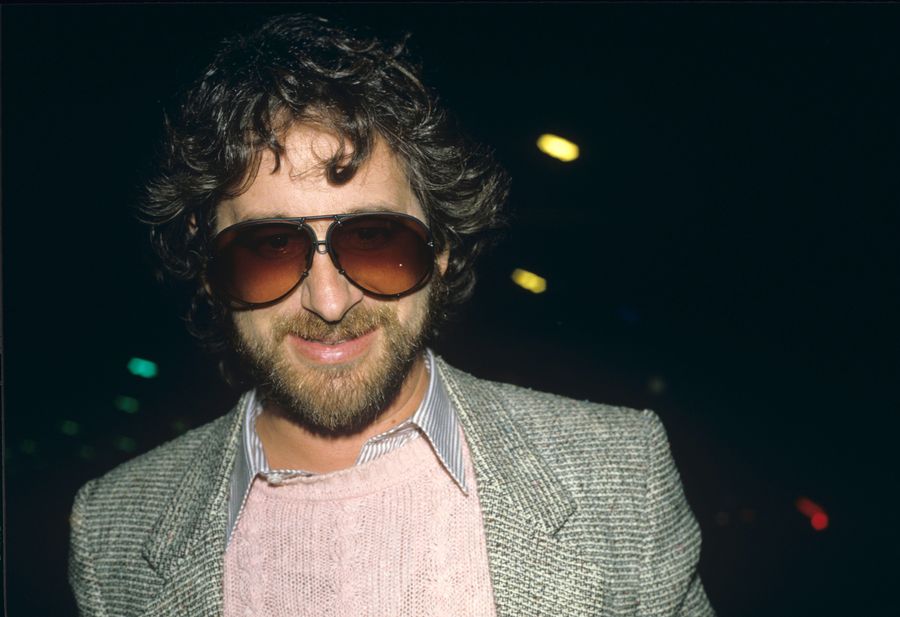
For Spielberg, the movie has inspired his approach to filmmaking, admiring Welles’ uncompromising creative vision. He told AFI, “Citizen Kane is, if not the icon, it is an icon of courage. I’m talking about the courage of the filmmaker — the audacity. It’s about courage and audacity, and ‘I’m making this my way.’”
Spielberg continued to discuss his admiration of Welles, adding, “And ‘I’m going to deepen the focus. I don’t care how many layers of makeup those actors sweat off. We’re going to see from one inch to infinity in every shot. We’re going to see ceilings. We’re going to tell a very convoluted mystery story about a man’s life.’”
Citizen Kane is often regarded as the best movie ever made, and Spielberg seems to be in agreement. He said, “And it is just one of the great movies ever made. Many people are going to agree. It is one of the great American experiences in the cinema.”
The director loves Welles’ movie so much that he even possesses one of the important sledges from the film, telling the BBC that it is “the greatest memento” he owns.
It’s easy to dismiss a favourite movie as just that, a preference to sit and watch some entertainment over others. But when that person is, in turn, one of the greatest storytellers of the visual world, then things take a new direction. Through the genuine power of Citizen Kane, Spielberg was both enthralled and inspired to bring his own stories to the silver screen. But he wasn’t the only one.
A directorial group, known to most as ‘The Movie Brats’, which included Spielberg, Francis Ford Coppola, Martin Scorsese and Brian De Palma, were all affected by the inspirational work of Welles. While Scorsese and Spielberg have been more vocal about their love of the auteur, it is hard to avoid the realisation that Citizen Kane helped to shape an entire generation of filmmakers.
While there might be the slightest whiff of conjecture in that assumption, one thing is for sure: it helped to inspire Spielberg, who, in himself alone, has created some of the most foundational movies ever made, inspiring his own generation, or generations, of moviemakers to come.
