


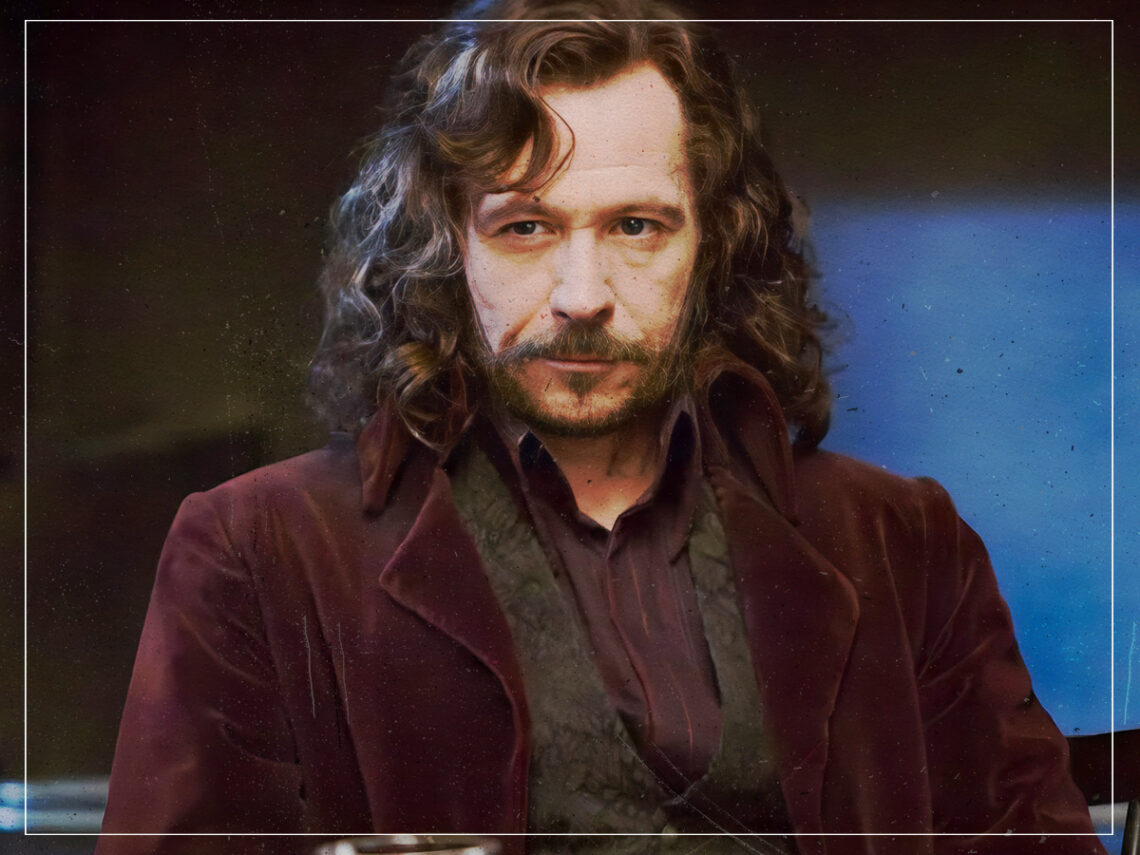
The 1971 movie that inspired Gary Oldman to become an actor: “It was like a moment of clarity”

The term “character actor” can either be a pejorative or a compliment, depending on the context. On the negative side, it can be a dismissive term for a performer who crops up in lots of films but who never quite attains star status.
On the flip side, it can describe any performer who is so chameleon-like that they cannot be reduced to a single persona, no matter how many red carpets they walk. Gary Oldman fits neither of these definitions. From the beginning of his career, the London-born actor has disappeared into every role so completely that he is often unidentifiable even when his name is emblazoned on the poster. At the same time, he is undoubtedly a movie star.
Few actors have managed to balance those two qualities so successfully. Oldman built his reputation on transformation rather than familiarity, becoming the rare performer whose appeal often stems from audiences not immediately recognising him beneath the character.
From his chilling portrayal of renegade rocker Sid Vicious in 1986’s Sid and Nancy to his Oscar-winning turn as Winston Churchill in 2017’s The Darkest Hour, he is a performer who is impossible to pin down. One minute, he’s a blood-curdling DEA agent in Léon: The Professional; the next, he’s a lovable fool in the Shakespeare spinoff Rosencrantz & Guildenstern Are Dead. He’s embodied the bizarre, the mercurial, the tragic, and the larger-than-life. And, of course, Sirius Black.
Perhaps the only way to truly describe Oldman is to say that there is simply no other actor like him. But even unparalleled artists get their inspiration somewhere, and Oldman is no exception. For him, acting wasn’t a long-held dream or a family birthright. Growing up in a rough part of London in the ‘60s as the child of a single mother, he wasn’t exposed to theatre from a young age, nor was he searching for an outlet to express any creative tendencies. Instead, his inspiration to become an actor hit him like a bolt from the blue.

“I saw Malcolm McDowell in a movie called Raging Moon,” he said in a 2000 interview. “And that was it. It was like a moment of clarity. ‘This is it.’ That was [the] lightning bolt. You have to think, is there such a thing as a coincidence, or are things predestined?”
Released in 1971 when Oldman was a young teenager, Raging Moon (which was released in the U.S. under the even less elucidatory title Long Ago, Tomorrow) stars McDowell and Nanette Newman as two disabled inpatients at a care home who fall in love. At the time the film was being made, McDowell had already appeared as Mick Travis in the controversial counter-culture landmark If…, playing a public school insurrectionist. His fiery performance caught the eye of Stanley Kubrick, who cast him in A Clockwork Orange, but Raging Moon was released first.



Although the film is often overshadowed by McDowell’s more controversial work from the same era, it showcased a different side of his abilities. Rather than relying on rebellious energy alone, it demanded vulnerability, emotional nuance and restraint.
Despite its somewhat saccharin subject matter, the film allowed McDowell to demonstrate a complex range of emotions and a pronounced character arc. Beginning the story as a rakish football player, McDowell’s character is struck with an illness that leaves him permanently confined to a wheelchair.
The actor had to demonstrate a similar type of rage and resentment as he did in If…, but also a creeping tenderness and longing for Newman’s character. It’s an emphatic performance that one can imagine would have a galvanising effect on a 13-year-old who hadn’t yet realised that he desperately wanted to become an actor.
Looking back, it is fitting that Oldman’s journey began with a performance built on transformation. The qualities he admired in McDowell’s work, emotional range, commitment and the ability to disappear into a role, would become the defining characteristics of his own remarkable career. More than five decades later, that lightning-bolt moment continues to echo through one of the most versatile filmographies in modern cinema.
