


The 1983 movie Quentin Tarantino declared the “coolest” ever made

Quentin Tarantino is a man who likes what he likes, and what he likes, he loves.
Like a real-life manifestation of The Simpsons’ ‘Comic Book Guy’, Tarantino’s knowledge of pop culture is pretty much unrivalled. In fact, it is this love alone that helps to fuel his own films, as he explains, “I just grew up watching a lot of movies. I’m attracted to this genre and that genre, this type of story, and that type of story.”
The enthused filmmaker continues, “As I watch movies, I make some version of it in my head that isn’t quite what I’m seeing – taking the things I like and mixing them with stuff I’ve never seen before.” In some way, he’s the most professional purveyor of ‘fan fiction’ in the history of the artform, and he’s bloody proud that.
One feature that brings out a lot of his most beloved ingredients in a film is the 1983 American neo-noir thriller, Breathless. Directed by Jim McBride, it tells the tale of Jesse Lujack (Richard Gere), who sees drama unfold “when [he] steals a car in Las Vegas and drives down to LA, his criminal ways only escalate – but when will it end?”
The whole thing unravels in a sleek and sexy fashion with Valérie Kaprisky starring as Lujack’s love interest and plentiful erotic scenes that prove high octane enough to match the frantic pacing of the unfurling crime, while occasionally amour provides a more pastoral calm.
This lured Tarantino right in, especially since he was a disciple of Jean-Luc Godard at one point. Drawing on the French original, style is king in this sumptuous story, but there are thrills and depth to support it.
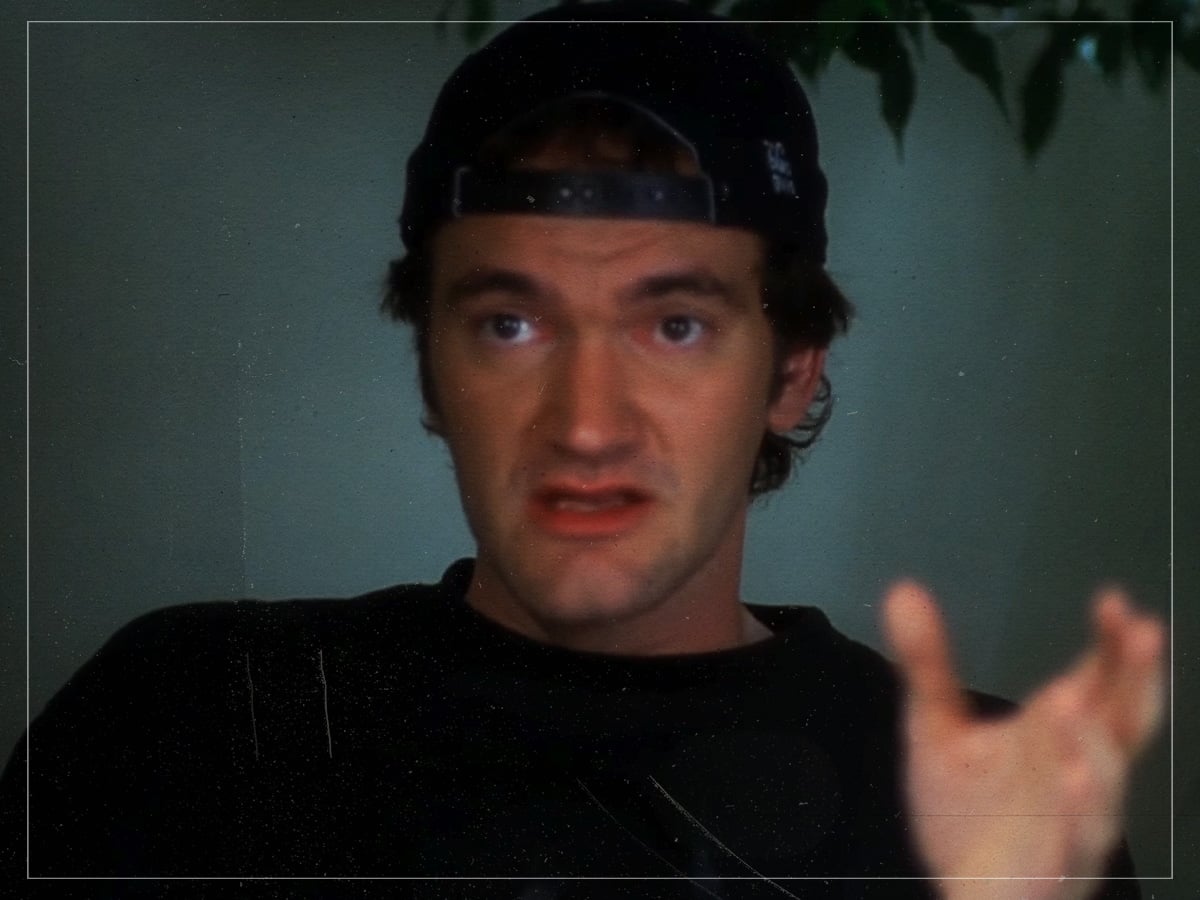
Why Tarantino fell in love with Breathless
As the legendary director said of one of the “coolest” films he’s ever seen: “Here’s a movie that indulges completely all my obsessions – comic books, rockabilly music and movies.” In fact, Tarantino was so obsessed with the film that it even worked its way into one of his own features.

The Silver Surfer poster in Freddy Newandyke’s apartment in Reservoir Dogs is a nod to Lujack’s own penchant for the comic book hero. To some, it is a trifling motif, but to the likes of Tarantino, these flourishes are what make movies little worlds to explore, populated by knowable heroes.
For many, the film might not live up to the 1960 French original, but its bold use of Americana is something that Tarantino admires greatly. After all, his own films are filled with the joys of wider pop culture. Thus, the riveting soundtrack to Breathless, featuring the likes of Sam Cooke, Brian Eno, Link Wray, Bob Dylan, and Mink DeVille, is another element that would no doubt have appealed to the Pulp Fiction director.
As the masterful filmmaker said of his own use of pop music, “I go through my record collection and just start playing songs, trying to find the personality of the movie, find the spirit of the movie.” Once he has found that feel, the rest seems to fall into glorious place. The same can be said for Breathless. It is an homage to things that we love, and it presents them with a bristling erotic edge.
There’s something about Breathless that plays like a mixtape of Tarantino’s earliest fixations: pulp storytelling, dangerous romance, and an unflinching affection for the iconography of the so-called American cool. Richard Gere’s Jesse Lujack isn’t just a rebel without a cause; he’s a man driven by pure instinct, living as though life were a comic book panel in motion.
That kind of swagger, pitched somewhere between nihilism and cartoonish bravado, would go on to become a Tarantino hallmark, evident in characters like Clarence Worley in True Romance or even Stuntman Mike in Death Proof.
What makes the film so compelling through Tarantino’s lens isn’t just the story or style, but how unashamedly it wears its references on its sleeve. Breathless is, in essence, a cover version of Godard’s original, stripped of its Parisian intellectualism and repackaged in denim and dust. Just like Tarantino would later riff on samurai cinema or spaghetti westerns, Breathless reimagines a classic through an American filter, giving it a new beat and a different rhythm.
And that, ultimately, is what connects Tarantino to the film on such a deep level. Breathless is pure cinematic curation; it takes what it loves and throws it together with flair, energy and a middle finger to convention. Isn’t all great art partly homage?
For a filmmaker like Tarantino, whose own career has been defined by a similar cut-and-paste mastery of pop culture, McBride’s remake was never about replacing the French original; it was about proving that reinvention can be just as radical as creation.

Never Miss A Take
The Far Out Quentin Tarantino Newsletter
All the latest Quentin Tarantino content from the independent voice of culture.
Straight to your inbox.