


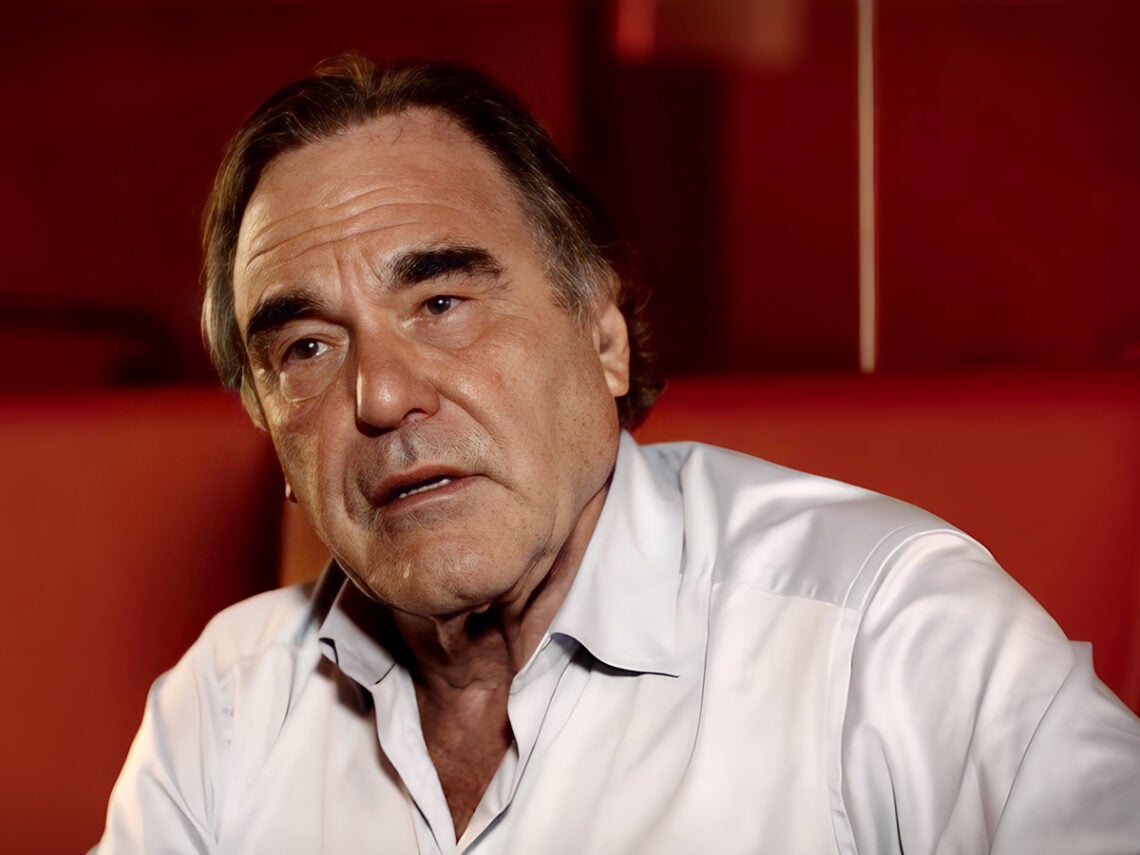
The “exhausting” movie that pushed Oliver Stone’s career in a new direction

In a career full of controversial and ambitious films set worldwide and in history, it would be easy to classify director Oliver Stone as some kind of untiring juggernaut. Even in the early years of his career, he was penning the screenplays for classics like Midnight Express and Scarface between his turns in the director’s chair. Once he built up some momentum, Stone’s filmography was a constant barrage of work with no breath in between.
But despite marathon runs in his career, like the late 1980s, when he directed Salvador, Platoon, Wall Street, Talk Radio, and Born on the Fourth of July in the span of three years before releasing his massive features The Doors and JFK in the same calendar year not long after, there’s one movie he picked out as particularly exhausting when speaking to the BBC in 2003.
Any Given Sunday marked a turning point for Stone, prompting him to take a hiatus from filmmaking. The sports drama, starring Al Pacino as the head coach of the fictional Miami Sharks, boasted a star-studded ensemble cast, including Cameron Diaz, Dennis Quaid, and James Woods. While the film was a success, it became an exhausting ordeal for Stone, as he contended with both a large budget and the challenges of managing a diverse group of strong personalities. This experience led him to step back from the industry for a few years.
As he told the BBC: “In 1999 I did Any Given Sunday, which was a very exhausting feature film for me, and it was time to take a little bit of a break. As you know, in the ’90s the budgets in Hollywood movies got so big – what was costing $19million in the early ’90s was shooting up to, like, $50m.”
Any Given Sunday reportedly had a budget of $55m. Meanwhile, Platoon was made on a relatively paltry $6m, and even the far-reaching spectacle of JFK only cost $40m. That quick expansion was mirrored in the sport itself, with franchises exploding in the late 1990s and becoming more corporate. Stone told Entertainment Weekly that football had become a ”ridiculously outsized industry”.
It’s clear that Stone was grappling with the responsibility of inflating demands from studios ready to open their wallets to him. But with an enormous budget comes a heavy load of responsibility: “So it was more and more about marketing, bigger budgets, bigger egos. It’s just very difficult to work inside that system – not that I’ve given up on it, but I just wanted a break from it.”
Stone took a few years off from Hollywood, travelling to Cuba in 2002 to interview Fidel Castro for a documentary that sparked controversy and has yet to see release in the United States. It was the first of a trilogy of extended interviews with controversial world leaders, followed by the Hugo Chavez interviews in South of the Border and The Putin Interviews in 2017.
It’s a testament to how tiring the creation of Stone’s football film must have been that his take-a-break next project involved travelling to Cuba and spending three days with one of the world’s most polarising statesmen.
Nevertheless, the enormity of the scale of the production on Any Given Sunday couldn’t have left to bad a taste in his mouth, as a few years later in 2004 he was at the helm of a mammoth epic budgeted at $100m more than the sports film – Alexander, a story about another never-tiring leader, only one that colonised the known world before the age of 25.
