


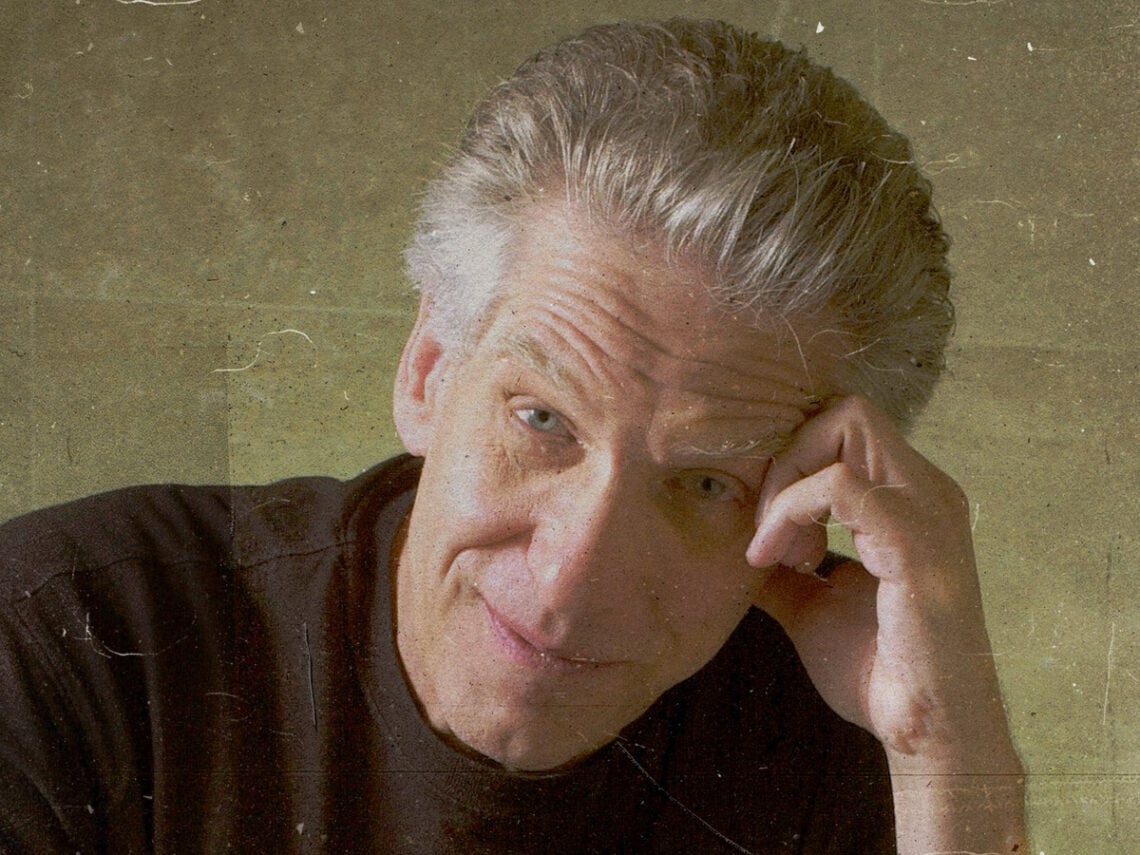
‘Relativity’: The movie that proved to David Cronenberg he didn’t need film school

It can be challenging to pinpoint precisely what it is about David Cronenberg’s cinema that exerts such a profound effect. The visceral experience of watching one of his films can’t be attributed solely to a single aspect of filmmaking, such as lighting, editing, or sound. Instead, the precise amalgamation of these elements seems to cast an unsettling spell. There’s a logic to many of his movies that feel as close as you can get to recreating a dream – or more perhaps a nightmare.
A prime illustration is his 1986 fusion of horror and science fiction, The Fly. In this film, a brilliant scientist, Seth (Jeff Goldblum), experiences pure joy as he achieves the seemingly impossible—teleporting himself using his groundbreaking invention, a state-of-the-art transportation machine. Unbeknownst to Seth, a fly becomes entangled in the machine during teleportation, resulting in a slow mutation that transforms him into a part-fly, part-man hybrid. This touching and terrifying movie seamlessly blends B-movie melodrama with Franz Kafka’s Metamorphosis.
His subsequent film, Videodrome, explores the journey of a television producer who undergoes a hallucinatory experience after discovering a show that leaves a subliminal imprint on its viewers. As he delves into the program’s origins, the infamous scene in which the show’s programmer is sucked into his television set remains etched in the minds of filmgoers. Revisiting it today, the movie’s enduring theme of humanity’s addiction to technology feels as vital and shocking as ever.
Cronenberg, reflecting on his career and inspiration, recently shared some of his favourite films and the filmmakers who have influenced him during a feature with Le Vidéo Club. He cited Federico Fellini’s acclaimed neo-realist fable, La Strada, as the beginning of his enchantment with moviemaking.
Cronenberg also highlighted Nicolas Roeg’s Don’t Look Now, describing it as “a very, very strong movie, very strange, very much about death, but at first, you’re not aware that that’s really the subject matter”. Don’t Look Now, a tale of a couple travelling to Venice after the tragic death of their child, encountering a sister who insists their deceased child is trying to warn them of impending danger, aligns seamlessly with Cronenberg’s work, blending mystery, thriller, and horror.
However, Cronenberg also pointed out Ed Emshwiller’s movie Relativity as proof that film school wasn’t a prerequisite. According to Cronenberg, “You didn’t have to go to film school, which I never did, you didn’t have to work in the film industry; you could make a movie yourself just because you wanted to make a movie.”
Emshwiller crafted this film with the support of a Ford Foundation grant, describing it as an exploration of “subjective reality” and the emotional essence of one’s perception of the overall environment, including sexuality, physicality, social dynamics, time, space, life, and death. Cronenberg, like many filmmakers of his generation, takes pride in forging a career in the movie industry without a prestigious film school on his resume. Making films independently and outside of an institution has likely contributed to the singular vision that defines his work. It’s reassuring to know that even the best directors occasionally need creative encouragement.
