


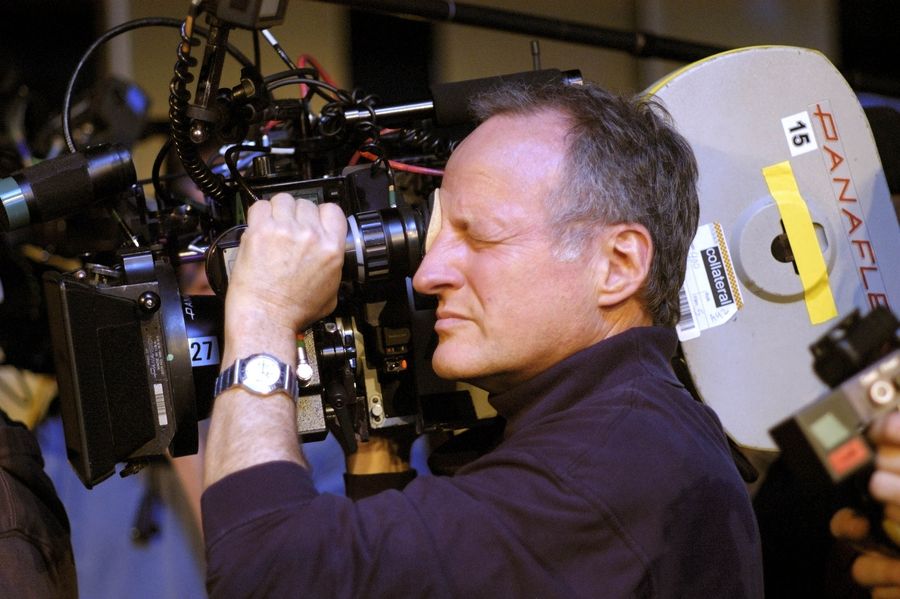
‘Ali’: The movie never felt truly satisfied Michael Mann

By the late 1990s, Michael Mann was one of the most respected film directors on the planet. Having first made his name in television, most famously as the executive producer of the massively popular and influential 1980s cop drama Miami Vice, Mann broke into the movie business. He worked his way up from the reasonably small-scale 1980s productions Thief, The Keep, and Manhunter to the considerably larger historical adventure The Last of the Mohicans in 1992.
After calling the shots on epic crime drama Heat—a remake of his earlier TV movie LA Takedown, notable for giving Al Pacino and Robert De Niro their first scenes together—Mann went on to direct 1999’s fact-based drama The Insider, which brought Russell Crowe to the attention of the wider audience, as well as giving the future Gladiator star his first Oscar nomination.
This body of work, and the level of respect it brought for Mann in Hollywood, saw him win out over such other contenders as Spike Lee and Ron Howard to land the director’s chair on 2001’s Ali, the long-awaited biopic of the iconic boxer Muhammad Ali, with Will Smith in the lead role.
Although the film significantly underperformed at the box office—earning just $87million after costing between $107-$118m to make—Ali was, for the most part, a critical success and famously netted Smith his first ‘Best Actor’ Oscar nomination. Even so, Mann would admit in the years that followed that he was unsatisfied with the version of the movie that made it to screens.
Reflecting on his work, Mann told Rolling Stone in 2017: “I wasn’t satisfied with how I felt at the end of the film – which is to say, the story that was being told wasn’t complete. It needed to be reorganised, or re-authored, in a way. If all drama is conflict – and I believe it is – then I needed to make more it more tangible that lots of adversarial elements had arraigned against Ali, and that they were all connected.”
To this end, Mann first re-edited the film for a director’s cut DVD release in 2004. Then, in 2016, when Ali himself passed away, Mann decided to release a third cut, re-inserting a lot of previously unseen footage that brought Ali’s politics more sharply into focus.
Mann remarked of these re-edits: “Suddenly, what becomes more poignant is the sense of the years Ali lost, which would have been the best years of his career as a boxer. You get the pressure impacts on his family… And basically, it connects those elements more to FBI/COINTELPRO operation, the CIA surveillance, and how they all link. Ali was aware of what was going on in the Third World; he knew who [Congolese independence activist] Patrice Lumumba was and why he was considered dangerous.”
Released to Blu-ray in 2017 as the commemorative edition, this film cut—at 152 minutes—actually runs shorter than Mann’s earlier, 165-minute director’s cut, as Mann reduced the emphasis on Ali’s fights to delve more deeply into the man himself.
After returning to thriller territory with 2004’s Collateral, 2006’s Miami Vice, 2009’s Public Enemies and 2015’s Blackhat, Mann more recently made another sports-related biopic, 2023’s Ferrari, which cast Adam Driver as motorsports pioneer Enzo Ferrari. Similar to Ali, this film was also met with critical praise but audience disinterest, failing to make its budget back at the box office.
