


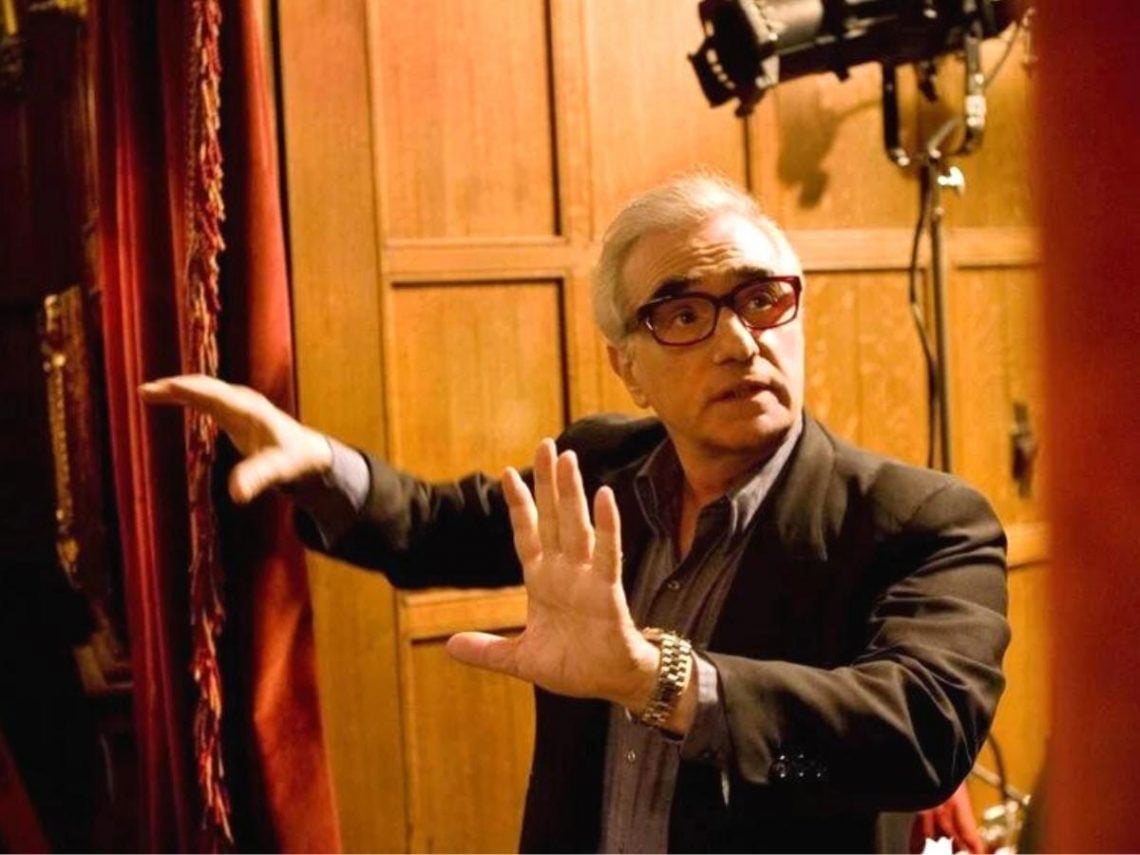
Martin Scorsese on why ‘Vertigo’ is “one of the greatest films ever made”

Beginning his career as a young filmmaker in the New Hollywood movement in the late 1960s, Martin Scorsese has enjoyed one of the most successful careers in cinema history. A master of his craft, the director has continuously released movies that have garnered critical praise like no other, becoming one of the biggest names of the industry in the process.
After releasing his first feature, Who’s That Knocking at My Door, in 1967, it would only take Scorsese a few years to hone his skills before he received critical acclaim for his 1973 crime drama Mean Streets and 1976’s landmark character study, Taxi Driver. The filmmaker developed his love for cinema early on, often going to the movie theatre as a substitute for sporting activities, which he couldn’t do because of his asthma.
Scorsese has cited numerous directors and cinematic movements as paramount in developing his tastes and influences. Italian neorealist filmmakers such as Roberto Rossellini and Vittorio De Sica left a lasting impact on the young director, as did Michael Powell and Emeric Pressburger. The directing duo’s films, such as The Red Shoes, The Tales of Hoffman and Black Narcissus, were vital players in Scorsese’s cinematic education. Of course, with that, it goes without saying that he adores the French New Wave, which Scorsese calls one of cinema’s most important movements. He cites Jean-Luc Godard and Agnes Varda as some of his favourite directors from the era. He also deeply admires Francois Truffaut, stating, “The beginning of Jules and Jim, the first three or four minutes influence the style of Goodfellas and Casino and Wolf of Wall Street and so many”. Truffaut was a massive fan of Alfred Hitchcock, so much so that he wrote a whole book about the British suspense master’s brilliance by extensively interviewing him.
Hitchcock/Truffaut has since become a definitive text, helping to bolster Hitchcock’s reputation as a true genius and cinematic master. Talking to the Los Angeles Times, Scorsese explained the brilliance of the book: “You suddenly had two filmmakers from two different generations and two different cultures speaking not about old Hollywood and what it was like to work with this or that movie star and the food at the Brown Derby, but about the art of cinema, on a nuts and bolts level, proudly. So it gave us a richer sense of our own art form.”
Truffaut’s persuasion evidently worked on Scorsese, who cites Hitchcock as one of the greats. He explained that Vertigo, Hitchcock’s stunning 1958 psychological thriller starring James Stewart and Kim Novak, is “one of the greatest films ever made”. The film revolves around a retired police detective suffering from vertigo that becomes obsessed with the woman he has been hired to follow. At its core, Vertigo is a study of obsession, painted in lucid greens and reds.
Scorsese added: “I saw it on its first run in VistaVision. It was perplexing at first, but I liked it and couldn’t say why. It was quite different from what people expected of Hitchcock, and the story was so odd, so purely emotional”. The director discussed the film with fellow filmmaker David Fincher, who described Vertigo as “odd, perverse and almost poetic,” although he much prefers Psycho and Rear Window, where Hitchcock is “his most honest”.
Yet, for Scorsese, “I never care about where I am in the picture. These are probably the things that bother Fincher; I get lost in the story, in the atmosphere and the images, just like Stewart does. I look forward to that each time I see the film.”
