


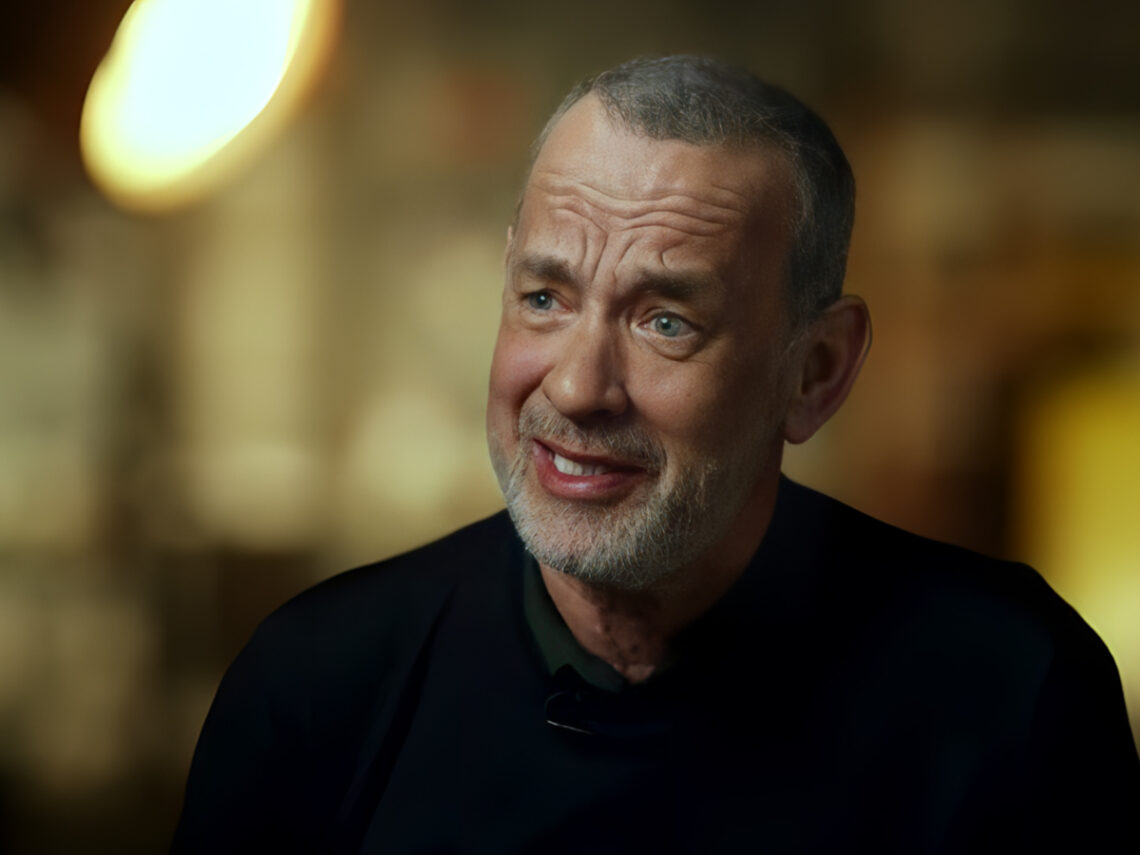
The movie that made Tom Hanks break his cardinal rule of acting: “The most important tool we had”

All actors have tried and tested processes that they swear by when constructing their performances. Some embrace method acting and try to live like their characters, while others simply learn their lines. Some love committing to extensive rehearsals, while others like to leave room for spontaneity and improvisation. Some need lots of direction, while others prefer their director’s input to be minimal. Tom Hanks abides by his own acting rules, and they have served him extremely well in his four decades as one of Hollywood’s most beloved leading men. However, a recent movie forced him to break his cardinal rule, as he was crafting a performance unlike anything he’d given before.
Hanks’ journey to breaking his one rule began in an unlikely place. He was watching the 2020 documentary The Truffle Hunters, and it prompted him to chat with Robert Zemeckis, the director he worked with so memorably on Forrest Gump and Cast Away. The documentary followed a group of old hunters searching for a particularly special and rare truffle in the woods, but it wasn’t the content of the piece that fascinated Hanks. Instead, it was the documentary’s visual presentation that piqued his interest.
“So much of that movie was shot in a locked-off tableau form,” explained Hanks. “And there was something about how long they went on, and yet how invigorating all these scenes were, that stuck in my head. I said, ‘I wonder how much of that you could get away with in a feature film.'” Amazingly, though, Zemeckis was already way ahead of Hanks, who chuckled, “He literally said, ‘Funny you should ask,’ and he showed me the graphic novel.”
The graphic novel in question was Richard McGuire’s Here, which began life as a six-page comic in 1989 but was expanded into a full-blown 304-page novel in 2014. It showed the same location in time and space in fixed panels, going from primordial times to the modern day, without altering the composition of each shot. It was a compelling experiment in the comic book format, and Zemeckis felt an adaptation could serve as a similar experiment in film.
Hanks and Robin Wright signed up to play Richard and Margaret Young, whose story would make up most of Here. Because the film would follow them from wide-eyed 17-year-olds to old age, it would require extensive visual effects to de-age the actors. However, it would also entail the 68 and 58-year-old actors adjusting their performances based on what age they were supposed to be playing.
To begin figuring out how the experiment would work, Hanks, Wright, and Zemeckis set up in a Los Angeles ballroom for a week. Hanks explained, “We locked off an iPhone, and we had approximations of the set. We had to just figure out the technical parts.” He chuckled, “The studio executives were always saying, ‘You’re sure this is going to work? This has never been done before.’ Well, who in the world do you think you’re talking to? Bob Zemeckis does nothing but make movies that have never been done.”
When it came time to calibrate their performances alongside the computer technology that would de-age them, though, Hanks revealed he had to go against his usual instinct as an actor. He has always said he doesn’t watch his own movies because it makes him too self-conscious, and this extends to watching the playback of his performances on-set. He confessed, “I will not watch playback on a standard movie because I am going to be the least objective about anything that I see.”
However, Hanks quickly realised that Here was no standard movie, and he needed to watch his performance in playback because it was the only way he could judge if he was successfully playing “younger” or not. He mused, “It was the most important tool we had to judge ourselves as 17-year-old or 37-year-old versions of ourselves. I had no self-consciousness about looking at the playback except, ‘Are my shoulders in the right place? Do we have enough energy? Are our eyes actually, you know, focused the way they can be when you’re young — or burdened when you’re old?'”
Ultimately, Hanks adjusted his technique to embrace the unique experiment of Here. However, it would be surprising if he decided to keep watching playback in any future, more straightforward productions. In truth, Zemeckis is likely the only director who could convince Hanks to do something that makes him so uncomfortable. As he admitted, “I’ll follow Bob into hell if he’s got an idea and see where it will lead us.”
