


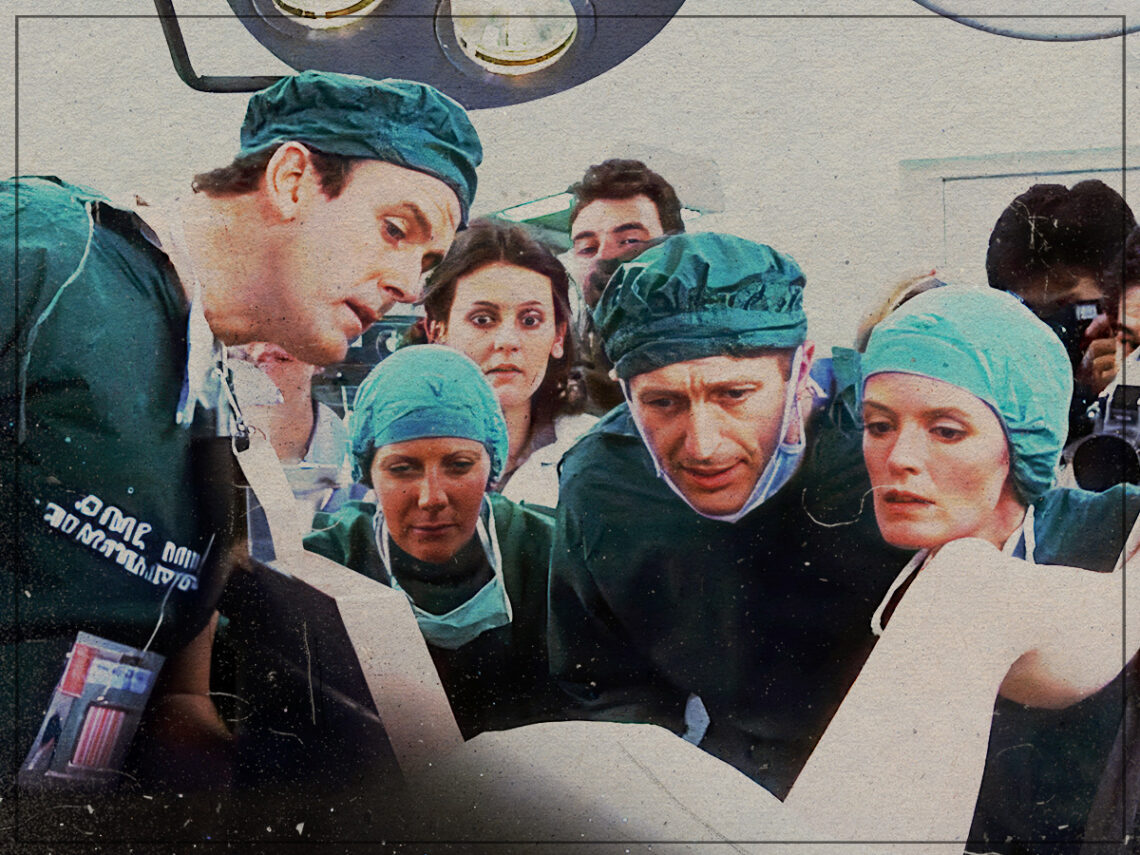
‘Monty Python’s The Meaning of Life’: The movie that made Quentin Tarantino look away from the screen

It’s no secret that Quentin Tarantino is a tremendous movie buff. The director developed an intense interest in cinema from a young age, writing his first screenplay when he was just 14. Through the 1980s, Tarantino worked at an adult movie theatre before working in a video store in California, a period of time in which he was exposed to a wealth of movies that shaped his tastes.
By the late 1980s, Tarantino had written several screenplays and even directed the unfinished 1987 comedy My Best Friend’s Birthday, allowing him to explore themes and techniques he would later develop in his future filmmaking career. In 1992, he released his debut feature, Reservoir Dogs, a landmark in independent filmmaking. He soon followed the success of his first film with Pulp Fiction, not before selling scripts that became Natural Born Killers and True Romance.
Since then, Tarantino has become one of the most prominent directors of his generation, building up a dedicated fanbase due to his distinctive style and narratively complex movies. The director frequently pays homage to other films within his work, reflecting his intense love for cinema. As much as Tarantino has an outspoken love for many movies, he is also unafraid to voice his distaste for many others.
One film that Tarantino has spoken negatively of is Monty Python’s The Meaning of Life, revealing that it made him feel deeply uncomfortable. Despite gruesome deaths, mutilated body parts and blood commonly occurring in Tarantino’s movies, he couldn’t hack watching the scene where Terry Jones’ character repeatedly vomits.
Tarantino explained to The Irish Examiner: “The only time I’ve ever had to look away, because I couldn’t bear to watch, was The Meaning Of Life when that fat bastard keeps being sick. I felt really nauseous – it was just too much. I was looking around, and I thought, ‘If anyone here is sick and I have to smell vomit, I’m going to hurl.'”
“I just about held onto my lunch in the end, but I still can’t think about that scene without retching,” he added. Tarantino is referring to the sequence where Jones’ rude character Mr Creosote continuously vomits while being served an extensive amount of food and drink at a restaurant. Eventually, he comically explodes after eating a mint despite declaring: “It’s only wafer-thin”. In the process, he sprays everyone around him with copious amounts of vomit, so it’s unsurprising that Tarantino had an uneasy stomach while watching the scene.
The Meaning of Life, a comedy that takes a hilarious and absurd look at the various stages of human existence, from birth to death, is etched into the annals of British cinema history. Through a series of loosely connected sketches and musical numbers, the film explores topics such as reproduction, war, gluttony, and the search for the meaning of life itself. It’s classic Monty Python humour, filled with irreverent satire and over-the-top absurdity, offering a humorous take on the human condition and the often futile quest for purpose.
“Having done The Holy Grail and Life of Brian,” Michael Palin later recalled of the film. “We found ourselves with a much bigger budget for The Meaning of Life. This meant we could spend an entire week on things like the sketch with Mr Creosote [the monstrously fat diner]. The sheer amount of minestrone used in the vomiting sequence was only possible because we were with Universal. That part was filmed at Seymour leisure centre in Paddington. On the morning after the final scene, in which Mr Creosote explodes and thousands of gallons of vomit get hurled against the walls, the room was all cleaned up immaculately – and, within 12 hours, two people were married in there. I wonder if they ever knew what had happened hours before.”
Each sketch in The Meaning of Life is a comedic gem in its own right, and the film is known for its outrageous spirit, memorable characters, and catchy musical numbers. From the bizarre (and disgusting) restaurant scene where gluttony is taken to extremes to a surreal exploration of the afterlife, the movie offers a series of vignettes that skewer societal norms and challenge conventional wisdom.
Through its irreverent and often absurd approach, The Meaning of Life ultimately invites viewers to ponder life’s absurdity and embrace its inherent silliness. It’s a cult classic that showcases Monty Python’s unique brand of humour and leaves audiences laughing while contemplating the more significant questions of existence.
While Tarantino has never explicitly stated that he hated The Meaning of Life, it appears that he was predominantly disgusted by this one stomach-turning sequence. Revisit it below if you can handle it.

Never Miss A Take
The Far Out Quentin Tarantino Newsletter
All the latest Quentin Tarantino content from the independent voice of culture.
Straight to your inbox.