


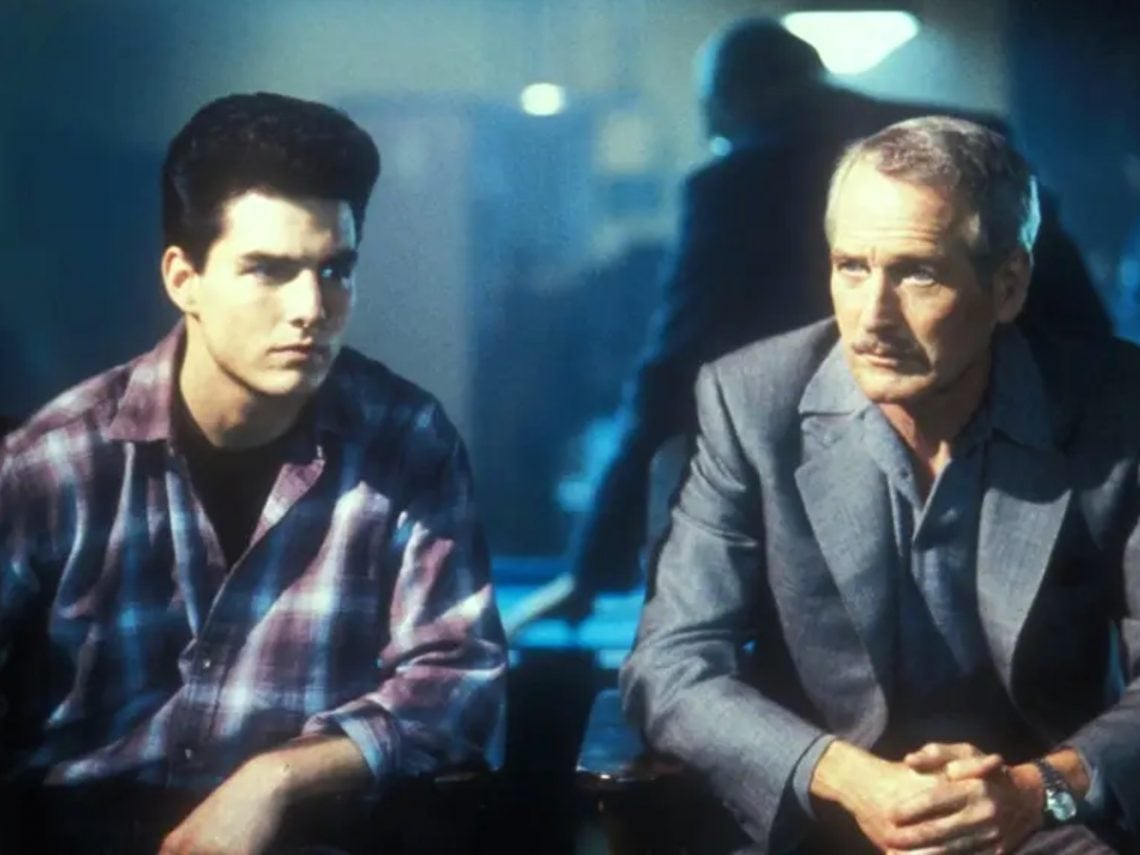
The movie that inspired ‘The Color of Money’, Martin Scorsese’s only sports film

One of the best directors in the business making a legacy sequel to somebody else’s movie is a strange proposition, albeit one that makes a lot more sense knowing that Martin Scorsese was influenced by a lot more than just The Hustler when he began crafting The Color of Money.
25 years previously in 1961’s forebear, Paul Newman displayed effortless cool and natural charisma as ‘Fast’ Eddie Felson, earning a ‘Best Actor’ nomination at the Academy Awards for his trouble. In fact, director Robert Rossen’s original was an all-around heavyweight during awards season, landing an additional seven nods, including ‘Best Picture’, winning two for its art direction and cinematography.
That only heaped more pressure upon The Color of Money to succeed even with a filmmaker as distinguished as Scorsese at the helm, but the focus was always on telling a different type of story. A quarter of a century later and Newman was embracing the part of a respected veteran on hand to imbue any project with his effortless gravitas, but he needed a rising star to play off against.
Fortunately, Scorsese had drafted in the single fastest-rising youngster in all of Hollywood to provide it, with The Color of Money releasing just months after Tom Cruise had cracked the A-list by headlining Tony Scott’s Top Gun. Individually, they were great, but together, the central pairing was electric.
The second time around, Fast Eddie teaches Cruise’s Vincent Lauria the tricks of the trade, but the cocky youngster thinks he’s more than capable of scamming in his own way. As the sports drama tends to do, the former friends end up becoming rivals, with things reaching a head in a nine-ball showdown where much more than pride and bragging rights are at stake.
As one of the most scholarly cinephiles in the industry, there was never any danger of Scorsese eying The Color of Money as a straightforward and simple sequel. Instead, he cast his gaze towards one of the classics he holds in the highest regard, naming writer and director Dino Risi’s Il Sorpasso as an important touchstone.
The bushy-browed icon named it as the perfect companion piece to his pool hall story on Letterboxd, through their shared similarity of having a narrative that follows “the relationship of the mentor and the untutored youth corrupted along the way,” with Scorsese describing Il Sorpasso as “the model”.
In the 1962 Italian feature, the protagonists are an introverted law student and a middle-aged man driving a convertible, who end up striking up a firm friendship after their initial encounter and heading off on a road trip together. Bonds are formed, tensions are raised, and a schism forms between them eventually, all lifted liberally from Il Sorpasso and parachuted right into the thick of The Color of Money, which justified its existence as a follow-up to a great that was more than worthy in its own right.
