


Understanding how and why the movie industry started in New Jersey

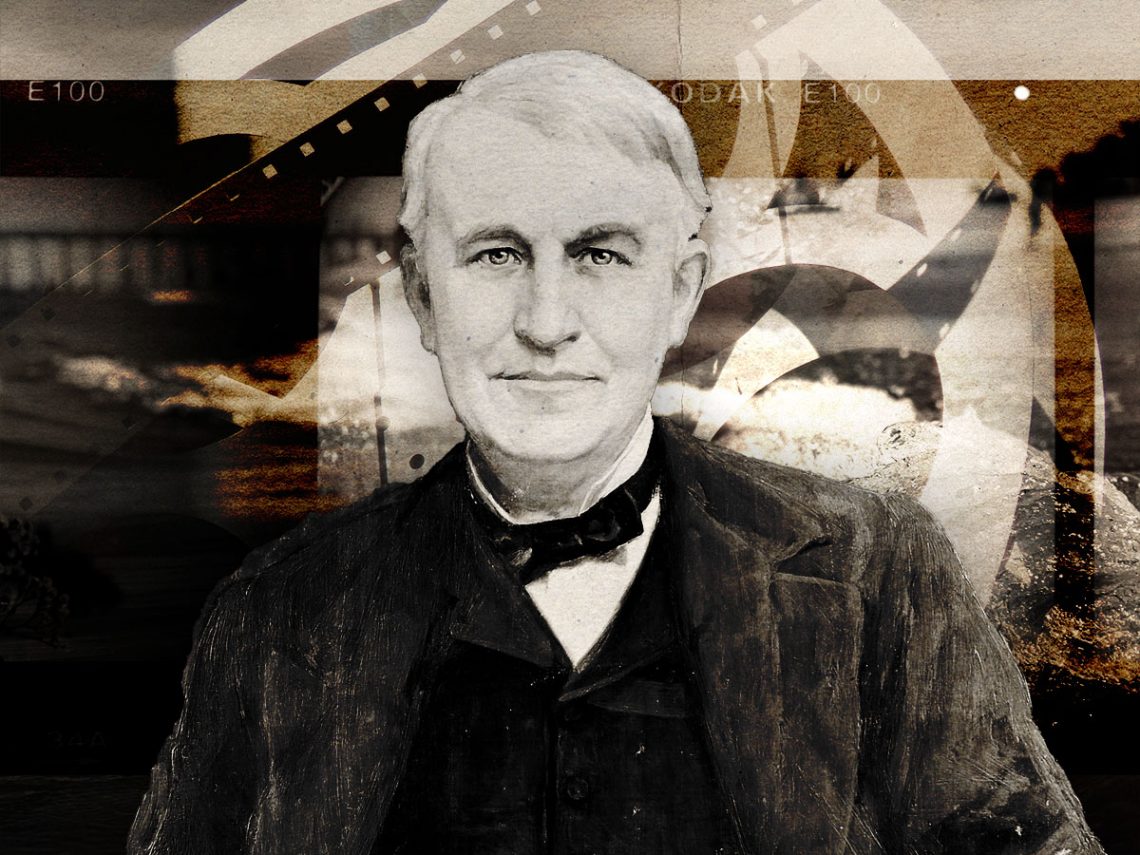
While we primarily associate the film industry – its birth and history – with Hollywood, the truth is that before Hollywood’s rise to power, New Jersey had actually been the world’s movie capital. New Jersey’s original claim to the cinematic throne comes from none other than the inventor Thomas Edison.
Right at the end of the 19th Century, Edison had been working on motion picture technology. In his West Orange, New Jersey laboratory, Edison, assisted by William Kennedy Laurie Dickinson, invented the first ever film viewer and film camera. The camera, known then as a kinetograph, took its name from the Greek word kineto, which means movement.
Professor of cinema studies at Rutgers University, Richard Koszarski, explained that Edison’s camera was “the only fully operational motion picture studio facility in the world.” Koszarski claimed, in an interview with Variety, that while several production spaces were being set up over the river in New York, the problem was that it was difficult to film there as “they didn’t have very good artificial lights” nor much natural skylight.
By contrast, New Jersey had far more open space, which not only allowed for more natural light but also meant that equipment could be easily stored. With the filming equipment sorted, all that was required was a space to film in. This is where the Kinetographic Theater – better known as the Black Maria – came into play.
The theatre’s roof was left open as only sunlight was strong enough to let the cameras capture images on its film correctly. The entire theatre also had the ability to rotate so that it could stay in line with the sun. In 1894, 75 films were made at the Black Maria; most of them were around 20 seconds long, and all were black-and-white and silent. Even the interiors of the 1903 film The Great Train Robbery were shot at the Black Maria.
Eventually, better-equipped studios sprang up, including the first permanent studio, Champion Studio, in 1910. A few years later, all major production companies had a studio in New Jersey. The business was well and truly booming; even the Marx Brothers were filming there.
However, by the time World War I rolled around, combined with the 1918 flu pandemic, the industry had moved elsewhere, mainly to California, with its constant hot weather, plus the expansive, spacious areas that New Jersey had promised some decades prior. So the film industry essentially moved to Los Angeles, while the improved filming equipment meant that shooting was easier in New York. Yet, for one time, New Jersey was the king of the industry.
