


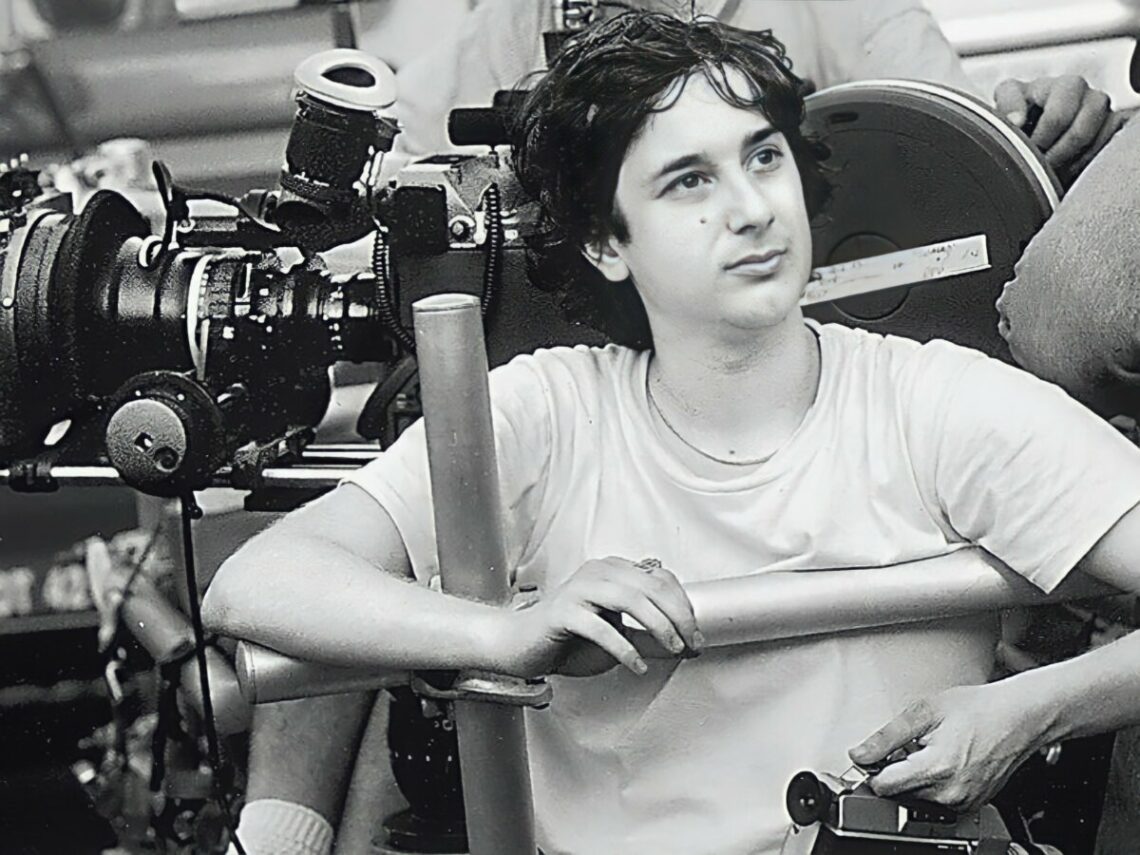
The one movie Harmony Korine considers to be “next level”

Of all the contemporary directors who have consistently and relentlessly pushed boundaries, Harmony Korine reigns supreme. The maverick auteur behind an assortment of eccentric, outlandish, and undeniably distinctive films, Korine has built a career on his commitment to the unconventional, arguably making him one of the most intriguing directors of his generation.
Born in Bolinas, California, Korine made his entry into the film industry as a screenwriter for Larry Clark’s critically acclaimed Kids in 1995 – but it was with his 1997 directorial debut Gummo that cemented his place in the cinematic landscape. Immediately mastering his utterly bizarre and unique brand of storytelling, Korine’s first film questioned the very concept of narrative form, giving us a fragmented and episodic portrait of a backwater town ravaged by a tornado.
Korine’s art-house sensibilities and non-linear storytelling have become his signature style and define almost all of his filmography, particularly with Julien Donkey-Boy two years later and Trash Humpers in 2009. Spring Breakers, featuring performances from high-profile stars like James Franco and Selena Gomez, marked a notable shift towards the mainstream for Korine, leaning much more into a conventional narrative and garnering significant attention from critics and audiences alike.
Most recently, Korine returned with the admirable, if not tonally inconsistent, The Beach Bum in 2019, starring Matthew McConaughey as a pot-smoking, free-wheeling poet named Moondog. It was a love letter to burnouts and hedonism, further showcasing Korine’s unique brand of storytelling whilst also alerting die-hard Korine fans that the director was perhaps beginning a more theatre-friendly chapter in his filmmaking career.
Given Korine’s penchant for avant-garde cinema, his admiration should lie with a film that falls nothing short of “next level”, according to the director himself in an interview with Rotten Tomatoes. That film is the severely divisive and sexually explicit Battle in Heaven, directed by Carlos Reygadas – a filmmaker equally known for his exploratory narratives and philosophical reflections – and undoubtedly a kindred spirit of Korine’s.
Reygadas presents a profoundly intimate yet unflinching exploration of sex, guilt, and redemption through the life of its central character, Marcos. The film stirred controversy upon its release, mainly due to its explicit sexual content and depiction of infanticide, but has since been celebrated for its hauntingly beautiful visual aesthetic and thought-provoking themes, much in the same way that Korine had a critical evaluation by mainstream audiences in the early 2000s.
Reygadas, like Korine, is a director with a knack for challenging conventions and subjecting audiences to extremely unsettling imagery. An arthouse powerhouse, the Mexican director’s work tends to subvert standard cinematic norms and resonate with profound existential themes, and his follow-up in 2007, Silent Night, continued this approach to filmmaking but presented in a much more palatable way that saw recognition from Cannes and approval from Martin Scorsese. Battle in Heaven, however, remains Reygadas’ most unflinching and powerful work, and it stands proud as a benchmark in contemporary arthouse cinema.
When Harmony Korine calls a film “next level”, it’s worth noting. Given his unorthodox approach to narrative, his love for almost otherwordly characters and his general affinity for the freaky and extraordinary, his praise for Battle in Heaven feels wholly appropriate. For Korine and Reygadas, the status quo is there to be questioned, norms are there to be defied, and cinema, in its purest form, is a platform for unfiltered and authentic expression.
