


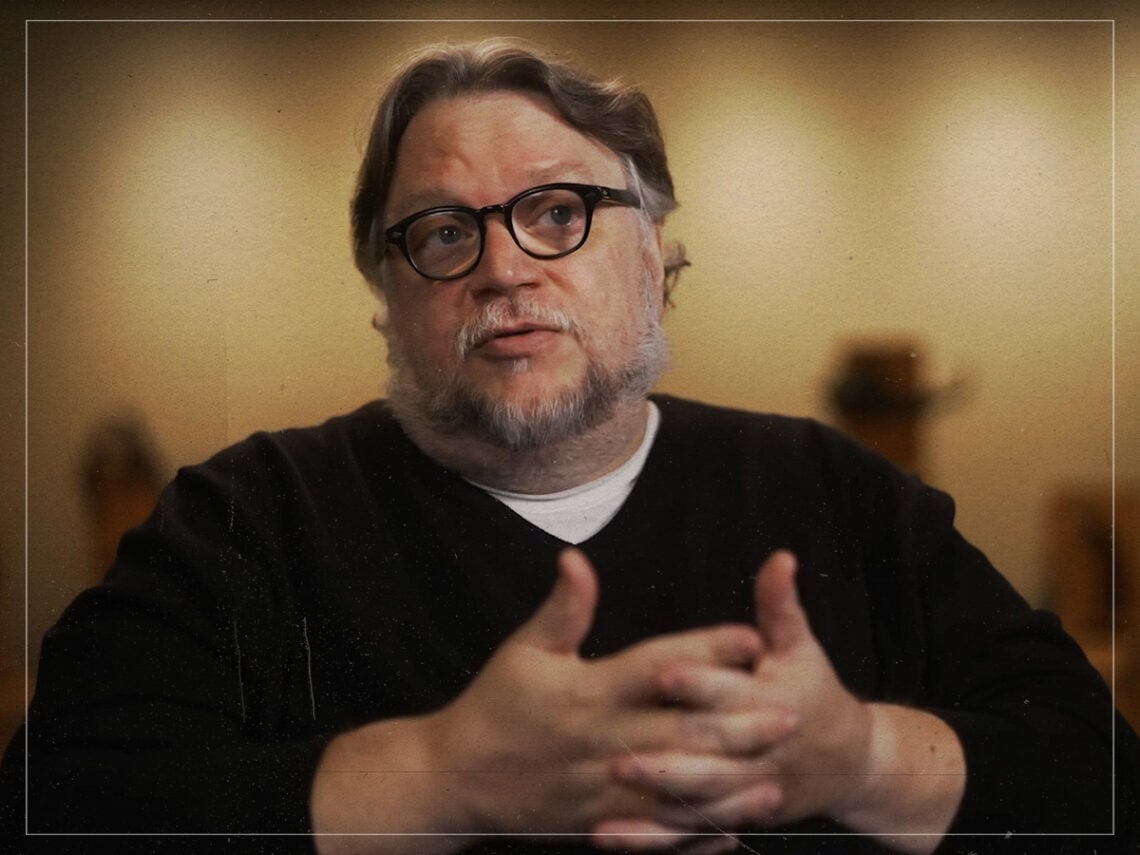
The huge 2005 movie Guillermo del Toro refused to direct on religious grounds: “I’m not trying to sell you into a point”

You could fill most of a phonebook with the names of the movies that Guillermo del Toro could have directed but didn’t, although there was only one of them that he refused on religious grounds.
The filmmaker has admitted that he’s dedicated over a decade of his career to projects that never came to fruition, but that hasn’t stopped him from being prolific, even if some of those films that he either abandoned or turned down could have turned out to be pretty spectacular.
For the most part, he doesn’t have any regrets about the what-ifs that have defined his downtime between pictures, although there are exceptions to the rule. At the Mountains of Madness is the most famous by far, with del Toro trying and failing to move heaven and earth to make it happen for years.
As for the ones that were eventually helmed by somebody else, the missed opportunity to direct a Harry Potter flick is the one that sticks in his craw the most, so much so that he was affronted when his friend and fellow ‘Three Amigo’ Alfonso Cuarón initially scoffed at his offer to direct The Prisoner of Azkaban.
Right in the middle of Potter’s eight-film run, del Toro could have helmed another fantastical literary adaptation of its own, one that looked poised to give Daniel Radcliffe’s bespectacled wizard a run for his money at the box office, only for the wheels to begin creaking before they ultimately fell off three instalments deep.
With Andrew Adamson in the director’s chair, The Chronicles of Narnia: The Lion, the Witch and the Wardrobe hoovered up almost three-quarters of a billion dollars at the box office, earning three Academy Award nominations for its technical merits. It was a solid enough fantasy blockbuster, but you’d imagine it would have been a damn sight better were del Toro in charge.
However, despite being raised as a devout Catholic and incorporating plenty of religious and spiritual imagery into his work, del Toro has described his adult self as “very lapsed.” He enjoyed CS Lewis’ work as a child, before subsequently calling the author “too Catholic for me,” summarising his writing as “not something as an adult I can feel comfortable relating to,” which is ironic, because he wasn’t a Catholic.


Of course, in The Lion, the Witch and the Wardrobe, Aslan the lion is basically Jesus, who sacrifices himself and gets resurrected. It wasn’t a storyline he could envision himself taking on as someone whose faith isn’t what it used to be, but he found a more than suitable compromise, since he made Pan’s Labyrinth instead.
“I’m not proselytizing anything about a lion resurrecting. I’m not trying to sell you into a point. I’m just doing a little parable about disobedience and choice,” the three-time Oscar winner explained at the time. “This is my version of that universe, not only Narnia, but that universe of children’s literature.” Adamson’s movie may have made a lot more money, but del Toro’s was infinitely better, so he made the right call.
