


Bob Dylan’s most overrated classic album: “We peaked five minutes ago”

Why is Bob Dylan the greatest songwriter of all time?
Or perhaps you might even ask, why is Bob Dylan the greatest artist of all time? Both are valid questions, and the answers are myriad, but chief among them is the sense of vitalised and timeless transcendence that distends throughout the best of his work.
His poetry is astounding, but there have been plenty of other great poets. His melodies beguile with graceful ease, but the same can be said for The Beatles. The bite to his stabbing delivery was revolutionary but in a comparable manner to The Kinks. Joni Mitchell was just as elevated. And there’s greater depth to a Nina Simone arrangement.
But did any of their words spear the zeitgeist in the manner of ‘Like a Rolling Stone’? Did any of them kickstart a genuine revolution, the sort the FBI would actively try to neutralise, quite like ‘Masters of War’? Did any of them prompt 250,000 upstanding citizens to march on Washington as ‘Blowin’ in the Wind’ did? No. That is why Dylan is the greatest.
He didn’t just write great songs, he wrote songs that mattered. And he wrote them before we knew what songs that mattered even sounded like. With a wicked and revolutionary wit, he rolled off the pages of Jack Kerouac’s classic novel On The Road and continued the writer’s revitalisation of the timeless folk tradition of capturing culture on the wing.

Dylan gazed deep into the world around him and bore it into blood-dripping songs cobbled together on a shoestring budget of three chords, a coat he borrowed from James Dean, and a voice that came from you and me. Without the slightest credentials to be a star, the enigmatic and surly original vagabond stepped out from the shadows of old, weird America’s cultural past and suddenly found himself captivating an audience of millions in a new, visceral and electrifying way.
His peers were all stirred up by his unruly presence, and the median word amid the monument of praise that they all piled up for him was depth. From John Lennon to David Bowie, a legion of stars cited Dylan as the turning point in pop. He represented the moment when they knew sub-three-minute ditties about holding hands were a thing of the past in a world that needed heroes with things to say.
So, it was only natural that a keen mind like Dylan saw fit to give the world its first double album. Blonde on Blonde was a bold statement that defied the conventions of needing hits for the radio. It was so costly to produce that it even defied the convention that the work of a popular artist is done for cash. Without these bold moves, we might not have had plenty of alternative culture that followed on from this Promethean venture.
In this regard, it would’ve been another great artistic leap forward from Dylan, even if the songs backfired, with the concept alone illuminating a brighter future for pop. Thankfully, they don’t.
There’s the forever misunderstood ‘Just Like a Woman’, the sultry swoon of ‘I Want You’, the liberating madness of ‘Rainy Day Woman #12 & 35’, the unprecedented 11-minute declaration of love that is ‘Sad Eyed Lady of the Lowlands’, ‘Visions of Johanna’, and the song The Rolling Stones wish they had written, ‘Stuck Inside of Mobile…’ In fact, every track is creditable. Some of the songs are even close to magnificent.
But it isn’t magnificent songs that make Dylan what he is. Interpol have written some magnificent songs. Gang of Four have released ground-breaking albums. But how many people have heard them? Modern culture is made up of great works that matter not to the masses. Greatness has continued to abound in the years following the folk icon’s pomp, but none of these great works could come up to the ankles of Dylan’s tower of influence. That ability to grap society’s lapels and drag it somewhere new is an unrivaled skill.
You could put that down to timing. It is, after all, convenient to be a political, folk songwriter with a penchant for the radical who arrives on the scene shortly after a president’s head was blown off and the phrase ‘nothing new under the sun’ wasn’t even thought of. But the truth is, Dylan didn’t just arrive at the right time; he defined the times before the fact.
That much is evidenced on many of the records that came before Blonde on Blonde. Even now, there’s a wallop of bone-chilling awe brought about when he growls, “And I hope that you die, and your death will come soon.” There’s also awe induced by ‘Visions of Johanna’, but it’s not as discernibly different from the wonder conjured by other great love songs as ‘Masters of War’ is within the realm of protest music.
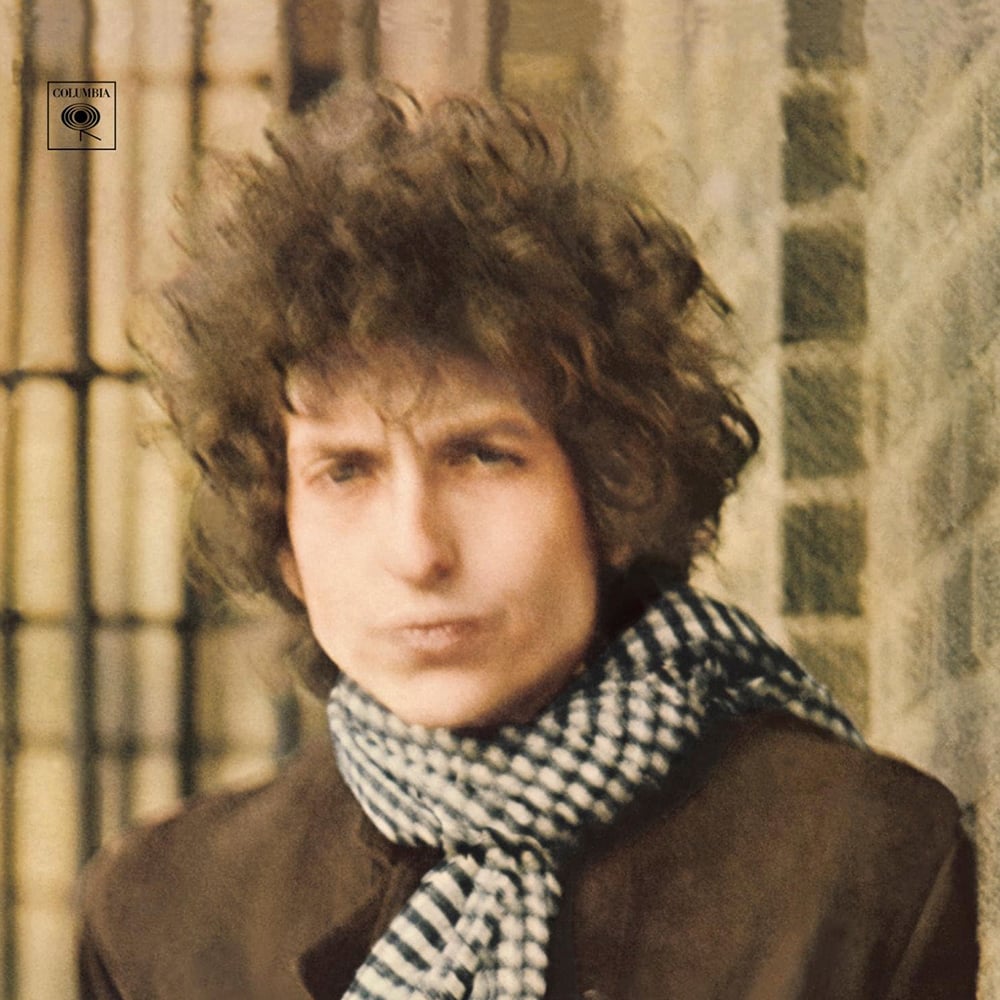
Highway 61 was a lightning rod, illuminating the possibilities of a heady age on the brink of ‘something’ and crucifying its damned contradictions that hamstrung that fabled ‘something’ from ever reaching fevered fruition. Does Blonde on Blonde do that? What is the throughline to the record beyond a verbose artist in the midst of a breakup with a few funky off-cuts to throw in to fulfil the promise of a ‘groundbreaking’ double album?
Sure, ‘Just Like a Woman’ is great, but does it say much more than ‘Don’t Think Twice, It’s All Right’ already did? In fact, if the songs weren’t so good and it didn’t arrive quite so hot on the heels of Highway 61 and Bringing It All Back Home to be clobbered in as an electric trilogy, it might be seen as the beginning of Dylan’s self-imposed regression from the frontline of culture.
Within the state of retreat, Dylan stammered as he still attempted to retain a defined sense of purpose, and there’s undoubtedly a wavering to be found on the record. While this might have suited his subsequent live sound perfectly – something that seems pivotal right up to this day when you see him perform – even he seemed to acknowledge that there was a level of uncertainty creeping in.
With the extended runtime of the record and elongated tracks to match, he retrospectively worried that it was all “too much and not enough.” He told Paul Zollo, “A lot of my songs strike me that way.” While you could never accuse Blonde on Blonde of not being enough, there’s a touch of evidence from the searing ensemble band he had assembled at the time, that it often verged on being too much.
As the drummer Kenny Buttrey told Clinton Heylin regarding ‘Sad Eyes Lady’, “If you notice that record, that thing after like the second chorus starts building and building like crazy, and everybody’s just peaking it up ’cause we thought, Man, this is it … This is gonna be the last chorus and we’ve gotta put everything into it we can. And he played another harmonica solo and went back down to another verse and the dynamics had to drop back down to a verse kind of feel.”
He adds, “After about ten minutes of this thing, we’re cracking up at each other, at what we were doing. I mean, we peaked five minutes ago. Where do we go from here?” It’s still an amazing track, but you don’t ask that when the declaration of love comes to a close on ‘She Belongs to Me’ in two minutes flat. And I firmly think that in 100 years time, when people listen back to that track, they may well say, ‘Where were me meant to go from there?’ Hell hath no fury like Dylan’s pen scorned, and at his finest, he yields that wrath to put the world to rights with blood, ink and a voice of sand and glue. Or else he retreats in the beauty of ‘simple life’ introspection and breezes through mellow masterpieces like New Morning.
It seems Blonde on Blonde finds itself somewhere between these two poles, the best of both worlds, but the defining might of neither. It’s certainly a classic, but when it is lodged as ‘the classic’ it often feels like that’s just because it is the culmination of praise he had rightfully built up.

Never Miss A Tale
The Far Out Bob Dylan Newsletter
All the latest stories about Bob Dylan from the independent voice of culture.
Straight to your inbox.