


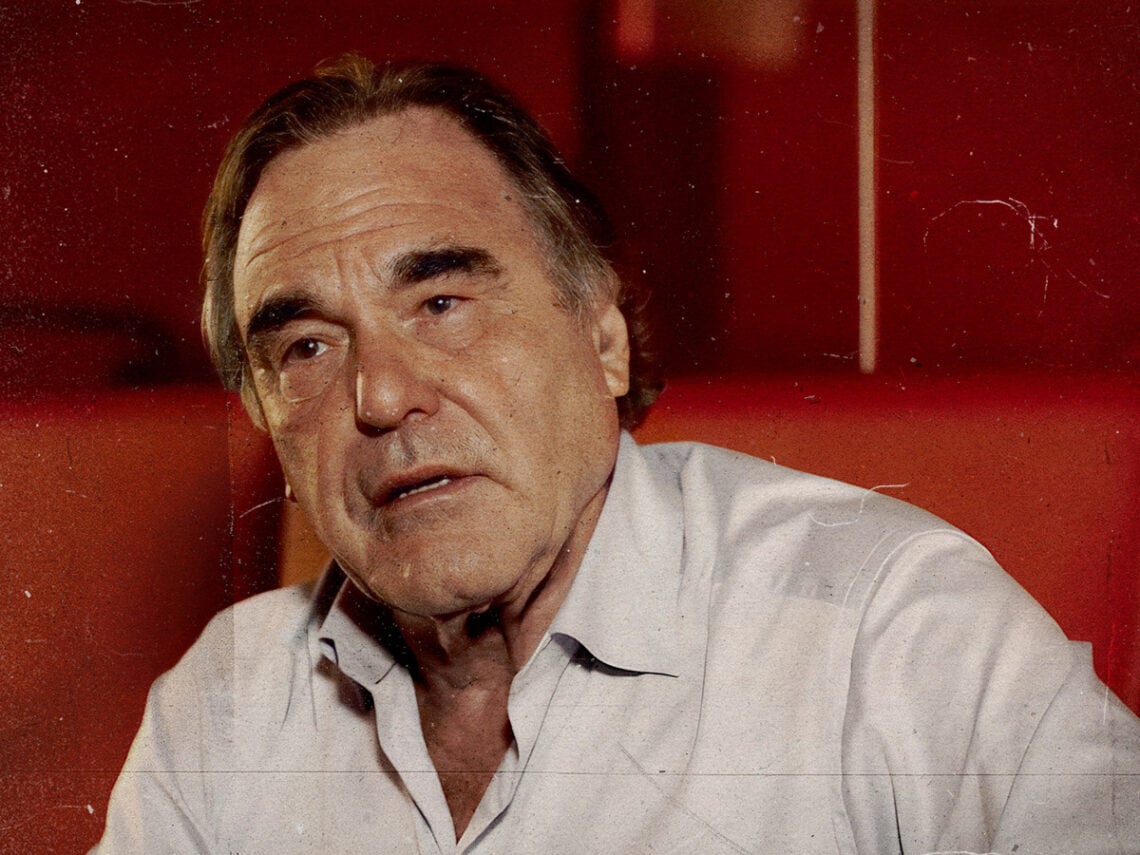
Oliver Stone picks the most hated film of all time: “No movie in the history of pictures took more flak”

Oliver Stone lives for the drama. The acclaimed filmmaker can seemingly never decide if he wants to achieve greatness or infamy. He’s a two-time Oscar ‘Best Director’ winner, having scooped the illustrious prize for both Platoon and Born on the Fourth of July. Then there are his films tackling real-life tragedies such as the September 11th terrorist attacks and Edward Snowden’s NSA leak, not to mention his worryingly positive view of Vladimir Putin and the Russian regime.
This is the man who once apologised to the entire country of Turkey for how he portrayed the nation in his screenplay for Midnight Express. Then there’s all the controversy surrounding his 1994 picture Natural Born Killers, which was accused of glorifying and glamorising mass murder. Neither of these films is the director’s most controversial work, not according to the man himself anyway.
It’s fashionable to hate my movies,” Stone told the Irish Examiner before adding, “No movie in the history of pictures took more flak than JFK.” Stone is, of course, referring to his 1991 historical drama, which reframed certain elements of John F Kennedy’s assassination and lent credibility to some of the conspiracy theories surrounding this world-changing event.
“I was trying to do my best to give an alternative version of what I thought might have happened,” he clarified, “It wasn’t understood.”
Starring Kevin Costner as Jim Garrison, a district attorney who becomes convinced there is more to the killing than meets the eye, JFK is over three hours long and was a massive passion project for the incendiary auteur. Stone met the real Garrison and apparently grilled him for over three hours on various aspects of the case. Even though he wasn’t fully onboard with the former DA and his methods, he still wanted to explore one of the most famous assassinations of all time through a unique lens. He also based some parts of his movie on Garrison’s book, On the Trail of Assassins, which, when word got out, caused issues before he’d even filmed a single frame.
Garrison was not an overly respected figure at the time, which led to the press blasting Stone for entertaining the possibility of working with him. Time ran a hit piece on the film while it was still being made, claiming that Stone was attempting to undermine the release of another JFK film that was due to come out around the same time. The director was forced to go on a full-charm offensive to convince people his movie was worth watching.
When the chips were down, however, Stone came out on top. JFK made over $200million on a $40m budget and was nominated for eight Oscars, winning two of them. Alas, it wasn’t all good news. With increased interest in conspiracy theories in a post-Trump America, particularly those surrounding President Kennedy’s death, some critics have accused the movie of being a genesis point for a generation of dangerous sceptics.
In a completely objective sense, JFK is a very important movie. It is still being heavily discussed over three decades after its release, which isn’t something most directors can boast about their work. Its reputation is constantly in flux. Who knows how it will be viewed in another 30 years’ time?
