


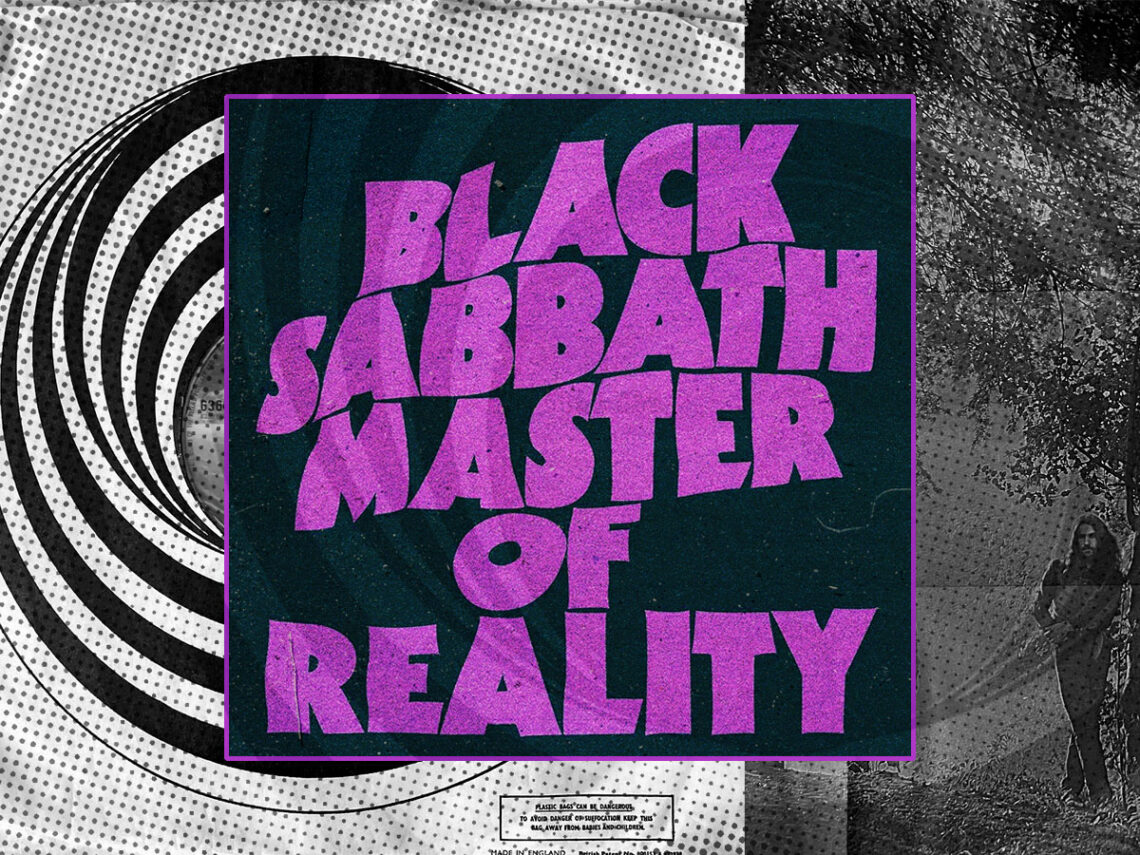
The monumental impact of Black Sabbath album ‘Master of Reality’

Whilst the debate surrounding the best Black Sabbath album will rage on ad infinitum, the one record that takes the crown for having the biggest impact on popular culture is undoubtedly 1971’s Master of Reality. It was the moment that the stars aligned for the quartet. After writing two classic albums in quick succession, 1970’s self-titled debut and Paranoid, the band found their creative footing, took more time in the studio to experiment, and created a masterpiece.
Whilst the first five Sabbath albums are all brilliant in their own ways, Master of Reality has managed to retain a higher cultural value than the others. Much of the album’s power comes from the group taking proceedings up a level by sheer ingenuity and, as is always the case in such stories, a tiny bit of luck. The most notable example of this is that Tony Iommi downtuned his guitar one-and-a-half steps on some of its most impactful tracks, ‘Children of the Grave’, ‘Lord of This World’, and ‘Into the Void’.
Whilst he did this to loosen the strings and make playing less painful on his fingers, it thickened the sound, creating a swollen mass of air that proved incredibly pioneering for the time. Augmenting proceedings, bassist Geezer Butler did the same, and together, things started to get really heavy. Ballasted by the thunderous, jazz-inflected drumming of Bill Ward and Osbourne’s undoubted excellence as a vocalist on the album, the group moved into the area they had teased on their previous two studio offerings with Master of Reality. Of course, a hefty quantity of their favourite sweet leaf also had an influence.
Explaining what went down in the studio to make Master of Reality such a sonic behemoth, Bill Ward told Metal Hammer in 2016: “On the first album, we had two days to do everything, and not much more time for Paranoid. But now we could take our time, and try out different things. We all embraced the opportunity: Tony threw in classical guitar parts, Geezer’s bass was virtually doubled in power, I went for bigger bass drums, also experimenting with overdubs. And Ozzy was so much better. But this was the first time when we didn’t have gigs booked in, and could just focus on making the album a landmark.” There’s no surprise, then, that Ward has gone on record to say that the 1971 album was his favourite to make with Black Sabbath.
Writing in his autobiography, I Am Ozzy, Osbourne provides a comical account of recording Master of Reality. He says he can’t remember much about the studio sessions “apart from the fact that Tony detuned his guitar to make it easier to play, Geezer wrote ‘Sweet Leaf’ about all the dope we’d been smoking, and ‘Children of the Grave’ was the most kick-ass song we’d ever recorded.”
A classic album in every sense, Master of Reality greatly impacted music’s development. Not only did the downtuning of guitars provide all heavy music with its basis moving forward – the importance of which cannot be understated – it also directly inspired a host of majorly influential acts and various genres.
The usual exhibit is that it had a defining impact on the emergence of stoner rock and desert rock in the 1990s, with Kyuss, Monster Magnet and Orange Goblin notable adherents. Via Kyuss, it also means that guitarist Josh Homme’s subsequent band, the globally successful Queens of the Stone Age, would not have come to fruition without the sludgy sounds of Iommi, Butler and Sabbath. It was also through Homme that Arctic Monkeys repackaged the might of 1971’s Black Sabbath on 2013’s AM, the album that saw them break America. In addition to the sonics and the band openly citing Sabbath as influences, one only needs to glance at the similarities in the Sheffield band’s logo and the font on the cover of Master of Reality to know how true this point is.
Following this, the album was also instrumental in the establishment of stoner and doom metal genres, with Californian heroes Sleep massively indebted to the West Midlands band’s sound on the 1971 record, with their unwavering, hypnotic grooves propagated by Master of Reality. The trio have made no bones about their love of Sabbath either, and their 2018 album, The Sciences, contains multiple references to its inspiration. Tony Iommi is mentioned in the reverberating sorcery of ‘Marijuanaut’s Theme’, and the track ‘Giza Butler’ is an open play on the names of the Egyptian city of Giza and Geezer Butler.
Master of Reality also had a tremendous impact in more nuanced ways. Its influence on grunge bands is also undeniable, particularly through the heavy, blues-based twists of The Smashing Pumpkins, Alice in Chains, Soundgarden, and, less so, Nirvana. By proxy, there’s also an argument that there would be no proto-grungers Melvins without this album, with Buzz Osborne’s viscous guitar work another stylistic relative of Iommi’s.
Demonstrating the impact the 1971 offering had on The Smashing Pumpkins, when listing the albums that changed his life for Melody Maker in 1993, frontman and guitarist Billy Corgan said it “spawned grunge.”
He added: “This changed the way I thought when I was eight years old. I’d picked it up from my uncle. The album looked so cool with it’s dark evil colour and purple writing. I put it on and listened to it’s stupid Ozzy intro and it sounded so heavy.”
Corgan continued: “OK, the lyrics are pretty hit or miss. ‘Sweet Leaf’ is their bad ode to pot and never has a man rhymed ‘insane’ with ‘brain’ so many times. But the music is amazing. It spawned grunge. Unfortunately. A lot of bands wouldn’t admit to its influence, I guess because of the satanic connection.”
No other album in Black Sabbath’s oeuvre can claim to have had such a widespread effect on music and popular culture as much as Master of Reality. The examples mentioned are only the tip of the iceberg too; we haven’t even mentioned its influence on alternative metal.
