


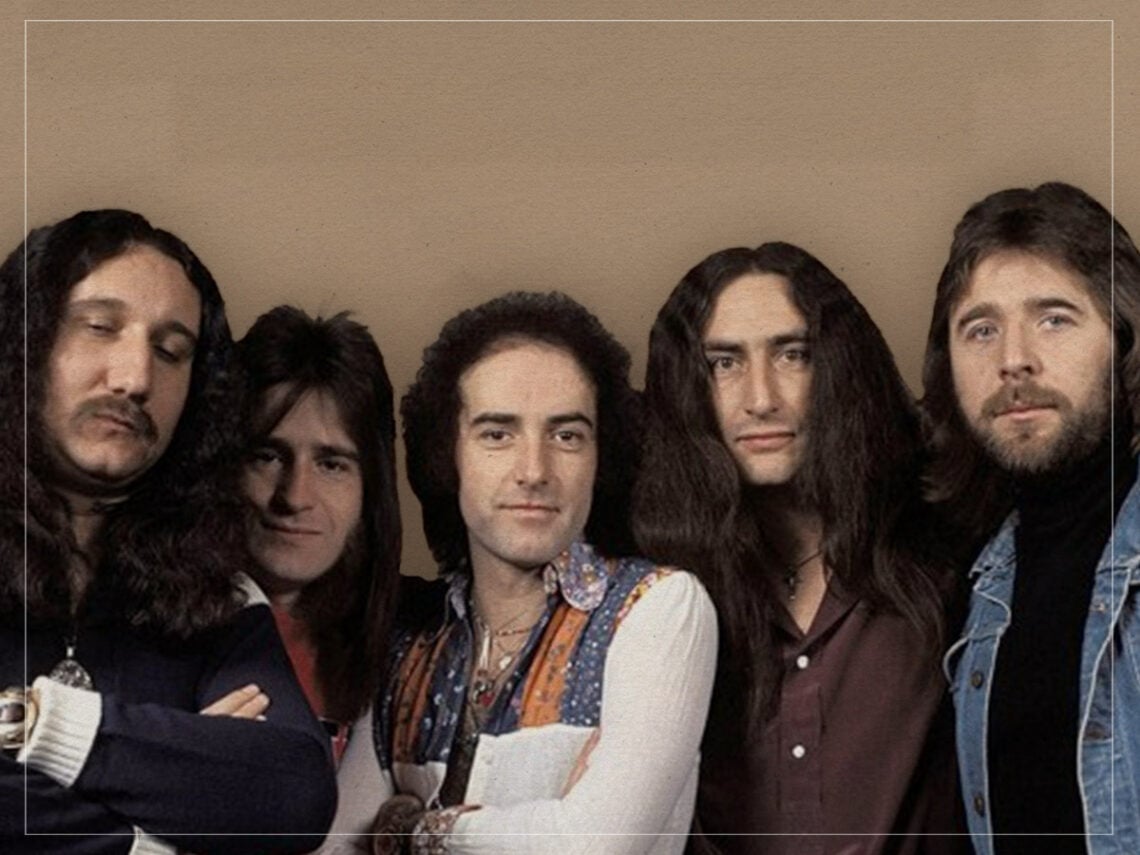
“Kicked and screamed”: The tragic moment Uriah Heep were forced to sack David Byron

It takes a lot for a rock band to become a global success. Uriah Heep had everything they needed, but the familiar haunt of rock ‘n’ roll lifestyle made their 1970s streak harder than most.
The band did more for the ’70s rock scene than most will likely ever know. From their debut, it was clear this wasn’t a group that simply wanted to stay in their lane, nor did they care for reinventing the wheel.
Their sound was heavy and guitar-driven, fitting in with many of the traditional tropes permeating the space at the time. But there was also something more theatrical about it, more diverse and innovative in its arrangements and in David Byron’s vocals. Over the course of their first few records, Uriah Heep was a product of their own internal chemistry, a force that gave listeners more than enough to sink their teeth into with a simple enthusiasm behind the scenes.
With Demons and Wizards, for instance, there was much to analyse and romanticise about the fantastical references they injected into their metal sound. But there was also a more direct approach present, one rooted in the simplicity of enjoying what they were doing and taking their success as a bonus. As Ken Hensley later said, it was “just a collection of our songs that we had a good time recording”.
There’s a lot of that straightforward appeal through most of their material. It’s also what made their live performances so good. They really did tick all boxes, their chemistry a cherry on top of the cake that made their rise so insatiable to begin with. But beyond that, they also experienced many of the frictions most rock and metal bands endure at some point during their reign. And many centred around the issue of drug and alcohol abuse.
After all, behind the sheen of the empire were disagreements exacerbated by drug use and another mounting issue that surfaced in the form of Byron’s alcoholism. During one specific performance in 1975, these issues came to the surface a little more unexpectedly during a show at Philadelphia’s Spectrum arena.
The years leading up to this were intense for Uriah Heep, mostly for good reasons. But the pressures and contradictions came with High and Mighty, Heep’s ninth and arguably most divisive record. To rub salt in the wound, Byron’s presence on stage was becoming a point of contention. And in ‘75, in his then-familiar intoxicated state, he told the audience to “fuck off” after misinterpreting their sounds for laughter.
Recalling the moment much later, the band’s long-standing and trusty member, Mick Box, still grimaces whenever he thinks back to that moment. “I was tuning my guitar at the time and couldn’t bring myself to turn around and face the audience,” he told Louder. Hensley feels similarly, saying, “When your lead singer curses out an entire audience what do you do? He was pissing my career down the toilet as well as his own.”
The worst part, for the remaining members, was that Byron seemed a lost cause. He didn’t want help, and would seemingly act out whenever the subject was brought up. Lee Kerslake also said he once “slapped me around the face, kicked and screamed at me.” On top of the stress was also a genuine concern that he was costing the band, so in the end, they made the decision to fire him, no longer able to coast along when they knew it would all end in disaster.
