


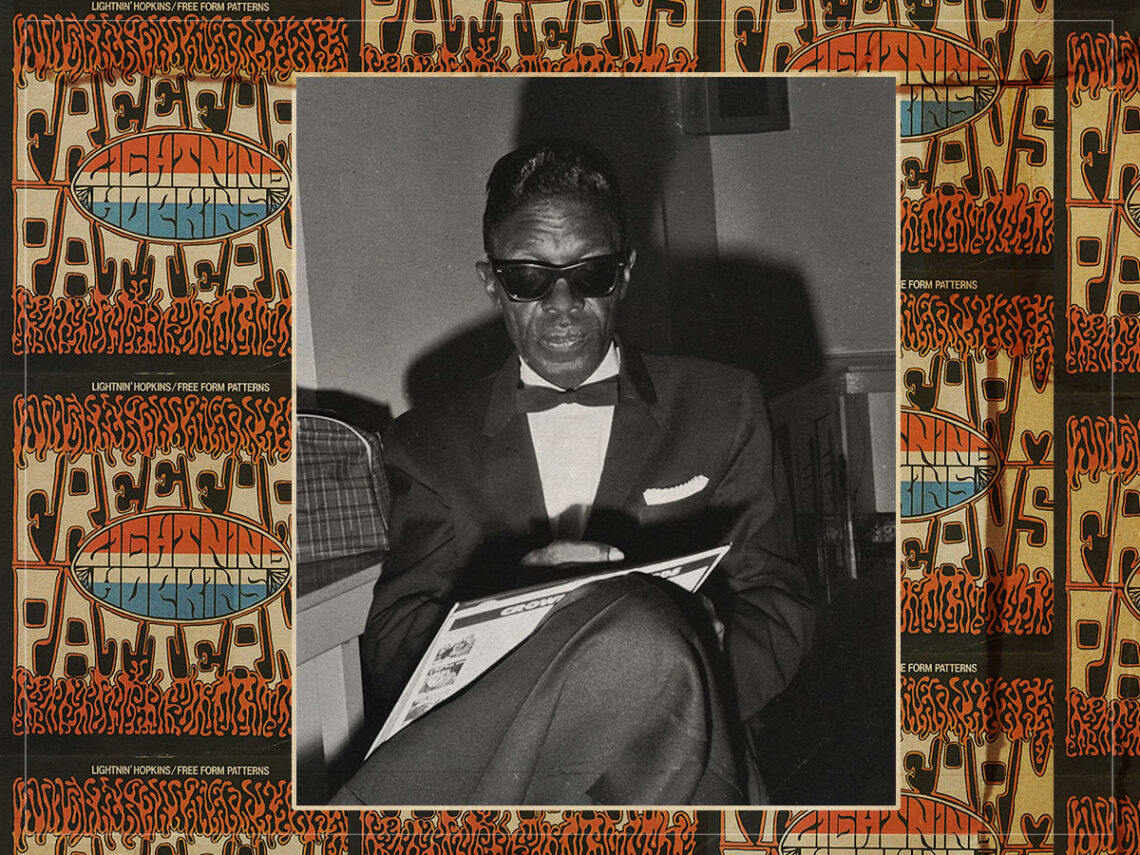
‘Free Form Patterns’: the moment Lightnin’ Hopkins made blues go psychedelic

Blues is the seed from which so many beloved music genres and artists blossomed. From its roots in 19th-century America, the distinctive and timeless sounds of blues have inspired countless songwriters over the centuries, from those first few rock and roll stars to modern experimentalists. The 1960s were a particularly transformative period for blues music, as a handful of artists attempted to bridge the gap between old-school blues and the ever-expanding new generation of psychedelic rockers.
For many blues purists, the advent of psychedelic rock was akin to treason. This sacred style that had been passed through generations of artists in America was suddenly being hijacked by a generation of acid-riddled hippies. However, one blues artist who recognised the power of this mind-altering rock, rather than shunning the style as a bastardisation of blues, was Samuel Hopkins, or Lightnin’ Hopkins to you and me.
With a truly legendary career in blues music stretching back to his childhood in the 1920s, Hopkins’ distinctive guitar stylings, gravelly vocal delivery, and repertoire of groundbreaking blues lyrics made him a defining figure in American blues for multiple generations. It was during the 1940s and 1950s that Hopkins first began making an impact on widespread audiences in the US, amassing a cult following among blues devotees, but it was in the 1960s that mainstream attention was placed on Hopkins.
In addition to performing alongside the likes of Pete Seeger and Joan Baez during the early part of the decade, Hopkins continued to write and record new material throughout the decade. While mainstream audiences were largely concerned with the blues-inspired British invasion rock or the ‘peace and love’ hippiedom which followed, Hopkins remained devoted to his traditional style of blues.
That was until 1968, at the peak of America’s psychedelic exploration, when Hopkins began working on his revolutionary Free Form Patterns album. Upon initial listening, you would be forgiven for viewing the album as yet another collection of Hopkins’ usual blues explorations. However, if you listen a little deeper, you might recognise the subtle influences of psychedelic rock within the album’s grooves.
This influence was certainly no mistake. When recruiting his backing band for the record, Hopkins called upon the rhythm section of psychedelic masters The 13th Floor Elevators. Hailing from Austin, Texas, the revolutionary psych-rock outfit unleashed their groundbreaking debut album in 1966, helping to usher in an age of psychedelic exploration which would give rise to groups like Jefferson Airplane, The Doors, and Big Brothers and the Holding Company.
So, when Hopkins recruited the band’s rhythm section for Free Form Patterns, he effectively imbued his classic blues style with all the trimmings of this vibrant psychedelic exploration. While these influences are often hidden beneath the surface of the album, Hopkins’ open adoption of these psychedelic influences only added to his legendary reputation within blues circles. As opposed to many of his contemporaries, the Texan songwriter showed a clear willingness to develop and expand upon his sound, even during the latter stages of his career.
Free Form Patterns capture the adaptability and enduring relevance of blues music and reflect the blues influences that made the psychedelic age of the 1960s what it was. What’s more, the album seemed to have an impact on the wider blues scene, with fellow blues guitarist John Lee Hooker opting to record with Canned Heat a few years later. While there is no overt link between the two records, it does seem as if Lightnin’ Hopkins burst open the door for blues to go psychedelic.
