


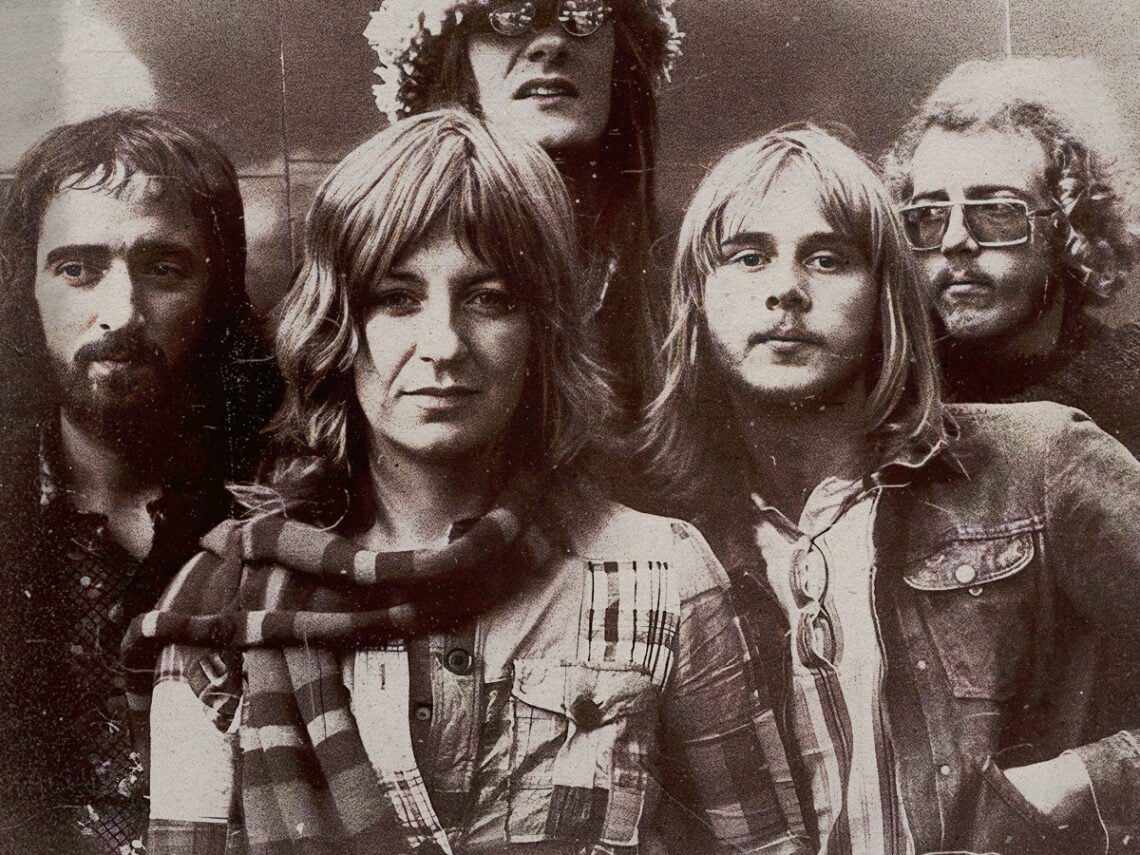
The moment Christine McVie knew she had to up her game: “Am I in the band?”

Christine McVie was truly essential to the success of Fleetwood Mac. She provided the band with her talents both behind a keyboard and a microphone, showing off her vocal prowess on emotive tracks like ‘Songbird’ and concocting catchy keys for hits like ‘Don’t Stop’, but she also demonstrated her skill with a pen. Alongside Stevie Nicks and Lindsey Buckingham, McVie emerged as one of the lead songwriters in the group, creating some of their most well-known and well-loved songs.
Just take a look at McVie’s credits with Fleetwood Mac. She wrote almost half of the songs on the band’s magnum opus, 1977’s Rumours, including the bouncy ‘You Make Loving Fun’ and the slightly more dramatic ‘Oh Daddy’. She created their glitteriest hit, ‘Everywhere’, which featured on Tango in the Night, as well as ‘Little Lies’, the single that preceded it. It was as if every song she touched turned to gold.
But McVie wasn’t always quite so secure or forthcoming in her talents. After joining Fleetwood Mac in 1970, McVie began contributing her songwriting skills to the band, but her early efforts were often outweighed and overshadowed by guitarist Bob Welch. Although he left the band before they even started work on their magnum opus, he was, at one point, a driving creative force in Fleetwood Mac.
Even interviewers noticed Welch’s increasing dominance in the band, so much so that Rolling Stone prompted McVie to comment on the matter in 1975. “You know, you’re the second person today who’s told me he thought Bob Welch was hogging the show,” she responded, before admitting that she hadn’t noticed this trend until watching back their appearance on Don Krishner’s show.
“When I saw that,” McVie remembered, “I said, ‘Hang on a minute. Am I in the band?’” The keyboard player didn’t necessarily blame Welch for this trend, though. Instead, she saw it as a product of their differing personalities. “I don’t know how it really happened,” she commented, “I guess I let myself get pushed back. Bob Welch was such an energetic, speedy guy. I was happy to let him do all the work.”
“It just boiled down to basic laziness on my part,” McVie shrugged, and even Mick Fleetwood admitted that they should have been using more of her writings on-stage. Fortunately, McVie pushed herself to become one of the leading songwriters of the band, creating hits that they couldn’t not include in their setlist. As a result, her contributions to the band have been much more widely lauded than they may have been at the time.
When Nicks and Buckingham joined the group in the same year Welch departed, Fleetwood Mac suddenly had an unparalleled arsenal of songwriters to their name. Nicks contributed witchy tales of womanhood and heartbreak. Buckingham penned bitter songs about her. And McVie used her blues influences and keys to create something different.
Although McVie might still, sometimes, be overshadowed by the impact of Nicks, her contributions to Fleetwood Mac simply cannot be understated. She would no longer hide in the shadow of her bandmates after their early years, proving her songwriting skills each and every time they created a new album, and maintaining her place as one of their greatest talents.
