


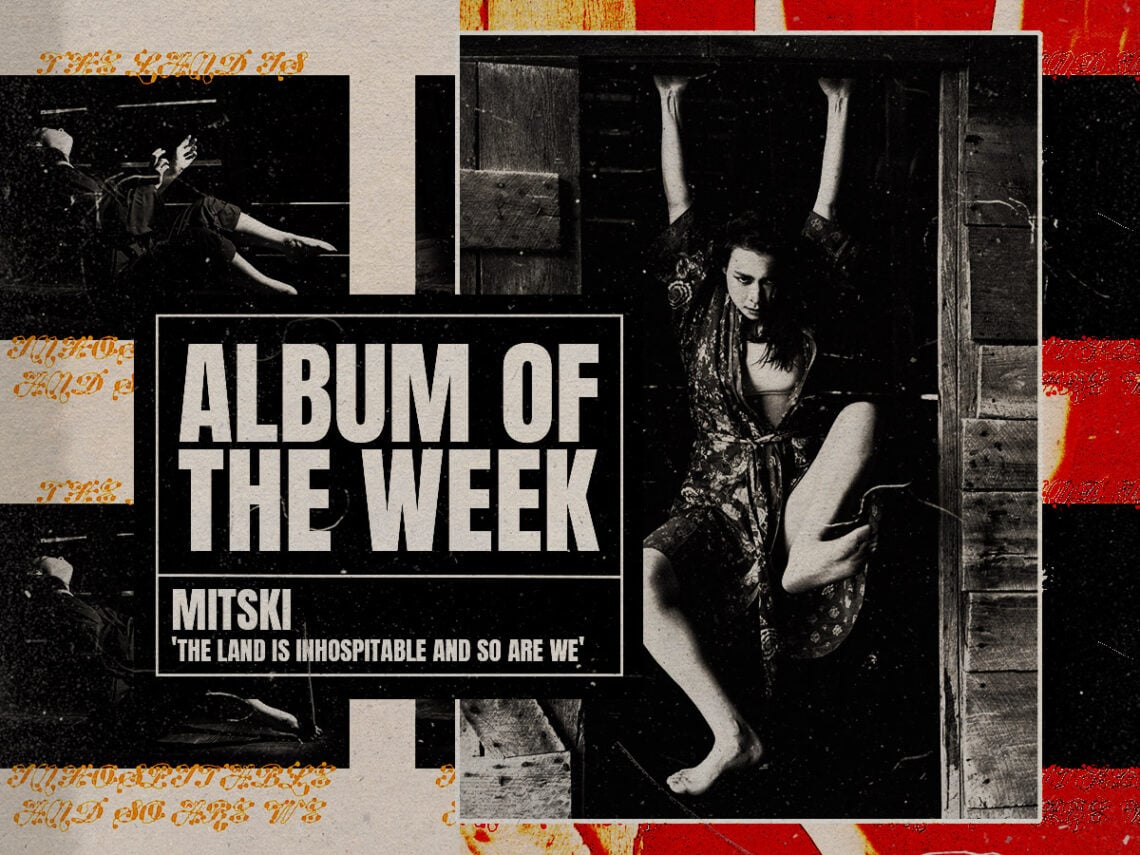
Mitski – ‘The Land Is Inhospitable and So Are We’ album review: embracing the laboured loneliness of love

“You believe me like a God, I destroy you like I am,” sings Mitski on ‘I’m Your Man’, the penultimate track of her new record. It’s a song that she proclaims is about the patriarchal man inside her head, but it could just as easily be applied to her audience. On The Land Is Inhospitable and So Are We, it’s difficult not to hang on to every word Mitski sings as if she is a God herself. Delivering crashing crescendos and poignant lyrics, she shows no mercy in her destruction.
While The Land Is Inhospitable and So Are We is a heart-wrenching collection of songs, like much of Mitski’s catalogue, it’s pervaded by themes of love. “The best thing I ever did in my life was to love people,” shares the singer-songwriter in a press release, “I wish I could leave behind all the love I have, after I die, so that I can shine all this goodness, all this good love that I’ve created onto other people.”
Whether it’s love and goodness or emotional desolation, Mitski has certainly created something permanent and affecting with The Land Is Inhospitable and So Are We. Abandoning the more upbeat, synth-pop focus of Laurel Hell, released just last year, the record sees Mitski return to her roots. She contemplates love, loneliness, and the interplay between the two with more lyrical prowess and vulnerability than ever before.
The record opens with ‘Bug Like an Angel’, a track which lulls you into a false sense of security with soft acoustic strums before it strikes. After Mitski delivers the devastating line, “As I got older I learned I’m a drinker, sometimes a drink feels like family”, a chorus repeats the word “family” in haunting harmony, and it cuts like a knife. The song introduces the themes that go on to permeate the album: divinity, self-reflection, catharsis.
Throughout the ten songs that follow, Mitski interweaves isolated feelings of despair and devotion into metaphors and musical swells. Combining influences from film composers Ennio Morricone and Carter Burwell alongside outsider artists Arthur Russell and Caetano Veloso, the album is at once intimate and cinematic. Its soundscapes are wide and dramatic, but Mitski’s words are precise and poignant, containing all the happiness and heartbreak of the mundane.
The combination of influences on the record can be felt in ‘The Deal’, one of the record’s most cathartic moments, which transforms subdued acoustics into a rumbling climax of strings and drums. Musing on the complexities of healing over the increasingly layered soundscape, Mitski declares, “Your pain is eased, but you’ll never be free”. This seems like a turning point on the record. Though it doesn’t mark a distinct change from darkness to light, it introduces an understanding that love and loneliness can exist side by side.
The first half of the record, pervaded by lovesickness and fear (of the self, of love, of promises and memories), makes way for tentative feelings of acceptance and healing. On the calmer ‘My Love Mine All Mine’, she shrugs, “Nothing in the world belongs to me, but my love, mine all mine”, while ‘The Frost’ laments, “The world is mine, but alone”.
Between the defiant ‘I’m Your Man’, which contains samples of barking dogs ready to hunt down the titular man, and the freeing ‘I Love Me After You’, Mitski sees herself as a God capable of destruction and, finally, prevails as “king of all the land”. Rather than shying away from the alienation and agony that life and love might bring, she makes the conscious decision to embrace those feelings. Love cannot exist without loss or loneliness, nor should it, a truth that Mitski cautiously reaches by the album’s conclusion.
Mitski has dubbed The Land Is Inhospitable and So Are We her “most American album”, but it’s also her most universal. In just 11 songs and a duration that barely surpasses half an hour, Mitski delves into the unavoidable destruction and difficulty of love, whether it be love of the world, the self or others. The record harms and heals in equal measure, flitting between Mitski’s internal monologue and external self-reflection, with highly concentrated emotion infusing every line and every instrumental swell. Love may be just as inhospitable as the land and the self, prone to endless mistakes and missteps, but that won’t stop Mitski from trying.

Never Miss A Beat
The Far Out New Music Newsletter
All the latest New Music from the independent voice of culture.
Straight to your inbox.