


The perpetuation of misogyny is destroying the music industry

Being a woman in the music industry has its own unique mix of experiences. On one side, it’s pretty rewarding knowing you’re representing a group that’s faced its fair share of challenges. But simultaneously, it’s a continuous journey to push for equality. The disparity that persists traces back to the industry’s longstanding history of being dominated by white men, whether we’re talking about the musicians in the spotlight or those working behind the scenes.
In the 20th Century, we saw music legends like Elvis Presley, The Beatles, and later David Bowie, who were hailed as some of the greatest in the business. On the other hand, their female counterparts, even though they often had just as much – or, in some cases, even more talent – had a more challenging time getting the recognition they deserved. While Bowie and others were praised for their creativity and musical genius, innovative artists like Kate Bush often got unfairly called “weird”.
Early in her career, Bush encountered a lot of sexism and was often dismissed for not fitting the realm of expected standards when it came to what a woman should act or look like. In 1978, when she unveiled her debut album, The Kick Inside, along with the hit single ‘Wuthering Heights’, there was a mix of astonishment and fascination. Here was a teenager creating music that was utterly unique, strange, and captivating, unlike anything else at the time. And yet, much of it was deemed ‘bad’ or unimaginative, would you believe.
In an era where genres like punk dominated with their raw and aggressive sound, Bush’s mesmerising, otherworldly music should have been appreciated as a refreshing counterbalance. Yet, she faced criticism and parody simply because she was a young woman. Thankfully, Bush had a sense of humour when it came to those who mocked her, and she was strong-willed and unafraid to stand up to interviewers and the media.
Many argue that the music scene is all about celebrating individuality, a place where fans and artists can come together to express themselves freely. While that’s true in some spots, we can’t ignore the fact that many areas pretend to be all about freedom while secretly sticking to tradition. Now, when we chat about rock stars, a few names like Axl Rose, Kurt Cobain, Ozzy Osbourne, and Gene Simmons often grab the spotlight. It’s only after we’ve exhausted these male legends that we might think of others like Siouxsie Sioux, Debbie Harry, Chrissie Hynde, and Grace Jones, if they even get a mention at all.
But delving into industry erasure encroaches on a separate issue — the persistent theme across all eras is that female innovators in music are rarely described as such. Bush’s image, voice, music, and opinions were all seen as contributing factors to her reputation as an outcast. Siouxsie Sioux was seen as extreme and menacing on account of her appearance. Jones was labelled as rude or “bitchy” for stating her opinion, whereas when Bowie spoke out against something, it was seen as brave and noble.
Women in music aren’t just slapped with unfair labels, either; they’re also intentionally pushed to the sidelines. For example, a mere 8% of those honoured by induction into the Rock and Roll Hall of Fame are women. This underrepresentation isn’t just a sign of sexist gatekeeping; it’s a deliberate choice reflecting wilful ignorance and unfriendliness. While the Rock Hall celebrates diversity more than it used to, there are still many details worth questioning.
For instance, when the Rock Hall kicked off in 1983, it would have made sense to kickstart with Sister Rosetta, but the inaugural inductees included Chuck Berry, James Brown, Ray Charles, Little Richard, Sam Cooke, Buddy Holly, Jerry Lee Lewis, Elvis Presley, and more – not a single woman among them. Sister Rosetta didn’t make the cut until 2018 after public outcry forced the Rock Hall’s hand. Big Mama Thornton, the one whose recording of ‘Ball ‘n’ Chain’ significantly influenced this evolving music form? Still absent from the list. Bush’s announcement to be induced didn’t arrive until 2023.
Pinpointing the different sources of insidious misogyny in the music industry would be enough to fill a book. In fact, many artists, journalists, and authors have actually put pen to paper to expose this exact issue. Contemporary artists, although the freedom to express and experiment musically is less likely to face trolling commentary (unless it’s the internet, in which case there absolutely will be trolls), are still susceptible to the enduring sexism that the industry refuses to loosen the reigns on.
Wet Leg and Björk, for instance, have had to deal with more than enough backlash. The former have been accused of emerging as an “industry plant” since day one because the idea that an all-women band becoming quickly successful just isn’t fathomable, is it? Haim, too, cannot escape the succession of media and internet opinions and let’s not even get started on Taylor Swift.
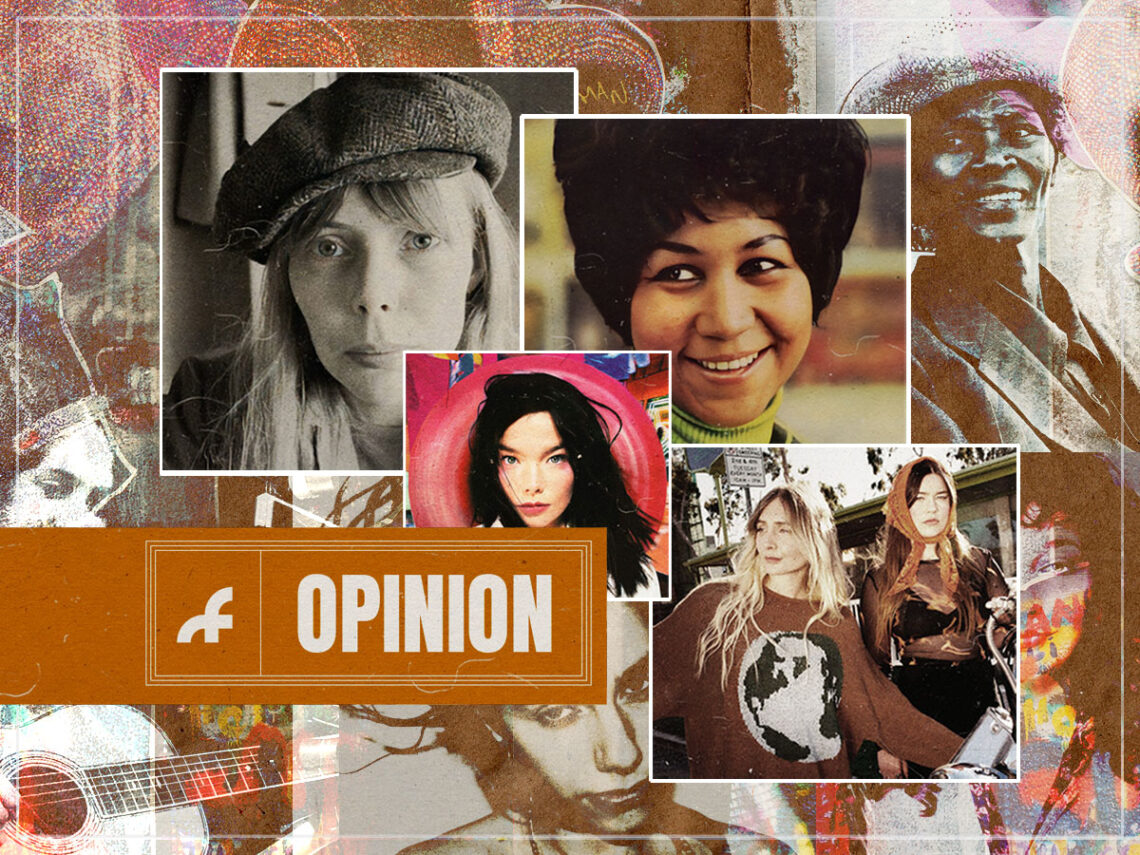
Let’s face the truth: women in music often face unjust labels, unequal opportunities, and a lack of recognition for their achievements compared to male musicians. Despite substantial progress in recent times, a persistent gender imbalance has disadvantaged our talented female artists for decades. From Joni Mitchell and Joan Baez to Etta James, Aretha Franklin, PJ Harvey, and many more — when will publications feature a more diverse lineup on their covers when celebrating the greatest musicians in history?
