


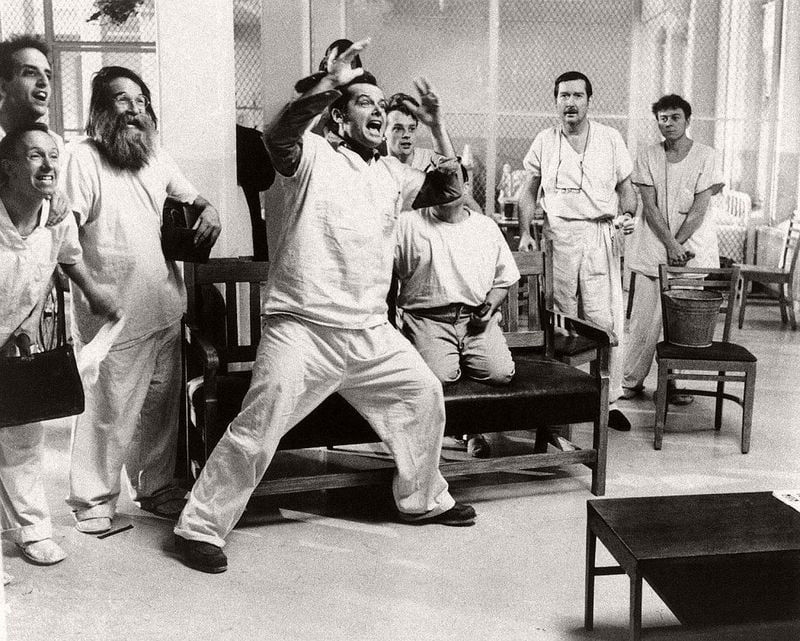
A fond look back at Milos Forman’s film ‘One Flew Over The Cuckoo’s Nest’

One of the best films of the 1970s is, without doubt, Milos Forman’s One Flew Over the Cuckoo’s Nest, the 1975 screen adaptation of Ken Kesey’s 1962 novel of the same name. Jack Nicholson performed in the movie in one of his career-defining roles, and the film, in sum, remains as pertinent today as it was then (if occasionally dated).
After the success of Ken Kesey’s novel, Dale Wasserman adapted it for the stage just a year later, in 1963, where it ran for a year and 82 performances. By the time the 1975 film version came out, it was based on the play rather than Kesey’s novel, and Danny DeVito retained his role as Martini for the screen adaptation.
Narratively, the movie centres on one of the most notorious fictional counterculture figures of the 20th Century, Randall McMurphy, who pretends to be mentally unwell to avoid hard labour on a farm after he raped a 15-year-old girl. He is soon transferred to a psychiatric ward run by a domineered head nurse named Mildred Ratched, who is somewhat cruel to the ward’s patients.
Amongst the patients are several men with various social and mental chronic conditions. However, McMurphy’s arrival on the ward with his rebellious spirit seems to rouse some of his fellow patients from their mental debilitations. Nevertheless, this also appears to threaten Nurse Ratched’s authority on the ward, which only spurs McMurphy further.
McMurphy hatches several plans to both undermine and wind Nurse Ratched up and give the ward’s patients a sense of freedom and confidence. While some of these plans go well, others end disastrously and result in suicide and electro-convulsive shock treatment.
On reflection, the film is an excellent piece of work that celebrates rebellion in the face of adversity, authority and the delimiting nature of mental health at the time. The fact is that, in the 1960s, mental health treatment was a far cry from what we know it as today and was primarily based on subduing those with mental ailments with all manner of drugs rather than providing proper care catered to the individual’s needs.
It’s through McMurphy (although, indeed, on the outside, he is deplorable given the reason he is in the institution in the first place) that he shows the ward’s patients that they “are no more crazy than anyone else out there”. If anything, perhaps it is McMurphy himself who is the most mentally unstable among the men. Jack Nicholson perfectly portrays this characteristic with an unbridled intensity that we would come to expect of him throughout the remainder of the 20th Century.
Considerable praise also ought to go to Louise Fletcher’s terrifyingly excellent performance as Nurse Ratched, as without her, there would be no one for McMurphy to rebel against, and the tension and humour of the film would be far less than the final product. In some ways, perhaps Fletcher even outshines Nicholson on this occasion, which is a feat in its own right.
One Flew Over the Cuckoo’s Nest remains one of the most beloved films of the 20th Century. It provided a sense of humour in a primarily serious narrative, which provided weight and nuance. It also serves as a critique of the mental institutions of yore and a thankful reminder that we are better positioned to deal with ailments of the mind in contemporary society.
