


Michelle Pfeiffer names the director who changed her career: “He had no reason to believe I could do that”

These days, Michelle Pfeiffer can proudly call herself a multi-award winner and an established Hollywood star, having won big accolades like a Golden Globe and a BAFTA while also earning three Oscar nominations. The actor has appeared in many critically acclaimed films, helping her to become one of the most recognisable faces in cinema.
She particularly thrived during the 1980s and the 1990s, performing in everything from period dramas like Dangerous Liaisons and The Age of Innocence to the Tim Burton superhero film Batman Returns as Catwoman. While she hasn’t starred in as much throughout the 21st century, she has still appeared in some popular movies, from Hairspray to Dark Shadows, Mother!, and Avengers: Endgame.
Yet, when Pfeiffer first started out, she was struggling to find much outside of small film, television and advert roles. She eventually found herself cast in the lead role of Grease 2, but that soon proved to be disastrous. The film wasn’t a hit – it bombed massively. Critics were quick to slate it, and as a result, Pfeiffer was worried that her career was over before it had even truly begun.
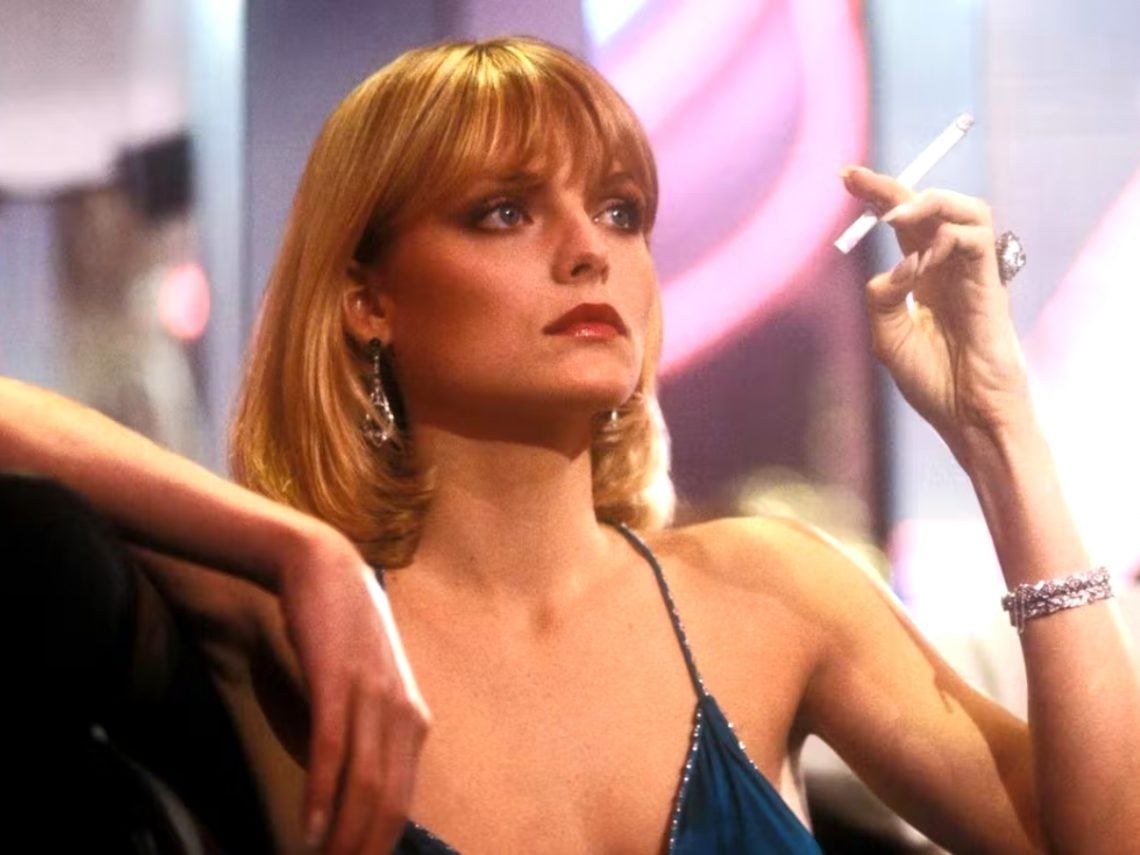
Because of the failure of Grease 2, she almost lost out on a role that would help to expose her to a wider audience. Brian De Palma was not ready to consider Pfeiffer for the role of Elvira Hancock in Scarface, the glamorous trophy wife of Al Pacino’s main character. Yet, after a producer begged him to consider her, Pfeiffer was given the part, which remains one of her most iconic roles.
Still, the part established Pfeiffer’s image as one heavily focused on her looks, and she soon realised that she wasn’t able to easily get the parts she wanted based on people’s perception of her. In 1988, she would come to work with a director whom she believed changed everything for her, opening up her career to a range of diverse role opportunities.
Talking to The New Yorker, she explained how she “had some concerns, and I know that that really influenced the choices that I made. I was very careful about when I had the option of actually choosing, because sometimes you just have to pay the rent. But when I had a choice of doing something that had nothing to do with how I looked, I would take that opportunity every time.” The chance to work with Jonathan Demme was an example of Pfeiffer taking on a part that was completely far-removed from the image of her in Scarface.
“I think the thing that sort of jarred everybody’s perception of me was when I did Married to the Mob, and I’m forever grateful to Jonathan Demme. He had no reason to believe I could do that,” she continued. The film saw Pfeiffer play a brunette-haired widow who is investigated by Matthew Modine’s character due to her connections with the mafia. She was praised for her performance, which earned her a Golden Globe nomination.
She continued, “I did Grease 2, then Scarface. But still, I was arm candy. Then when I did Married to the Mob . . . I remember then when I met Marty Scorsese, who was considering me for The Age of Innocence. I remember him saying, ‘I thought you were this brunette girl from New Jersey.’ That was probably one of the greatest compliments that was ever given to me.”
Pfeiffer would end up turning down Demme’s most popular film The Silence of the Lambs, telling the New Yorker that “there was such evil in that film.” Still, she admits that “the thing I most regret is missing the opportunity to do another film with Jonathan.”
