


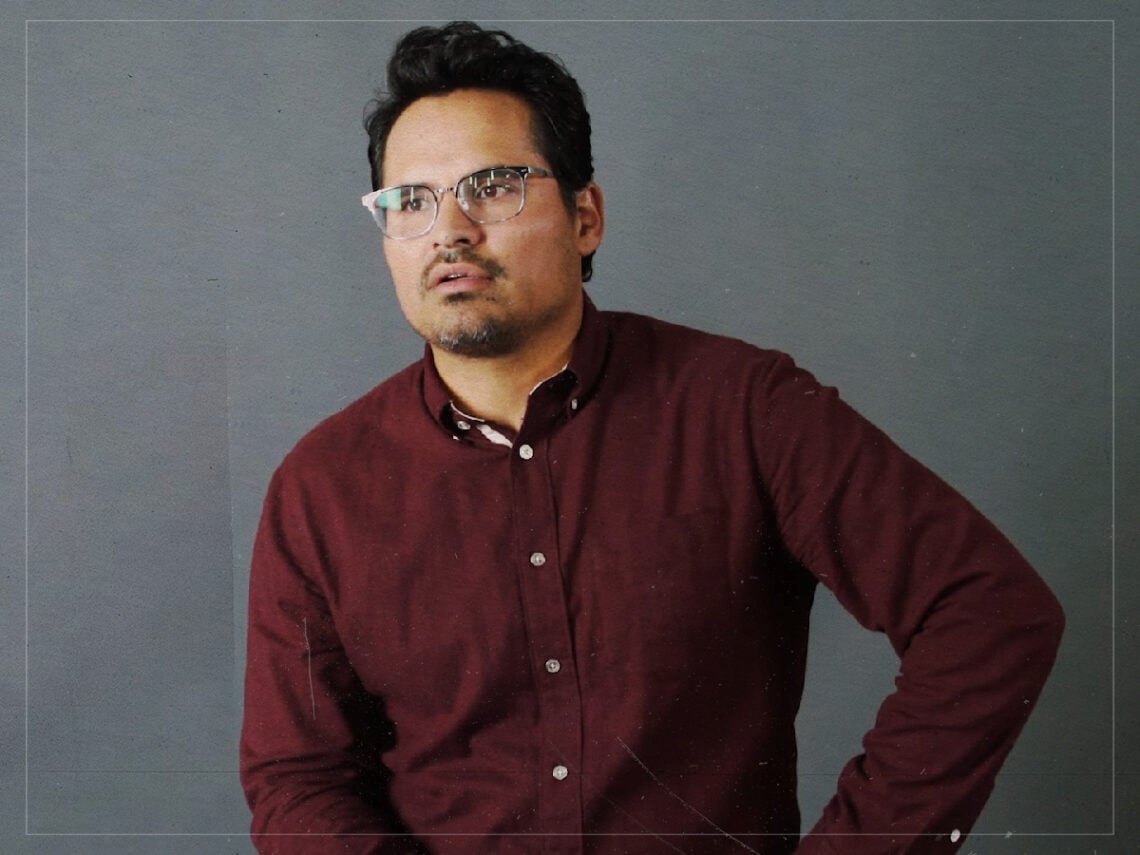
When Michael Peña spoke his dream role into existence

The process of doing interviews at press events like Comic Con can be very taxing for actors, as they’re forced to answer many of the same questions and give deep responses on-the-fly.
However, being interviewed in a public venue can sometimes help raise awareness about potential projects that they want to advocate for, and for Michael Peña, an off-the-cuff response to a question about his dream role landed him with one of the most important films of his career.
Although Peña had been gaining more respect thanks to his heartbreaking performance in David Ayer’s cop drama End of Watch, it was during a promotional event that KQED asked about the part that he desired most, to which Peña’s “snap answer” was Cesar Chavez, even though he admitted that he “didn’t know much about his story”.
Chavez was a civil rights activist who fought for the respect of labour workers within Mexican-American communities and helped to organise unions on behalf of agricultural workers. His life was certainly ripe for dramatic interpretation, as his non-violent protesting techniques eventually sparked formal investigations from the FBI, who disapproved of his influence on left-wing politics.
Peña’s answer makes a lot of sense when considering how strange it was that there’d never been a Hollywood film centring the life of such an important historical leader. Even though Hollywood has struggled to offer equal representation to Hispanic actors and depict their history in positive ways, Chavez’s life was so filled with interesting moments that it seemed like too good an opportunity to pass up. Although Peña likely wasn’t trying to put anything into existence, his comments coincided with the development of the biopic Cesar Chavez, directed by Diego Luna.
Unbeknownst to the actor, Luna had been in the midst of binging to light the film, and called him up nine months later to offer him the part, and although Peña had to audition three times, he eventually landed the lead role and had the honour of meeting the real Chavez.
Luna had only previously directed the comedy film Abel, and Cesar Chavez was to be a labour-of-love that brought together many of the best Hispanic actors in the industry; in addition to them, Pablo Cruz and Gael Garcia Bernal (who’d co-starred with Luna in Y tu mamá también) joined the project as producers, and conversations were held with Chavez’s family in order to incorporate real details from his life to make the film more authentic.
Cesar Chavez, unfortunately, wasn’t the box office success that it should have been, and despite positive reviews, particularly from Hispanic audiences, the film was released in early spring, where it wasn’t considered to be a legitimate contender for the Academy Awards. The sad reality is that it is often a challenge for smaller films to put up significant numbers without a major advertising partner, even if they are otherwise met with a great deal of enthusiasm, which is a brunt this film had to bear aplenty.
Nonetheless, the notion of making a profit off of Cesar Chavez doesn’t seem like it was a priority for either Peña or Luna, who can now say that they made a fact-based drama that can be watched many years down the line as a tool of education. It also helped to initiate a real-life friendship between the two, who had the chance to co-star in the excellent Netflix crime series Narcos: Mexico.
