


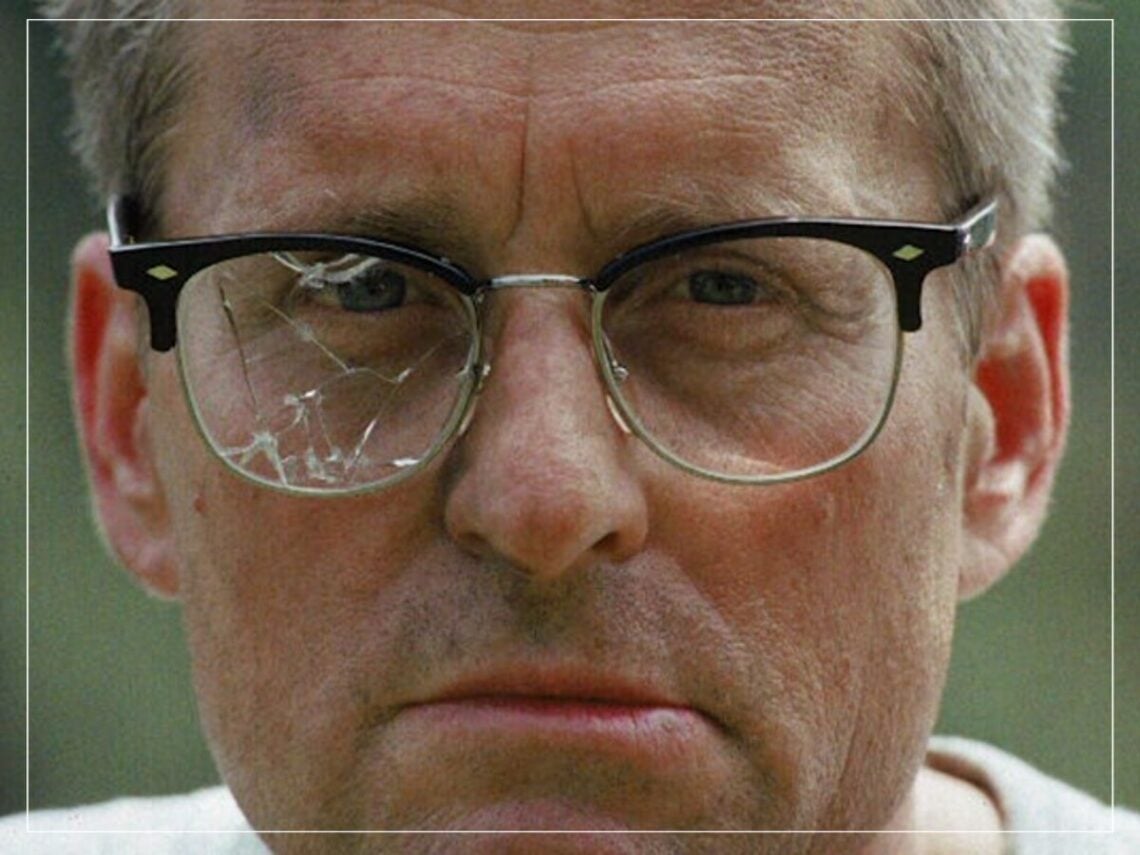
‘Falling Down’: An overlooked Michael Douglas performance heralded a new type of character

We’ve all been there, you see. That’s the crux of Michael Douglas’ character, Bill Foster, in the magnificent Falling Down. It’s all too easy to relate to his downfall.
Granted, we haven’t all gone on a wild, violent rampage, God forbid. But we have all sat in traffic on a morning where there was no time for coffee, after an evening where there was no time for rest, and some punk cuts you up and throws you a middle finger while they’re at it.
Then comes the fly, the pesky fly in the car materialising out of nought but bad air as though sent by some bedevilling bastard purely to further hex your horrid day. You spy out of your window that fuel prices have gone up again, and you begin to itch beneath your overly tight collar.
Then comes the shopkeeper and their inflated prices, rude indifference, and callous tone. Suddenly, the world feels like a mechanical grind designed to reward only the most undeserving and squash you into the dirt, poor little old you.
It’s enough to send anyone mad. In fact, at first, it seems like Bill Foster is the only one sane enough to follow through with his rally against it. As the very first words of the synopsis state, he is “an ordinary man”. He is a man of virtues and integrity, and following that path has led him to this day of all days, where bullies, bastards, and belittlers will all soon meet with the snapped vexation of his newfound Bolshevist ways. Behold: the ‘Good Bad Guy’.

Falling Down is a shocking film, filled with the sort of dark humour that slides towards sludgy, oblique blackness. It conjures the sort of laughs that are quickly sequestered into silence when the tirade of cracked comedy takes a left turn into even more troublesome terrain. It’s as though life is a joke… that you can’t always laugh about.
Poor Foster is over the edge and can no longer see the funny side. We have all been there. Falling Down is merely an uber-extreme version of the humourless moment when all of us mild-mannered souls refuse to say thank you to an arsey bus driver or ask a wayward youth to pick their bloody litter up.
Thankfully, that is the extent of it for most of us. However, watching one of us lose the plot comes with an almost sick gratification. Michael Douglas’ performance is like a boiling pan with the lid on. It slowly bubbles over, and then it somehow leads to a volcanic eruption. However, all the while, there is a sense of the lid still floating above it all, the nagging restraint of his old morality.
He is not a bad guy, you see, he’s a good guy pushed to badness by a world gone freaking mad, but he’s still trying to retain his own virtues even amid a vortex of headloss… unlike the wretched wrongdoers who have been freewheeling around waywardly from the start without an ounce of remorse.
However, what happens when the relatability diminishes? How long can you stick with Foster? At what point does the ‘Good’ get scrubbed from ‘Good Bad Guy’? That’s the moral conundrum that the character begins to impose. This has become a classic motif for many pieces of cinema and TV since Falling Down was released in 1993.
After all, who is Walter White if not Bill Foster with a chemistry degree and a cancer diagnosis on top of everything else? Who is Tony Soprano if not the inverse version of Bill Foster – a Bad Guy trying to be good? What is this Joker line – “All it takes is one bad day to reduce the sanest man alive to lunacy” – if not the tagline for Falling Down badly applied in a film that sort of misses the ‘Good Bad Guy’ point?
As Bryan Cranston, the man behind Walter White, recently explained, the beauty of the writing in Breaking Bad is that its creator takes a relatable man, puts him in a sickening crisis where sympathy is only an apt human response, then cranks up the dial to see how far that sympathy can stretch. As Cranston quips, by the end, he is utterly indefensible, yet fans still approach him on the street and say, “I never lost faith in you, I was with your character all the way,” to which he replies, “What the hell is wrong with you?!”.
Beyond that moral proposition, the beauty of these beasts is twofold. The high-intensity moments of release are cathartic. You feel the mounting tension, and you feel the release of the violent eruption. Even though their actions are despicable, you feel the character’s dopamine surge as they break free from normality.
In the process, some of the moral badness is forgotten about. You forget that Foster should’ve merely called quits on the day and taken a moment of mindfulness so as not to perpetuate the cycle of cynics going mad. Part of that moral dilemma is lost in the sense of vicarious satisfaction.
We humanly can’t deny that we’d love to smash a shop to smithereens sometimes or berate a thug for their ugly actions. As such, these characters force us to be empathetic; it’s wrong to champion them, but suddenly it seems so easy to see how a villain was born.
The second prong is that these white-shirted overnight headcases reflect society back to us. These days, it seems physically impossible to ‘take things as they come’. We are constantly bombarded by things that the kids, the dastardly kids of today, call ‘triggering’. From cancelled trains, screaming heretics, costs of living crises, ‘You can’t speak to me, you have to go back to the retailer, then they’ll issue a form, then… ah forget about it’.
Yeah, it is a truth acknowledged in some of the finest films and TV of the last 30 years that some days we could all end up a bit like Bill Foster. But we shouldn’t be… lord knows we shouldn’t be like Bill Foster, because Bill Foster is a bad guy. In fact, meet him on the wrong day, and he’s enough to drive you mad…
