


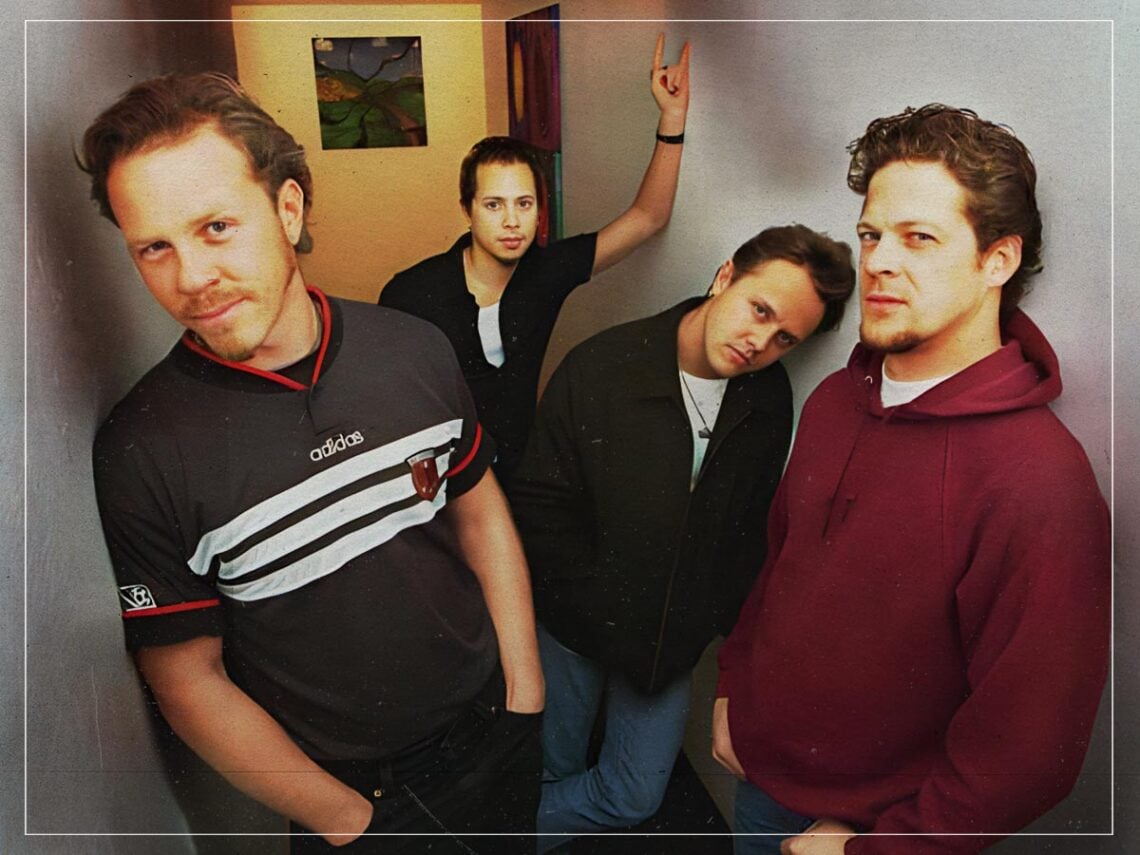
“Bastards”: When Metallica raged against their own fans in 2000

While metal fans might disagree with the insinuation that such a thing as ‘the big four’ exists, with there being plenty more than a quartet of acts arguably deserving of their place at the top, one thing that shouldn’t be up for debate is the inclusion of Metallica in this exclusive group.
Whether or not you think it ought to be a big five, a big eight, or an even bigger amount of flexible quantity, Metallica’s status as being up there with the absolute best is almost unquestionable at this point. Having instantly established themselves from the outset as a powerhouse in their field with 1983’s Kill ‘Em All, they followed it up with a string of genre-defining records throughout the course of the 1980s, setting the benchmark for other metal acts to aim for thereafter.
However, despite the overwhelming critical and commercial praise of their early material, things weren’t all plain sailing, and throughout the ‘90s, things would prove to be much more turbulent within the ranks of the band than their successes would have you believe. With diminishing returns arriving on each album after their self-titled fifth record, the cracks began to show, and the patience of some fans began to wear thin the more disappointing their output became.
Things would arguably come to a head in the conflict that was brewing between the artists and their so-called acolytes at the turn of the millennium, although the reason for their calamitous crash-out came as a result of a wider debate that had been brewing in the music industry for a few years by this point.
In the days before Spotify found a new way to exploit their user base under the pretence that they could provide a platform for musicians to share their work and be paid for it, adopters of the relatively newfangled concept of the internet were still collectively figuring out the best method of distributing music, and in some cases, with dire consequences for the industry at large.

The online file-sharing website Napster was arguably the place to go to share MP3s, allowing fans to upload and download digital versions of their favourite music without having to part with their cash, and understandably, many artists felt aggrieved by the lack of any remuneration for their work from this method of consumption.
However, things would escalate to another level of controversy when a demo of ‘I Disappear’, a song that Metallica had written for the soundtrack of Mission: Impossible II, was leaked via the website and found its way into the hands of radio DJs who were playing it before it had been officially released.


Despite not being the only band to fall victim to the nefarious practices of this peer-to-peer sharing platform, Metallica took Napster to court, demanding $10million in damages for the illegal distribution of copyrighted material. The music industry had frequently found itself attempting to combat different methods of piracy over the years, but at the time, this felt like a landmark case in the history of their battle, with Metallica ultimately coming out triumphant and waltzing away with their settlement.
The thing is, they may have been happy, but their fans weren’t. Lars Ulrich found himself in court with a list of users who had uploaded and downloaded the contraband file, and demanded that they had their accounts be removed from the site, while Hetfield directly attacked those who had engaged with the platform to acquire their music. Given their status as one of the biggest bands in the world at the time, the fact that they demanded an extortionate sum of money to add to their millions felt like just as much of a robbery as the file theft they’d committed.
“Metallica fans sided with Napster because they’re lazy bastards and they want everything for free,” Hetfield famously told Playboy in 2001, a year after the lawsuit had been settled. “I like playing music because it’s a good living and I get satisfaction from it but I can’t feed my family with satisfaction.” If you thought his words were strong, Ulrich’s were a lot less dressed-up. “If you’d stop being a Metallica fan because I won’t give you my music for free, then fuck you.”
Ultimately, Metallica had made a valid point about the unjust nature of file-sharing and illegal downloading, but had gone about tackling it in perhaps the most alienating way as far as their fans were concerned. One of metal’s all-time greats had fallen wildly out of touch with the core of their fanbase, the regular folks who gave them a career in the first place, and if their decision to lambast them for being scroungers while demanding heaps of cash in compensation didn’t feel like enough of an indication of this, then perhaps the dogshit excuse for an album they subsequently followed this debacle up with would have served as greater proof that they’d completely fallen from grace.
