


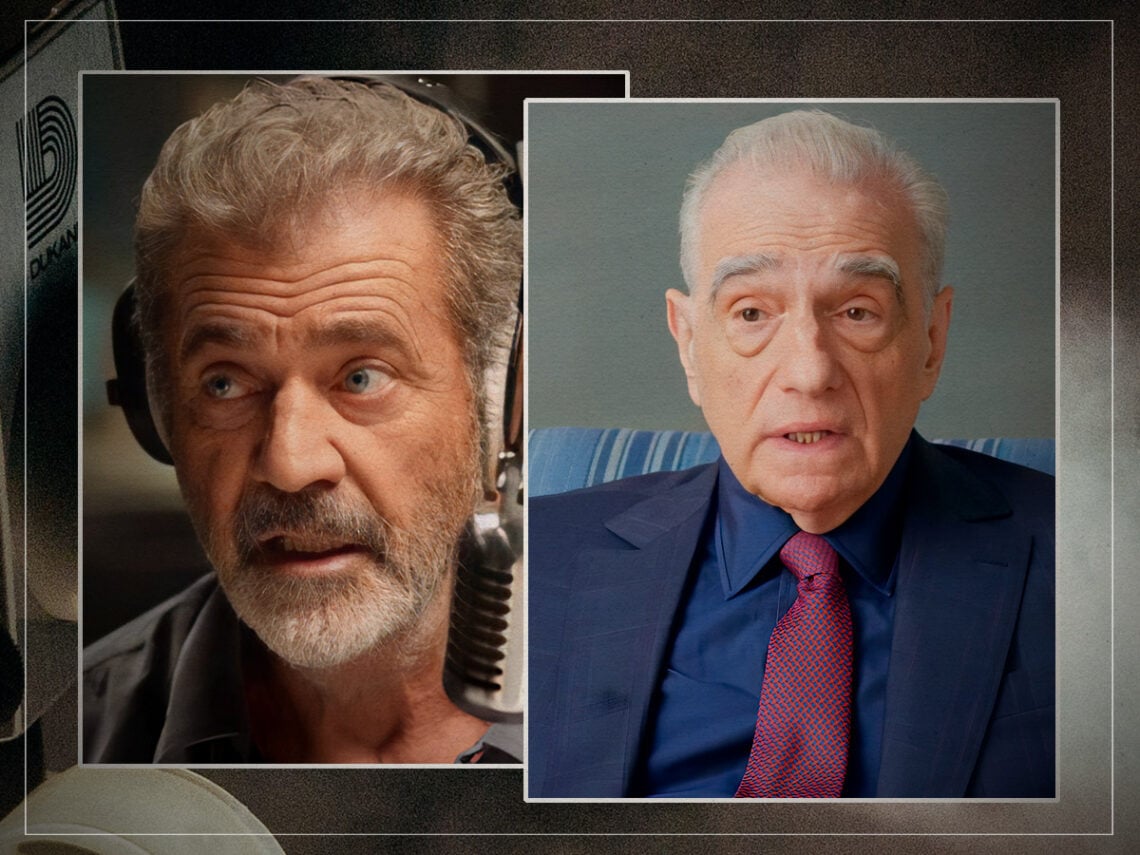
Why Mel Gibson refused to work with Martin Scorsese: “Wow, I’m not doing that”

There’s at least one generation of moviegoers out there who can’t remember a time when Mel Gibson was one of Hollywood’s biggest, most popular, and bankable stars, and with good reason.
It’s been almost two decades since the two-time Academy Award winner was arrested and responded with the venomous tirade that cost him his place at the industry’s top table, which wasn’t the first or last time he’d either be caught or have been alleged to say some pretty diabolical things.
In an era long before cancel culture, Gibson was immediately exiled, ostracised, and declared persona non grata in mainstream filmmaking. It didn’t technically destroy his career, although it did reduce it to a shadow of its former self, with the deposed A-lister now a staple of the straight-to-video circuit.
Back when he was a big deal, though, the Lethal Weapon frontman was knocking back choice offers left, right, and centre. Gibson declined the opportunity to inherit the mantle of James Bond from Roger Moore, decided he was too old to play Russell Crowe’s Oscar-winning role in Gladiator, and scoffed at suiting up as the title character in Tim Burton’s Batman.
In most cases, it’s difficult to say no when one of cinema’s most celebrated directors comes calling with an offer to play the lead in their passion project, especially if the source material is known to be something the actor in question has a deep affinity with. And yet, when Martin Scorsese offered Gibson The Last Temptation of Christ, he didn’t waste a second before saying no.

“I ate a bad oyster in London, and I was dying in a hotel room, and I couldn’t leave,” the actor told Joe Rogan. “It was the worst. While I was there, Scorsese called the room and said, ‘Come here, I want to talk to you.’ I go and talk to Martin, and he’s in his room, and all the windows, the screens, he’s drawn on. He’s got 18 different TVs going on at the same time in this dark room.”
It was a fairly foreboding introduction to an icon, but the conversation didn’t last long. “He’s talking to me about The Last Temptation of Christ, and he wants me to play Jesus,” Gibson elaborated. “And I said, ‘Wow, I’m not doing that.'”
It’s an understatement to say that Scorsese had a tough time casting anyone in the lead role. Christopher Walken, who Gibson ironically called the antichrist years later, was set to embody Jesus in the biblical epic before his hiring was overruled by the studio, while Robert De Niro had absolutely no interest in reuniting with his filmmaking muse.
Eric Roberts also claimed he was in talks to take on the daunting part before his agent convinced him it wasn’t the wisest move, before Willem Dafoe ultimately got the nod and steered Scorsese’s controversial film towards strong reviews, a healthy box office haul, and a solitary Oscar nomination for ‘Best Director’.
Of course, Gibson eventually helmed his own movie about Jesus and made a ridiculous amount of money by doing so. From a financial perspective, at least, turning down one of the all-time greats worked out for him in the long run.
