


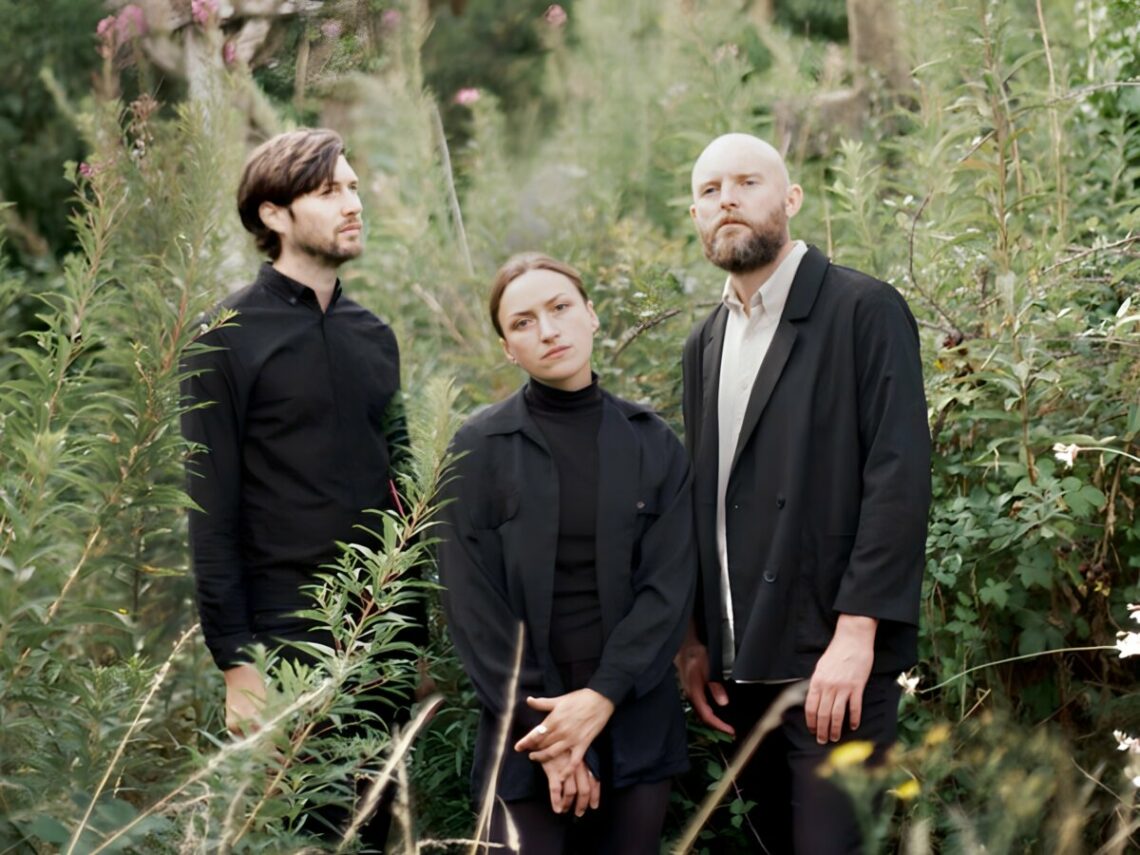
An interview with Esben and the Witch

A while ago, we spoke to Esben and the Witch guitarist Thomas Fisher about the extensive world tour they have been taking on, as well Rachel Davies’ writing methods and forcing drummer Daniel Copeman to keep his clothes on whilst recording their second album.
After travelling around the US playing their gothic rock they’re on the final leg of their shows in Europe before landing back in Manchester on the 24th of May. Here, we talk about their journey so far.
Far Out: I know the name derived from an Andrew Lang fairy tale, how important is poetry when it comes to your songwriting?
Fisher: “Poetry is an influence, especially on Rachel and her lyrics. Around the time that we were writing the new record, she was reading a lot of T.S. Eliot and Sylvia Plath in particular. We took the band name, though, because it seemed like a good fit for the music we were making at the time, and the story seemed interesting, Daniel and I honestly didn’t give it too much thought and certainly weren’t worried about the way the tale was written”.
I read somewhere that film and anthropology have influenced the band too?
“Films have always been a big influence. For me, The Proposition, The Road and 2001: A Space Odyssey all had some bearing on the way that I approached writing Wash The Sins… The landscapes we travelled through when touring the first record were a more immediate influence. When we were writing, we projected pictures we had taken when driving through these wild expanses in the US. We had these slide show things on loop in the background whilst we jammed around various ideas and got into our groove for each song”.
Just quickly, on the first album, if you had to name a film for Wash the Sins Not Only The Face to be a soundtrack for, what would it be?
“I’d say Apocalypse Now, although it does feel a little rich aligning our album with one of the greatest pieces of modern cinema! But anyway, I’d say the two share a vaguely similar concept of a journey through an ever more deranged and threatening landscape, all heading towards one particular encounter.
“Everyone knows what that represents in Apocalypse Now; for us, it was the idea that the album begins at the start of an expedition in the morning and closes the following night, in a desert, confronted with your Doppelganger. Obviously, people can take whatever they want from it, but this is what we had in mind”.
Wash the Sins Not Only The Face has been really well received, but how different was recording your second album?
“This time, we recorded it in a studio which was great. We wouldn’t have been able to do that before. We worked together with a fine gentleman called Tom Morris, it’s the most anyone has entered into the recording and production process with us, and I think the more collaborative spirit worked well. It was a very different experience sitting around him at his studio desk and sitting around a laptop on Daniels’s bed. Each has its merits, Daniel had to be dressed at all times in the studio, which was definitely a plus”.
You’ve been with Matador a couple of years now; how supportive have they been?
“They have been really supportive, they are all good guys. I wouldn’t say they have been too much of an influence, though, as, for the most part, they’ve left us to our own devices”.
Well, I guess that’s what you want, really. We love videos; how important do regard them?
“Cheers! Our videos are really important to us. We always come up with an idea for each of them, although we tend to get our friends or others to film them as we aren’t especially skilled with cameras. We treat videos like we treat the artwork, our press shots and our online stuff. We are trying (and have been since we started out) to create an immersive world to surround the music, and all these things are vital to that.
“We just had a new video made for ‘When That Head Splits’, we wrote a rough plan out, and he just went mad with plasticine. It looks incredible; he’s a talented man, for sure. And to think we wanted to try to do that video with people instead of plasticine, sometimes the practicality of these things can get away from us a bit”.
‘Marching Song’ is a pretty cool video; what was the idea behind it?
“The video concept was Rachel’s idea. It’s about strength and resilience in the face of adversity, which is what the lyrics mean to me as well”.
You’ve touched on trying to create an immersive world around the music; how important is creating an ‘atmosphere’ in your live performances?
“Yeah, that’s all part of it. We have worked hard on the live show as it’s always been something we enjoy. When we start playing the songs live, they often take on a more visceral, intense feel. Sometimes this just can’t be helped as there are only three of us, and so if something is supposed to be really loud you can’t spend time carefully arranging different layers. You’ve just got to find a brutal synth or guitar tone. We aren’t interested in performing exact recreations of our recorded stuff anyway, we want the live incarnations of our songs to head off in different directions if it feels natural”.
You’re coming to an end of a pretty extensive tour of the album; how do you decide where to play?
“We are always up for playing live, so as long as we can afford to do something and not lose a load of money, then we’re up for playing most places. All three of us enjoy touring and the strange cycle that you get in, each day totally different from the last in some ways and totally alike in others. It’s maddening in the best possible way”.
Where have you most looked forward to playing? We went to Berlin recently and loved it…
“I’m loved going back to play some shows in Germany for sure. There is this venue in Cologne called Geubaude 9 that is amazing, a really cold concrete warehouse, such a good setting. We played at The Scala in London that was cool; we have never played a show that big in London before”.
And you’ve toured the US again; how do your shows compare in America in comparison to Europe/England?
“I like playing in the US. At first, it’s a bit disconcerting as people seem to get more vocal mid-song; people tend to be slightly more reserved here, in my experience. I remember we had this bit in one of our songs where all three of us play the drum, and this guy just screamed “keep it going” over and over again. It was good, a bit strange at first that kind of thing, but after a while, you get used to it, and before you know it, you’re playing back in Europe, playing that same bit and wondering why nobody is hollering at you”.
You’ve been on some other big tours in past. Do you ever get a chance to have a look around the city you’re playing in? What has been the most memorable live gig?
“Yeah, we always try to make sure we get to look around cities, sometimes there just isn’t time, but that’s just how it goes. Being able to see so many places is one of the best things about a tour. A gig that sticks in my mind was one we played at Pohoda Festival in Slovakia a few years ago. The airline lost our luggage, so we had to play the show with a mixture of random equipment that the festival had as spares and what Three Trapped Tigers kindly lent us. It was probably far from our best show, but we played, and the crowd was really great. We couldn’t use the usual drum patterns, and so each song had this massive 4/4 beat under it; people seemed to dig that. It was late, though; drinks had been flowing all day, and that was our dance party set.
