


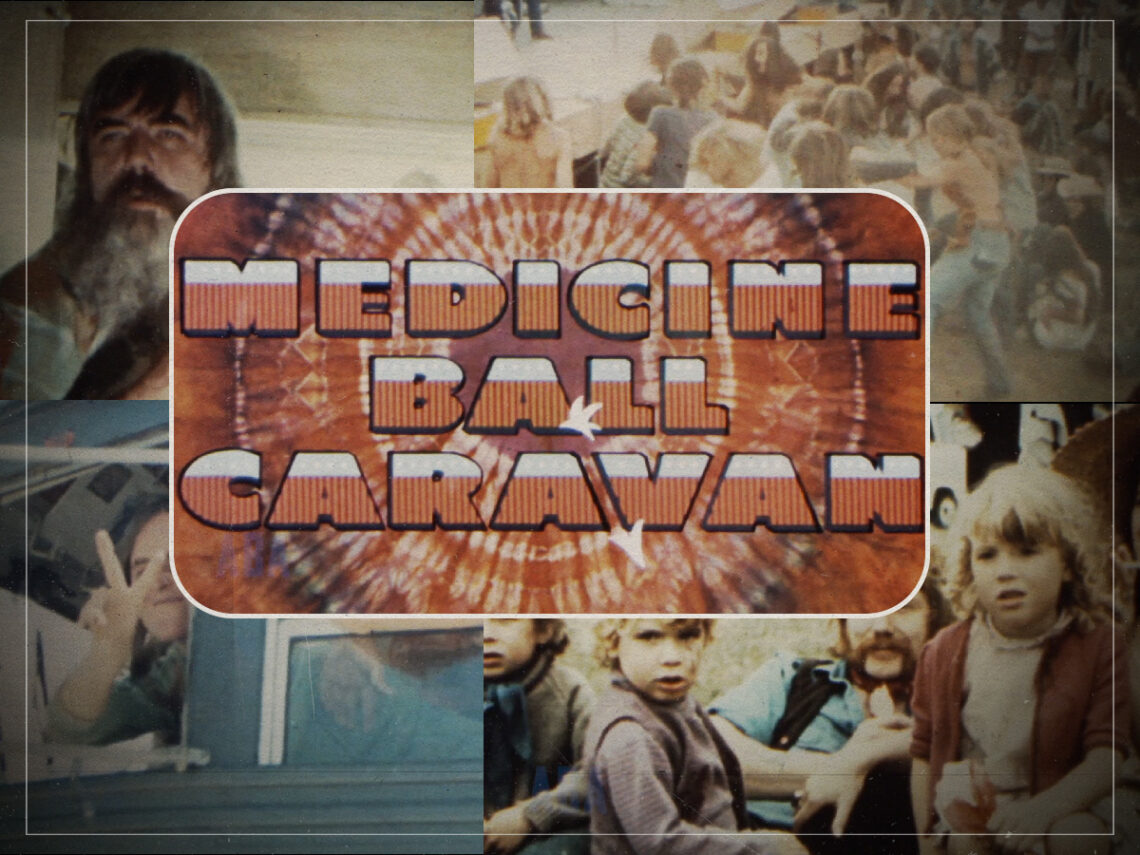
Medicine Ball Caravan: The forgotten trek of the “Woodstock on wheels”

Hippie idealism didn’t entirely die with the end of the 1960s, but there did seem to be a collective exhaustion among young Americans in 1970, as years of protest marches, music festivals, free love, and rampant drug use hadn’t done anything to end the Vietnam War or prevent Richard Nixon from coming to power.
By the end of the year, Jimi Hendrix and Janis Joplin would both be dead, and the joy was fast fizzling. On the other hand, for the influential San Francisco disc jockey, club owner, and record label head Tom Donahue, the real counter-culture movement was still just getting started, and the rest of the country just needed to find out about it.
A hulking figure bearing no small resemblance to Orson Welles, Donahue had seen the success of the Woodstock Festival in 1969, particularly the Woodstock documentary/concert film that made a surprising amount of money afterwards, and wanted to emulate it with a musical road show of his own, starring the leading lights of the Bay Area rock scene.
He sent a pitch to Warner Brothers, the producers of the Woodstock film, laying out his novel idea, which he called the Medicine Ball Caravan. “We have formed a caravan of love, discovery and sharing that will retrace the steps of the pioneers from West to East and on to the Europe of our forefathers,” Donahue wrote, “We come in a spirit of happiness and peace, with a party on wheels whose anthem is the music of the Grateful Dead, the group that more than any other represents the San Francisco roots of the Space Age Renaissance.”
Still fat off the huge profits of the Woodstock doc, Warner execs thought this caravan thing sounded pretty good, so they agreed to fund it for a cool one million dollars. Pretty quickly, however, Donahue’s idealism was met with some of that cold 1970s reality juice. The Grateful Dead, the supposed centrepiece and ‘house band’ of the tour, backed out almost immediately, and were replaced by the decidedly less noteworthy blues band Stoneground, featuring past members of the Beau Brummells and future members of Pablo Cruise.
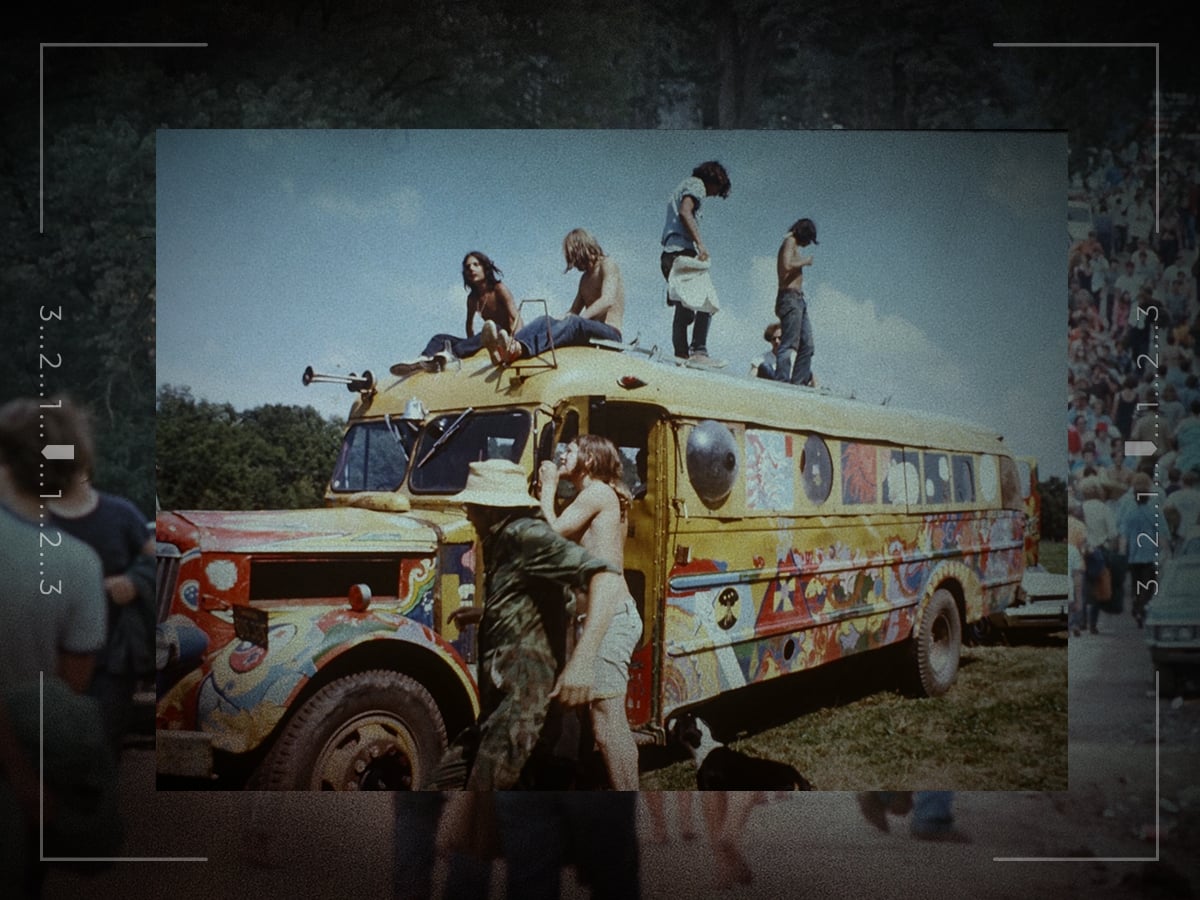
The Medicine Ball Caravan did, to its credit, still complete its mission, transporting a small army of musicians, roadies, hippie hangers-on, and a French documentary crew from San Francisco to tour stops in Boulder, Colorado, Placitas, New Mexico, Sioux City, Iowa, Yellow Springs, Ohio, and Washington, DC, among others. The Oakland Tribune called the tour a “Woodstock on wheels”, and along the way, it did manage to book some great guest performers, including Joni Mitchell, Van Morrison, BB King, the Youngbloods, and a very young Alice Cooper. There was even a closing gig across the Atlantic in Canterbury, England, featuring sets by Pink Floyd and Rod Stewart & the Small Faces.
The problem was that the caravan’s associated documentary film, directed by the recent Oscar winner Francois Reichenbach, was supposed to be the cash windfall at the end of the rainbow. Instead, the decision to have a French crew tell the story of a journey through the heart of America led to an unfocused lens and ultimately garbled message. To clean up the mess, a 28-year-old named Martin Scorsese was brought in by Warner Brothers to edit the film, based on similar work he’d done with the Woodstock movie.
“There was nine hours of footage,” Scorsese wrote in his 1989 memoir Scorsese on Scorsese, “Some of it was on 8mm, most of it on 35mm Techniscope, and the rest on 16mm. It was meant to be a two-week job… In the end, it took nine months. This was a very, very unpleasant time for me.”
Despite Scorsese’s best efforts to create a cohesive narrative in the editing room, the Medicine Ball Caravan film was an immediate failure upon its release in 1971, lacking the great performances or zeitgeisty appeal that the Woodstock doc had delivered a year earlier. A great deal of money was lost, and both the Medicine Ball tour and the film quickly faded into obscurity.
Before his death in 1975, however, Tom Donahue defended it wholeheartedly, believing it had still been a worthwhile adventure. “Apart from the movie,” he said, “I think the caravan itself succeeded in a lot of ways. It brought a great deal of community feeling to other people as it moved along. That whole feeling of ‘We are not alone’. People could say, ‘Man, do you see what’s out there? An incredible collection of freaks going across the country. There’s a lot more of them and they look like us and are interested in the same thing and they’re bringing with them this great groovy music’. And we did.”
