


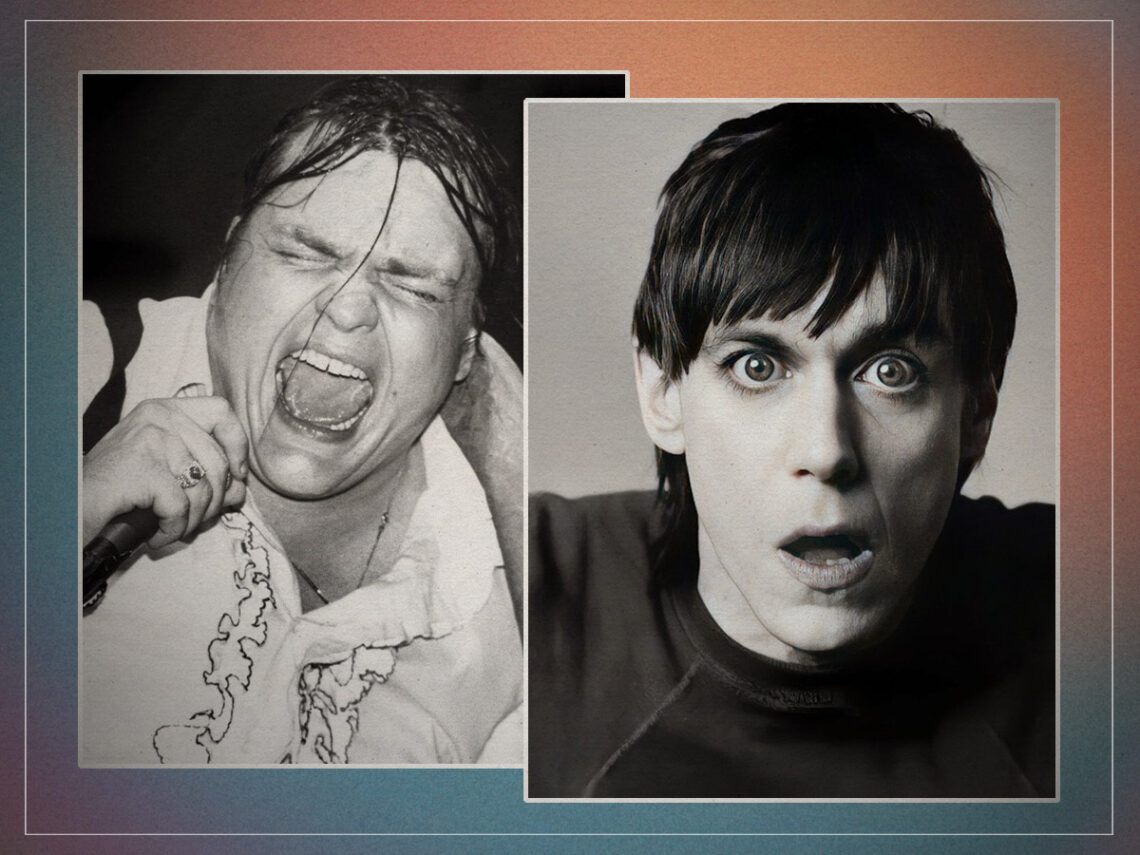
“It was over in six minutes”: Meat Loaf’s maddening cream pie experience at an Iggy Pop gig

The seismic personality and bellowing voice that radiated from every one of Meat Loaf’s pores is so fully assured and realised, it’s hard to imagine any career before his high-energy, billowing Anne Rice vampire get-up and comic gothic opera bombast.
Meat Loaf landed on the charts in earnest at a cofounding time. Just as punk and new wave were seizing the music underworld, and classic rock was wobbling into self-parody, he partnered up with key collaborator and songwriter Jim Steinman for a beguiling smash of Wagnerian theatre and high-school rock and roll that took Broadway to the fore of the day’s hard rock scene. It was more than a success.
Selling over 40million reported copies, 1977’s Bat Out of Hell still stands as the ninth biggest-selling album of all time, an utterly unique slice of conceptual prog pop that stood apart from the trends around it.
Two sequels would follow—1993’s glossy ‘I’d Do Anything for Love (But I Won’t Do That)’ mulch off the grandiose Bat Out of Hell II: Back into Hell—but Meat Loaf’s original would stand tall in the rock world as his premier offering, its motorcycle ride out of the underworld artwork an instant classic that sat proudly against Led Zeppelin’s Hindenburg disaster or The Rolling Stones’ zipper jeans in many record collections.
Yet, the road to his lusting over Karla DeVito on The Old Grey Whistle Test’s ‘Paradise by the Dashboard Light’ performance was a long one. Before turns in The Rocky Horror Picture Show and the Hair musical was a spell in late 1960s Michigan fronting former band Popcorn Blizzard. The new proximity to Detroit would prove foundational.

Not only would Meat Loaf be briefly signed to Motown, label subsidiary Rare Earth misspelling his name for the Stoney & Meatloaf soul duo with Shaun Murphy, but routine opening gigs at the city’s landmark Grande Ballroom would see the fledgling band share bills with everybody from The MC5, Bob Seger, and Alice Cooper before his glam-horror pomp.
No band could touch The Stooges in the Detroit music scene by the counterculture’s close, however. Fronted by the immortal Iggy Pop, Meat Loaf caught an early show in 1968 while they were still operating as The Psychedelic Stooges, their feral garage rock explosion yet to be captured on their eponymous and immortal 1969 proto-punk document. While Pop would trigger greater notoriety, The Stooges still licked up any competition during the 1960s’ dark musical curdle, wowing a young Meat Loaf in the crowd with their sheer raw power.
“His band consisted of the MC5’s road crew, none of who could play an instrument,” Meat Loaf recalled to Classic Rock in 2010, expanding, “The whole set was one song in the key of E. After an instrumental intro, in the key of E, Iggy came on, immediately took off his T-shirt and then started maiming himself by sticking needles through his fingertips and in his chest. He then somehow got hold of a cream pie, jumped off stage and started making out with this poor guy’s girlfriend.”
He added, “So this guy’s freaking out, and Iggy just laughs and slams the pie in this poor kid’s face and starts rubbing the cream all over himself. And then he jumps back on stage and disappears. That was the whole show. Fucking hilarious! It was over in six minutes.”
Pop had been taking notes for years at this point, scribbling down the animated charisma of James Brown and Mick Jagger before truly finding the light in The Doors frontman Jim Morrison’s mesmerising violence, but once he’d found his Stooges, he would establish a ferocious standard few ever matched. While never pushing transgressive boundaries in the same way, there’s no doubt that that fateful Stooges gig pointed the way to the young Meat Loaf to give his everything, cream pie ‘n’ all.
