


‘Me Deixe Mudo’: The song-by-numbers that came before Talking Heads’ ‘Stop Making Sense’

Stop Making Sense begins with David Byrne simply walking out onto an empty stage and announcing: “Hi, I’ve got a tape I wanna play”. Thereafter, his Talking Heads bandmates steadily join him song-by-song, and the stage is constructed around them, culminating in a crescendo that crowns the whole enterprise the greatest concert film of all time. It typified the imagination of a band at the peak of their powers. It was art in motion and remains a joy to watch.
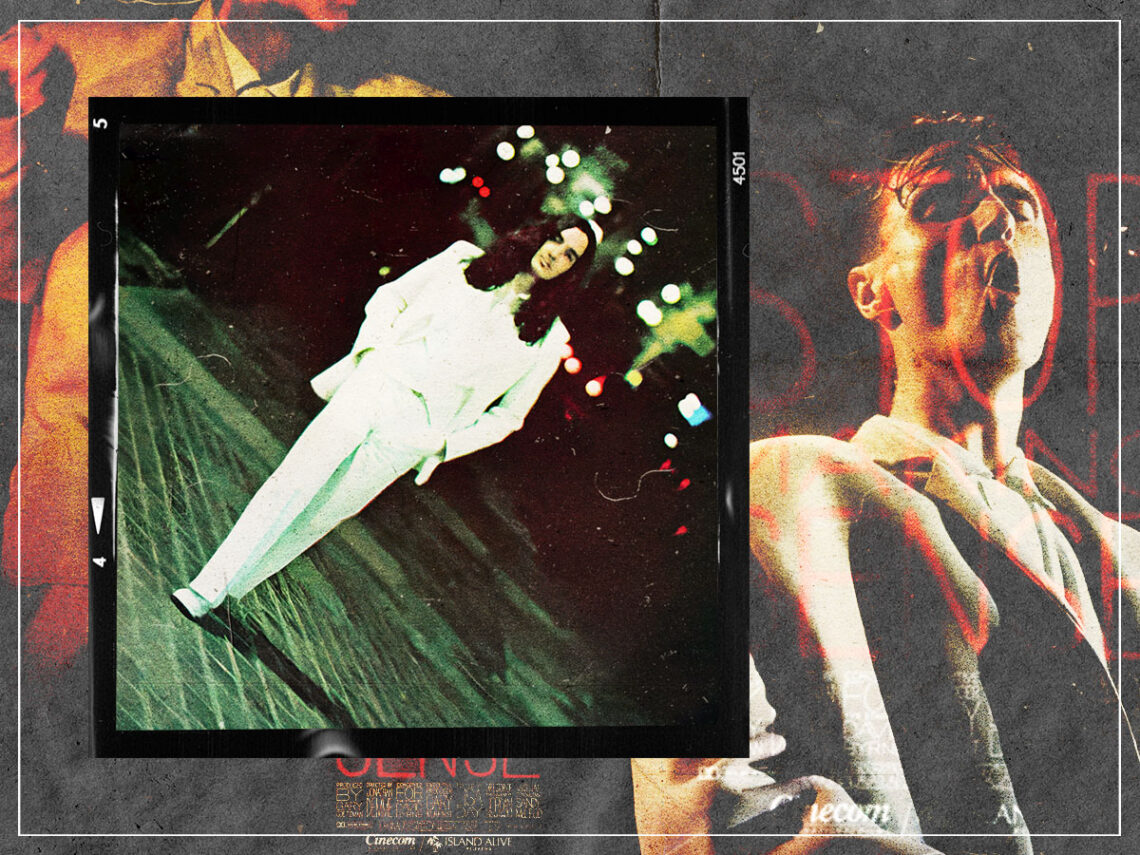
However, before Stop Making Sense, there are an artistic precursor that applied the same principles of the film in a song. Given Byrne’s love for music off the beaten track, it may well have even served as an inspiration for the Talking Heads’ team-up with director Jonathan Demme. Written by the experimental Brazilian musician Walter Franco in 1975 for his boldly titled album Revolver, ‘Me Deixe Mudo’ traverses the same song-by-numbers path that Stop Making Sense abides by.
The song begins in spasmodic fashion. But soon, the composition becomes clear: Franco is assembling a whole song from its component pieces. He breaks chords down to their individual notes, turns melodies into grunts, cymbals become sniffs, and rhythms are sporadic clicks or claps. Slowly, the notes then speed up until the point they are played as chords. The melodic topline begins to formulate into words. The grunts and clicks are solidified as instrumentation.
From nothing, we are presented with the bare necessities of music, and within six minutes, we have a campfire song to strum and chant along to. This return to basics in order to fully understand the compositional potential of music is something that has always been central to both Walter Franco and David Byrne’s respective output.
However, perhaps most pertinently, Franco’s song and Stop Making Sense reach a sort of communicative finale beyond the avant-garde attitude that inspired them. ‘Me Deixe Mudo’ vitally transcends its clever concept (just before it becomes annoying) to become something that can be sung around a campfire. And Stop Making Sense transfigures quirky artistic ingenuity into something that pretty much makes for the perfect Friday night at home with a bottle of wine.
However, in the act of doing so, they both make a point about the nature of creation—about the joy of starting on a blank page and suddenly conjuring art from the ether. This has a distinctly subversive message in many ways. As Byrne writes in his book How Music Works: “The act of making music, clothes, art, or even food has a very different, and possibly more beneficial effect on us than simply consuming those things. And yet for a very long time, the attitude of the state toward teaching and funding the arts has been in direct opposition to fostering creativity among the general population. It can often seem that those in power don’t want us to enjoy making things for ourselves—they’d prefer to establish a cultural hierarchy that devalues our amateur efforts and encourages consumption rather than creation.”
Byrne continues: ”This might sound like I believe there is some vast conspiracy at work, which I don’t, but the situation we find ourselves in is effectively the same as if there were one. The way we are taught about music, and the way it’s socially and economically positioned, affect whether it’s integrated (or not) into our lives, and even what kind of music might come into existence in the future. Capitalism tends toward the creation of passive consumers, and in many ways this tendency is counterproductive.”
By breaking their art down into such basic components, Byrne and Franco allow us to see that freedom, exploration and simplicity can become something mighty, connective, and joyous. It’s all just a collection of notes, we can all do that, and great things can be built from it.
