


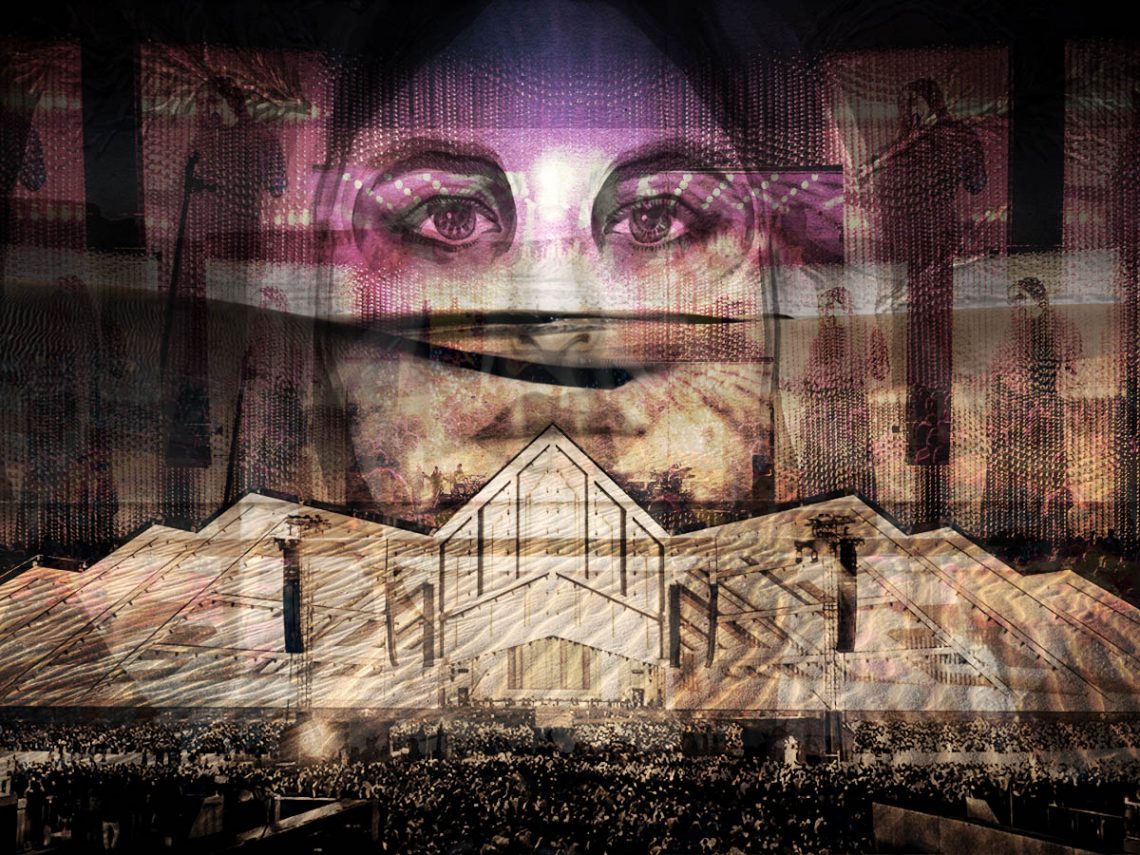
MDLBeast Soundstorm: A music festival with the ability to predict the future?

This past weekend, I witnessed what could be seen as the future of music festivals, for better or worse. Soundstorm, a blockbuster event like no other, took place on the outskirts of Riyadh, the capital city of the controversial Kingdom of Saudi Arabia. Headlined by the likes of David Guetta, Bruno Mars and DJ Khaled, the festival marked what appeared not only to be a new dawn for the entertainment industry but also for a long-maligned country as a whole.
Now to caveat this article, I must first do some housekeeping. As the editor-in-chief of this website, this is a piece that has long troubled me as I battled between the moral, ethical and journalistic values of writing such a feature. I have struggled with the idea of shining what could easily be seen as a positive light on a country that has long been criticised for a series of human rights issues. I, nor this publication, support the oppressive laws set out by the unitary absolute monarchy. Far Out has long strived to be an open source of culture while also supporting the LGBTQ+ community, championing women’s rights, and pushing for racial equality. While debating this article, it was clear that more discussions are taking place in countries of concern. Qatar is hosting the FIFA World Cup, the women of Iran are fighting for a revolution, and Saudi Arabia is entering the public consensus with high-profile business, tourism and cultural transactions.
Like so many of these decisions, you have choices to make. To put it in simple terms, you can follow the lead of artists such as Roger Daltrey and boycott a location based on principle, or you can choose the side of Nick Cave by visiting a country, forging your own views and stating factual information in the process. I opted for the latter, resting safely on the trust I have in the journalistic process, confident that I can deliver an overview of what is undoubtedly a challenging topic but one that has many layers. Far Out Magazine is a culture website, first and foremost, and to ignore what I witnessed as a significant international shift in culture would be remiss. However, I have balanced this with crucial statistical and factual information that should never be ignored. For added clarity and to ensure integrity, I was not paid a fee for this article. The PR company tasked with promoting the festival supplied me with flights and accommodation in order to report on the event, to which I have since made a donation to Amnesty International of an equal sum.
With the admin out of the way, let’s discuss the event at hand.
David Guetta, who headlined Saturday night on the Big Beast stage at Soundstorm, commented during a press conference at the festival that the feeling of performing in Saudi Arabia was “so special” because it “feels like being part of something that’s bigger than me” — it’s a sentiment that rings true. While in Saudi Arabia, I broke free of the press trip group and took four separate Uber journeys to four different locations in Riyadh, engaging with locals and attempting to get a feel for the movement taking place. “Five years ago, you wouldn’t have recognised this place,” Abdullah, the taxi driver, told me. I was hesitant about engaging too much, as I was aware that raising such conversations could have the potential to cause unnecessary unrest. “What do you mean?” I tentatively asked. Abdullah proceeded to explain that a series of changes enforced by King Salman of Saudi Arabia have altered the path of the country.
Shockingly, it was only in 2017 that women were allowed access to government services, such as education and healthcare, without the consent of a male guardian. That same year, the abolishment of a decades-old law stopping women from driving a car was confirmed. Other pivotal changes, such as allowing women access to passports, filing for divorce, joining senior ranks in the military and living alone independently, have all been approved in landmark rulings for Saudi Arabia. While the recent dates of these decisions seem jarring, my driver Abdullah – like all of the people I met during my visit – was wonderfully proud of the transformation taking place. But let’s be clear, there is still a monumental way to go.
It should come as little surprise, then, that amid this five-year period of change, Ramadan Alharatani, CEO of MDLBeast, launched an entertainment company that would look to merge giants of Western culture with the conservative values of Middle Eastern life. However, alongside the support of Mohammed bin Salman Al Saud, the seventh son of King Salman and the Crown Prince of Saudi Arabia, MDLBeast has capitalised on the relaxation of certain policies to a level of success that will have surprised many.
Over the past 15 years or so, I have attended a lot of music festivals, both in a professional and personal sense. However, as the constraints on the entertainment industry are felt across Europe, major events have started to push the boundaries of acceptability. At most festivals today, ticket prices are hiked up to unattainable levels, VIP passes take precedence, bar prices make you squirm and overcrowding ushers attendees through cattle-like passages of advertisements. Large-scale events are big business, but financial decisions have started to outweigh the importance of the experience for ticket-buying attendees. During Soundstorm, I was reminded of what it felt like to attend a festival that felt specially curated to deliver the best possible experience for ticket-paying punters.
While a reported 600,000 people attended the 2022 Soundstorm event – making it one of the largest music festivals on the planet – very rarely did it feel as though crowd levels would hamper the experience. With seven stages in total, over 100 food vendors and a high-line walkway connecting the entire event, Soundstorm has built a small city structure, one that has been carefully designed to deliver the best possible environment for the enjoyment of music. Among the seven stages – each one boasting a level of production that feels unfathomably high in quality – was the Big Beast stage, a Guinness World Record-breaking structure of 135.5ft. Each stage felt like a realisation of what was possible with the utmost detail, and, in truth, it made me feel short-changed when considering the European festivals I had attended in the past. Even when some of the music on show was objectively bad, the sheer absurdity of technology on display was enough to draw you in.
Across the 260 hours of music produced by 200 artists, the likes of Michael Kiwanuka, Chet Faker, Peggy Gou, and Skinny all impressed greatly, offering another dimension to the superstar names pinned to the top of the line-up poster. Drone shows, pyrotechnics, and dance tents all added to the level of hysteria that was building on this plot of land in the desert, all of which sporadically broke into silence for Islamic prayer times. It increased the surreal nature of what was unfolding.
Of course, I need to address the elephant in the room: what was the atmosphere of a music festival in a country in which alcohol and drugs are strictly illegal? Well, to the locals, it meant nothing. To an Englishman writing this article, a cold pint would have gone down very well. Alas, those in attendance were buoyed by the taste – albeit a small three-day sip – of a new life beyond the social constraints in which they live. While segments of the crowd would dance into their phones in what looked like an attempt to recreate a scene from a music video, the majority of music fans appeared so overwhelmed by the event that they simply bounced up and down on the spot, reminiscent of a pre-pubescent school disco in which the body and mind can’t quite join forces amid the excitement. It was a genuinely wholesome sight to witness what felt like half a million people releasing a weight from around their shoulders in the form of expressive movement.
As the festival progressed, so too did the crowd. The weekend began to peak, and the Saudi audience had grown to appear far more relaxed — and so did the normal societal behaviours. Come Friday night, considerably fewer men were wearing their traditional white robes – called the thobe – and so too had the headscarves (Keffiyeh) disappeared. Women, many of whom wear the black full-body cloak and Abayas in public spaces, had shed their outfits in favour of jeans, glittering trousers, and vests, allowing their hair to flow down beyond their shoulders while up on their feet dancing.
As the clock clicked beyond midnight, the event had transitioned into something different altogether. While alcohol is strictly illegal and punishable by lashing, I have no qualms in telling you that many people inside that event were royally fucked up on moonshine – and I know festival organisers won’t thank me for stating that, but it is crucially important to what I experienced. Young men, with glitter adorned across their faces and stumbling into the next stage, were holding hands, often looking at one another with an intimate gaze, flouting the law that makes homosexuality illegal. It was clear that as darkness set on the festival location, positioned a 90-minute drive from the reality of Riyadh, many people with different views, different sexualities, and different opinions felt safe to reveal their true selves — even if it was just for three days.
Of course, it would be irresponsible of me to paint a perfect picture of an event that was, at times, undoubtedly troublesome. The merging of two cultural identities is never going to be straightforward, and the core principles of a music festival, set out by Woodstock during the 1960s, is one of free love, acceptance, the loss of inhibitions and more — most of which is illegal in the Kingdom of Saudi Arabia and punishable by lashings, prison or even death.
The balance of gender was a deeply concerning one, with men outweighing women by a staggering amount. With that, more staff was made available by the festival, men in purple waistcoats dotted around the crowds and armed with walkie-talkies – these staff members were described as “harassment police” by a member of the press group. It was their job to be available for any person who felt the advancements of another too strongly. In fact, that same journalist who was discussing the harassment police also detailed troubling allegations of being groped by men while she was in the crowd. In truth, I alone, in the short time I was in and around the deepest mass of people, witnessed two separate incidents in which a young woman appeared vulnerable and was forced to reach out to a staff member for help.
I know a lot of people reading this – especially women – will be quick to point out that music festivals around the world have issues with harassment, given that a poll by The Conversation found that “34% of female respondents reported being sexually harassed or assaulted at a festival in the previous few years”. And, of course, I am not confirming that such behaviour took place at Soundstorm, but I did personally witness two moments that made me feel extremely uneasy. In reality, this is simply a reflection of the society in which these young men have been raised, one that has pitted women as second-class citizens for the majority of their lives. As aforementioned, regrettably, the merging of Western culture in a strict Middle Eastern country was always going to throw up these incidents. To their credit, the festival organisers had undoubtedly put a lot of thought and consideration into ensuring the safety of women, with staff on hand at every moment.
With relatively low ticket prices and a lack of alcohol sales to increase revenue, questions regarding the financing of Soundstorm have long been debated, with rumours of state funding propping up areas of the bill. While in attendance, I could not stop thinking about moments in history that defined a change: the Civil Rights Movement, the Arab Spring rising, the current battle for women in Iran – all are instances that, in some way or another, involved singular acts of protest, be it Rosa Parks keeping her seat on a bus or Hadis Najafi, the young Iranian woman who tied her unscarved hair back before stepping into the middle of a protest and being shot dead. I felt troubled because, as I looked around the thousands of people in attendance at Soundstorm, I felt like a revolution of sorts was taking place, but I could not identify an individual act to pin it on. But as I sat on my flight home, I continued to mull it over. While Soundstorm may not have its leader of change, the event as a whole showed that perhaps revolution can occur as a collective will for the arts. If the Saudi regime has plough money into an event as a “culture washing” exercise, as some have suggested, then they may be shocked to find out the youth in attendance appear to have seen a new side to life in their home country.
While Soundstorm will be celebrated for its vast production value, its momentous organisation and supremely impressive technological advancements, perhaps its greatest achievement is that of a metaphorical time machine. Inside the confines of the festival walls was a three-day glimpse at a potential new future for Saudi Arabia, one in which the youth shape a fairer world – a world built on the freedom of creative expression.


