


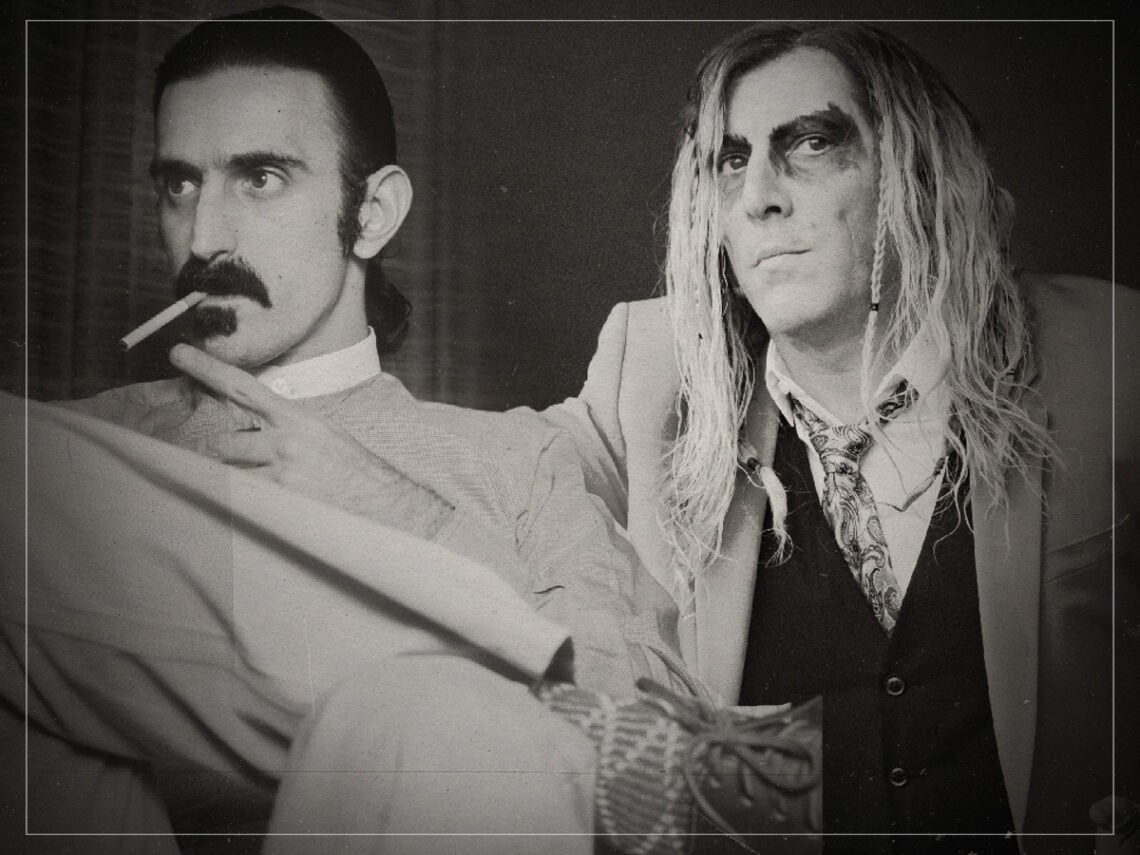
“Doesn’t move me”: Maynard James Keenan’s big issue with Frank Zappa

Even the most committed hater will agree that a fierce originality shines across Frank Zappa’s unwieldy oeuvre.
From his first real debut with 1966’s Freak Out! to 1993’s The Yellow Shark shortly before his death, the mountainous discography Zappa powered through across not even three decades is all stamped with that uniquely cartoon satirical lens gunked across his hectic grab at anything from jazz explorations, orchestral bluster, comix rock attack, and digital Synclavier experiments.
His artistic curiosity and distinct voice are, without question, all qualities beloved by hardcore devotees of the teeming Zappaverse. But not everyone dug it. Despite softening his stance later in life, Lou Reed held particular venom for the Mothers of Invention captain across much of his career, John Lennon lambasted his “intellectual” approach to music, and years later, while often presumed to stand as a major influence, the Ween duo confessed to Zappa’s sarcasm leaving them both cold.
A similar sentiment was offered by Maynard James Keenan. Speaking to music journalist Darryl Sterdan in 2012, the Tool frontman echoed the criticisms routinely directed at Zappa’s body of work. “That’s heady stuff,” he revealed. “It doesn’t hit you on an emotional level. It doesn’t soothe me. Don’t get me wrong; I really enjoy the theatrics and comedy sewn into Frank Zappa’s music. It’s just the music that doesn’t move me.”
It’s an assessment you’ll often hear, admiration over any real personal affinity or feeling for Zappa’s songbook. The same could be said for Tool. Emerging as one of the leading forces of the 1990s’ alternative metal explosion in the States, a penchant for progressive rock complexities and esoteric conceptual cloaks has won a feverishly intense fanbase enamoured with their lofty explorations, while the rest of the metal world can’t see past the band’s perceived pretensions.
There’s no pompous conceits with Zappa, but there’s certainly snobbery. An impregnable elitism surrounds the Zappaverse like a sneering fortress, his voluminous output slathered with a cynicism that can flash moments of acidic humour but often just revels in a joke you’re not party to.
Such serrated snark works brilliantly on We’re Only in It for the Money, The Mothers’ poison-tipped riposte to the era’s Summer of Love, but later records like Sheik Yerbouti or the Joe’s Garage rock opera lapse into heavy-handed satire fuelled by an artist convinced of his superior elevation above the conforming masses.
He was a libertarian, basically. Avowedly a freak in the Beat tradition with next to no love for the hippy idyll, Zappa’s strict anti-establishment belligerence expressed itself in a DIY fervour that hated unions and championed conservative notions of ‘self-reliance’, such individualism veering into a self-satisfaction later in life, a queasy tendency to marvel in his own lofty pedestal above mainstream mediocrity. Mixed with a fastidious perfectionism, busy compositional style, and a reputation for minor tyranny as a band leader, the unfeeling barriers around his work become less of a surprise.
Not that Zappa cared. Forever straddling a tension between confident visionary and arrogant aloof, the differences with his work would only have fuelled his antagonistic hubris, an ingredient essential to the Zappaverse that powered his uniquely towering presence in rock in all its artistic heights and plummets into haughty gatekeeping of his own, creative world, that James and many others just never felt the Mothers captain ever invited in.
