


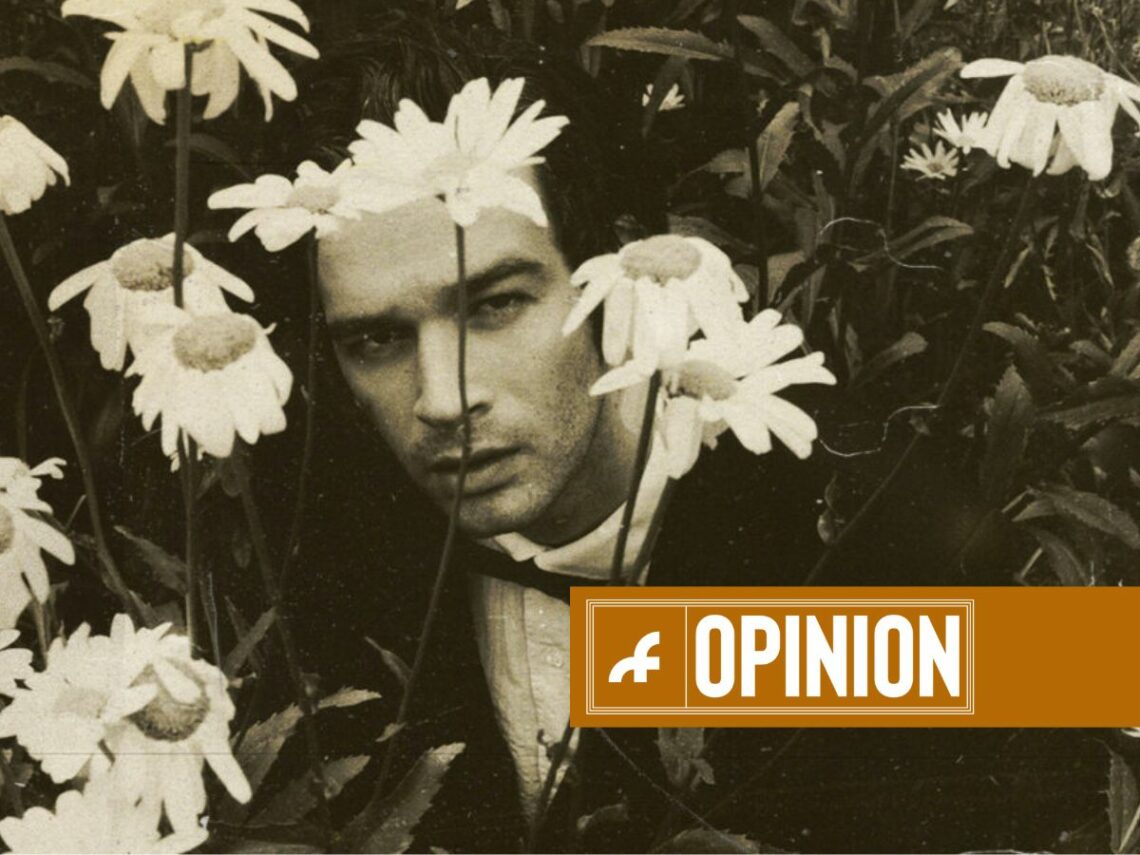
Hear Me Out: The 1975’s Matty Healy epitomises everything wrong with the music industry

It’s no secret that the music industry is alarmingly prejudiced. Breaking into this highly competitive world is much more challenging if you’re a woman, working-class, non-white, LGBTQ+ or disabled – that’s a sad but unavoidable fact. You only have to look at this year’s festival lineups – just 20% of the headline acts at 104 festivals feature female artists – to see that the music industry is skewed in favour of mainly white men.
The music industry’s penchant for male musicians is, of course, a reflection of society at large. Over the decades, many of the world’s most prominent male musicians have been accused of terrible things, to the extremes of sexual violence and racism, yet they are still revered and adored. If we were to stop worshipping classic male musicians because of their bad behaviour, we’d have very few left to listen to.
In contrast, female artists are routinely slammed by the media and condemned for minor ‘offences’, like having lots of boyfriends (Taylor Swift), being sad (Lana Del Rey) or making an impassioned speech (Fiona Apple). While female artists aren’t immune from criticism, and Swift’s brand of non-inclusive white feminism is a whole separate issue, they are often attacked with targeted gender-specific language for non-issues, while their male counterparts are excused for significantly worse offences.
The 1975’s Matty Healy epitomises the music industry’s championing of male supremacy and disregard for female artists. The musician, the son of actors Denise Welch and Tim Healy, got his start as a child, appearing as an extra in his parent’s shows. He attended multiple private schools before settling in a comprehensive, where he met his future bandmates, joining a group which would eventually become known as The 1975. After a decade of playing together, the band began releasing music seriously in 2012, with their self-titled debut album coming out the following year.
The 1975 were quick to find success online, especially on Tumblr, where masses of teenagers reblogged images of Healy, stills from their music videos, or text posts of their edgiest lyrics. Alongside the likes of Arctic Monkeys, Lana Del Rey, The Neighbourhood and Halsey, The 1975 defined many people’s adolescence during the early 2010s. Their reign has only continued as the years have passed, winning four Brit Awards, among other prestigious accolades, and routinely selling out arena shows. Yet, Healy, the band’s frontman, remains a curious figure.
Having grown up around his parents and their famous friends, Healy’s desire for fame and notoriety seems to have been present from an early age. From the beginning of his career, Healy has engaged in controversial behaviour, like when, at age 23, he dated a 17-year-old. As the years have progressed, Healy has purposefully attempted to spark debate and put himself in the news, practically begging for headline-grabbing attention – which he duly receives.
There are a number of terrible things that Healy has done and said over the past few years, but his appearance on The Adam Friedland Show in February 2023 is easily the worst. On the podcast, Healy exhibited racist and misogynistic sentiments, all while laughing with the co-hosts. He admitted to watching Ghetto Gaggers, porn which involves black women being dominated, brutalised and humiliated by white men. He also laughed along with the hosts as they described the young rapper Ice Spice as an “Inuit Spice Girl” and a “chubby Chinese lady”, despite the fact she is of Nigerian and Dominican heritage. After they performed various offensive accents, Healy chimed in, “Yeah, that’s what Ice Spice is like”.
Shockingly, Healy was asked, “So you slide into [Ice Spice’s] DMs and ask ‘What are you? A fucking Eskimo or something?’” to which Healy replied, “Yeah, that’s what I was like, you fucking [unintelligible]”. The frontman also encouraged the hosts to make impressions of Japanese Nazis working at a concentration camp. That’s just the tip of the Matty Healy iceberg; throughout his career, he has spouted a relentless barrage of ignorant, misogynistic, racist and privileged statements, even telling British GQ that he’s “never really been a witness to that much prejudice”.
When Healy was criticised for his comments on The Adam Friedland Show, he brushed off his offensive behaviour by telling The New Yorker: “It doesn’t actually matter. Nobody is sitting there at night slumped at their computer, and their boyfriend comes over and goes, ‘What’s wrong, darling?’ and they go, ‘It’s just this thing with Matty Healy.’ That doesn’t happen”. At a recent gig at Finsbury Park, he attempted to excuse his comments once again, telling the crowd: “I was always trying stuff. And some stuff I got right and some stuff I got wrong”.
He added: “What I mean is that I really am only doing this because I want to make you guys laugh and feel good. That’s what my favourite art does, and that’s what I’m trying to do. I get a bit excited.”
You have to possess an enormous sense of privilege, self-entitlement and delusion to believe that you can get away with racism, sexism and being an all-around wanker just because you’re trying to make your fans laugh. Since when was perpetuating harmful stereotypes about marginalised groups and subsequently putting them at greater risk of verbal and physical violence funny? Because Healy has “never really been a witness to that much prejudice”, he surely can’t comprehend the mammoth effect of his words, even if he claims otherwise. If he actually did, he would keep his mouth shut.
Aware of his status as a privileged white man, Healy presents himself as an ‘intelligent arsehole’ type who acknowledges the damaging effects of his behaviour. Yet, this only makes him more detestable. His supposed awareness of the damage his words can cause – especially as a man with staggering power in the music industry – paired with his insistence that he’s just a funny, purposefully problematic guy, is nothing short of vile. As a man in one of the UK’s biggest bands, he has the power to uplift female artists who are constantly up against gender-based hurdles. Instead, he chooses to laugh along with sexist and racist comments, targetting a successful young female artist who has been at the brunt of many misogynistic comments since emerging last year.
His behaviour is like a kick in the teeth to female artists who work themselves to the bone to become musicians, facing a completely different experience of the music industry than Healy could ever comprehend. The 1975 have never faced gender or race-based setbacks, and as much as Healy likes to posit himself as someone aware of his privilege, he is no better than your average neighbourhood chauvinist. You see, Healy attempts to mask his derogatory behaviour behind overwhelming charm, self-awareness and artistic style. It’s easy to see why Healy gets away with so much and how he easily manipulates his fans into thinking he isn’t that bad.
By positioning The 1975 as a left-wing band and championing LGBTQ+ rights, Healy successfully fools people into believing that he’s not a totally terrible person. In interviews, he appears witty, smart and down to earth. The beginning of the ‘Girls’ music video sees Healy deliberately acting in a pretentious manner, saying, “We’re not a pop band. [The video] needs to be in black and white”. For many fans, this mask is enough to convince them that Healy’s occasional racism and sexism are fine because he knows it’s wrong; he’s just trying to provocate.
But in a world where white, privileged men dominate everything, including the music industry, Healy is just another cog in this tyrannical wheel, and no amount of self-aware humour makes his perpetuation of oppression justifiable. When Rina Sawayama took to the stage at Glastonbury, she opened her song ‘STFU!’ with a glorious take-down of Healy, stating, “So tonight, this goes out to a white man that watches Ghetto Gaggers and mocks Asian people on a podcast. He also owns my masters. I’ve had enough!”
While Healy and his bandmates have had no trouble finding recognition, Sawayama, who moved to England from Japan when she was five, has experienced significant prejudices despite her visionary talents. For example, after living in the UK for 26 years, she was deemed unable to compete for a Brit Award because of her Japanese passport. “I think a lot of immigrants feel this way – where they assimilate, and they become part of the British culture,” she told BBC News. “And to be told that we’re not even eligible to be nominated is very othering”. Luckily, this led to a change in the Brit Awards rules; now, artists who have lived in the UK for more than five years are eligible for the main accolades.
While rising female artists are quickly labelled as industry plants – just one form of gender-based discrimination that happens on a daily basis in the music world – Healy and his mediocre band are a prime example of the industry’s patriarchal nature. When a man with as much influence as Healy makes such damaging comments, he only places women further on the sidelines, highlighting how the music industry is a ‘boy’s club’ where women have to continually fight to be heard. Despite his abhorrent comments, The 1975 have recently played shows to thousands of adoring fans. Healy has got away with a lot, unfortunately emphasising the corruptness and bigotry at the heart of the music industry.
