


‘Universal Language’ movie review: a quirky comedy from Matthew Rankin

Unconventional director Matthew Rankin affirms his reputation for atypical filmmaking with absurdist comedy Universal Language. The quirky, experimental production has seen critical success from the beginning: it received the audience award during its premiere at Cannes and is the Canadian submission to the Oscars in the ‘Best International Feature’ category. While creative and cleverly handled, it is also a wild ride, as challenging and confusing as it is enjoyable for its deadpan humour and incongruities. Rankin has described his intentions as “trying to look at the world in a new way,” a unique vision which may have viewers struggling to keep up.
The film begins by scrambling places, people, cultures, and languages in unexpected ways. Although set in a version of the director’s English-speaking home city, Winnipeg, all the dialogue is in Persian or French. The half-real, half-fictional setting is an invented society in which central Canada is an amalgamation of standard Canadian and Iranian culture mixed in random and completely irrational forms. Both spoken language and signage are in Persian (relying on subtitles and occasional on-screen translations of written material), and cultural norms overlap each other in interesting and often comical ways.
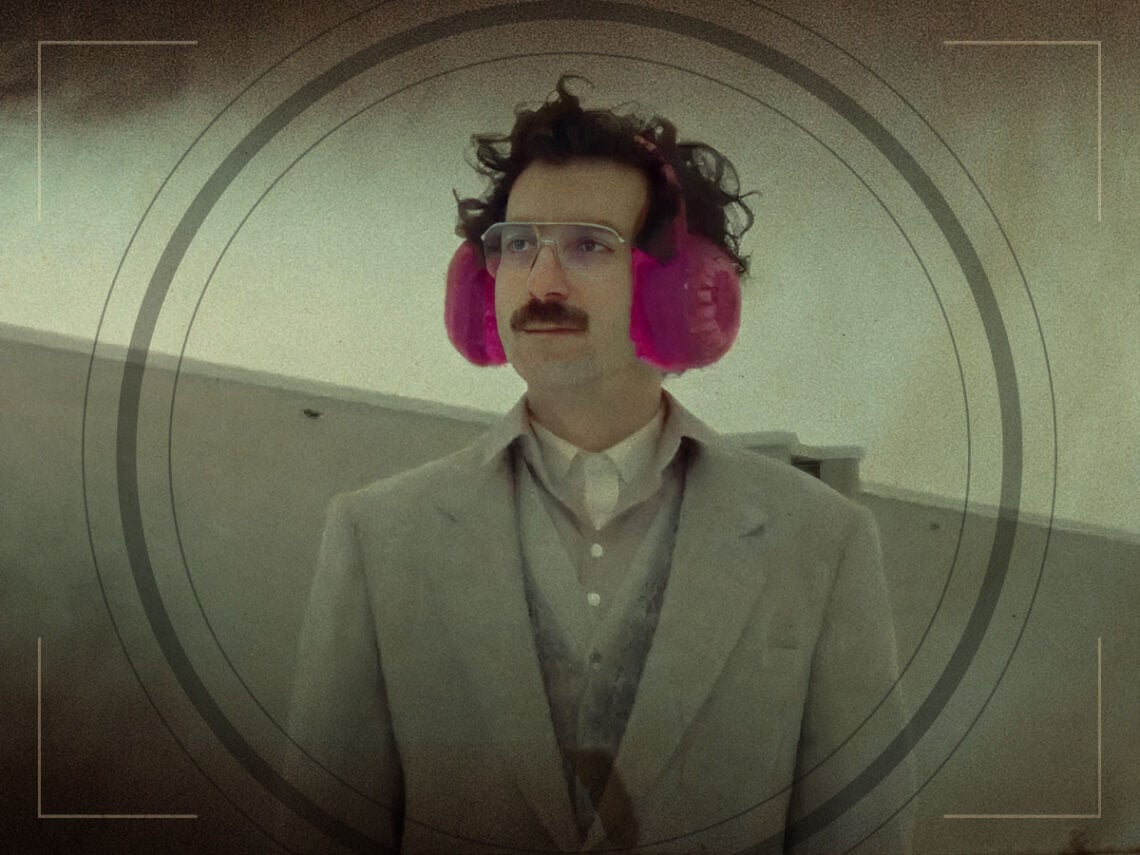
Following a playful introduction in which schoolchildren predict their future careers (some of which are later shown to come true), a series of minor plots make up the story, the isolated tales eventually finding common ground and coming together in the final act. Children find a banknote frozen in the ice and try to find a way to access it; an office worker (played by the director) resigns and returns to his home in Winnipeg, hoping to reunite with his elderly mother; a young husband and father (Pirouz Nemati) gives guided tours of Winnipeg’s most comically banal tourist destinations. As the characters from the various sub-plots gradually find their way to one another, their efforts and the people and places they encounter along the way make an odd but touching statement about community and common humanity.
Rankin’s dissident approach to film conventions is likely one reason for the enthusiastic support from movie lovers. Universal Language has a second layer, which references many of Rankin’s influences, from modern Iranian films to fellow absurdist director Guy Maddin to brutalist architecture, frequently playing with the language of film.
It also regularly diverts from traditional camera work with interesting results, such as when the focus is placed on distinctly drab buildings rather than the faces of the characters or when the film toys with movie artifice by making it obvious, jokingly reminding the viewer that he is seeing a movie. His creative aberrations include an office scene that captured much attention from film buffs by firmly breaking the cinematic convention known as the 180-degree rule, giving the scene a vaguely weird atmosphere.
This is decidedly a comedy, even if a distinctly poker-faced one, which especially uses contrast and absurd cultural mismatch as a source of humour. For example, the ubiquitous Tim Hortons coffee shop chain keeps its trademark colours and signage (in Persian) but is fitted with samovars rather than coffee machines.
Later, two passengers on a bus dreamily recite what seems to be an Iranian love poem, while subtitles reveal it to be the lyrics of a 1960s pop song. Rankin describes this as a “blending of codes” in which two cultural spaces overlap “like a Venn diagram”. He admits some of the combinations are ridiculous, “but it’s also our world” as “the world is full of these strange intersections.”
Additional comedy comes from Rankin’s flair for the bizarre, allowing the fictional Winnipeg to include a fixation on turkeys (both as food and as wild animals), a strangely elevated significance of Kleenex in various social situations, and an array of colourful characters, even in the most incidental scenes. It’s an approach that works surprisingly well once the viewer is able to let go of expectations and simply accept the film’s imaginary world on its own merits.
Rankin’s efforts are held back somewhat by the often confusing and obscure content, but the quirky comedy and the movingly expressed theme overcome its cryptic storyline.
