


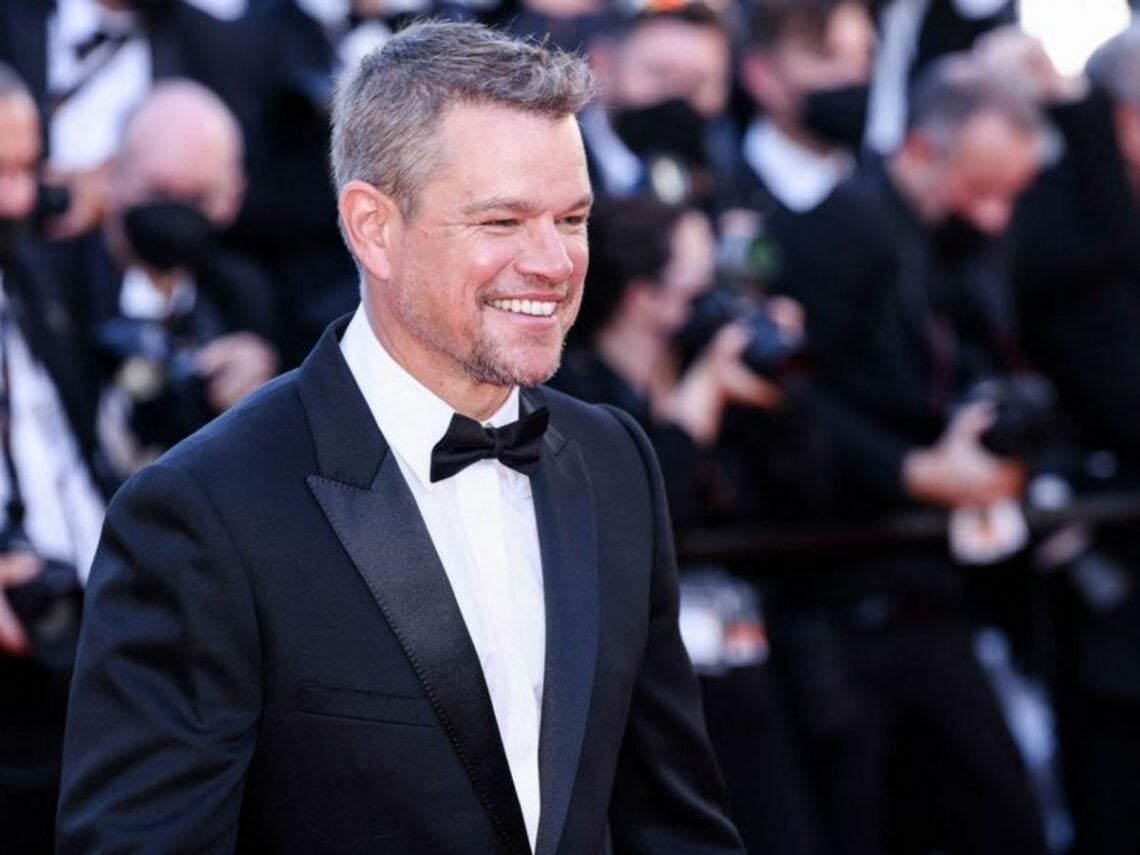
Matt Damon names his favourite Stanley Kubrick movie

One of the movie world’s most recognisable A-listers, Matt Damon first burst onto the scene in the 1990s. After a string of well-reviewed roles, the actor won critical and commercial success with 1997’s Good Will Hunting, a screenplay written initially for his Harvard English Class. The film was nominated for no fewer than nine Academy Awards and made Damon a star, opening the floodgates to a wave of starring roles in such films as Saving Private Ryan, The Talented Mr Ripley and The Bourne trilogy. Here, Damon names his favourite movie by revered auteur Stanley Kubrick.
Sitting down with Rotten Tomatoes shortly before the release of 2021’s Stillwater, Damon was asked to select five of his favourite films. After revealing a reverence for Francis Ford Coppola’s The Godfather and Martin Scorsese’s Goodfellas, Damon took the time to speak about Stanley Kubrick’s 1964 film comedy Dr Strangelove.
“That’s another good comedy and a Kubrick movie, so it ticks a couple of boxes for me,” Damon said. “It sticks out to me for Peter Sellers, actually. Sellers, I mean, he’s so brilliant in that movie. And I was sitting there wondering, should I go for Being There? Should I go for another Sellers movie? I just wanted Sellers on this list because he was so great. And that’s a movie where he’s as dynamic as he ever was. He played, however many… three or four different people… and they’re all just totally different and totally great. That guy was just absolutely brilliant and terribly funny.”
Released two years after the Cuban missile crisis, Dr. Strangelove arrived at a time when nuclear apocalypse was a very real threat. Kubrick was well-read on the subject and ended up basing Dr. Strangelove on Peter George’s novel Red Alert, an interrogation of Cold War paranoia that exposes the inability of governments to take action when faced with utter destruction. Sound familiar?
George’s original novel is a thriller, but in Kubrick’s hands, it was transformed into a dark comedy in which the madness of nuclear annihilation is matched only by that of the world leaders confronted by it. It is one of several book-to-film adaptations crafted by Kubrick, joining A Clockwork Orange and Eyes Wide Shut, the latter of which was based on Arthur Schnitzler’s scintillating 1926 novella Dream Story.
“The advantage of a story you can actually read is that you can remember what you felt about it the first time you read it,” Kubrick once said, discussing the art of adaptation, “and that serves as a very useful yardstick on making the decisions that you have to make directing the film because even with somebody else’s story you become so familiar with it after a while that you can never really tell what it is going to seem like to somebody seeing the film for the first time.”
You can watch one of our favourite clips from Dr Strangelove below. And remember: no fighting in the War Room.
