


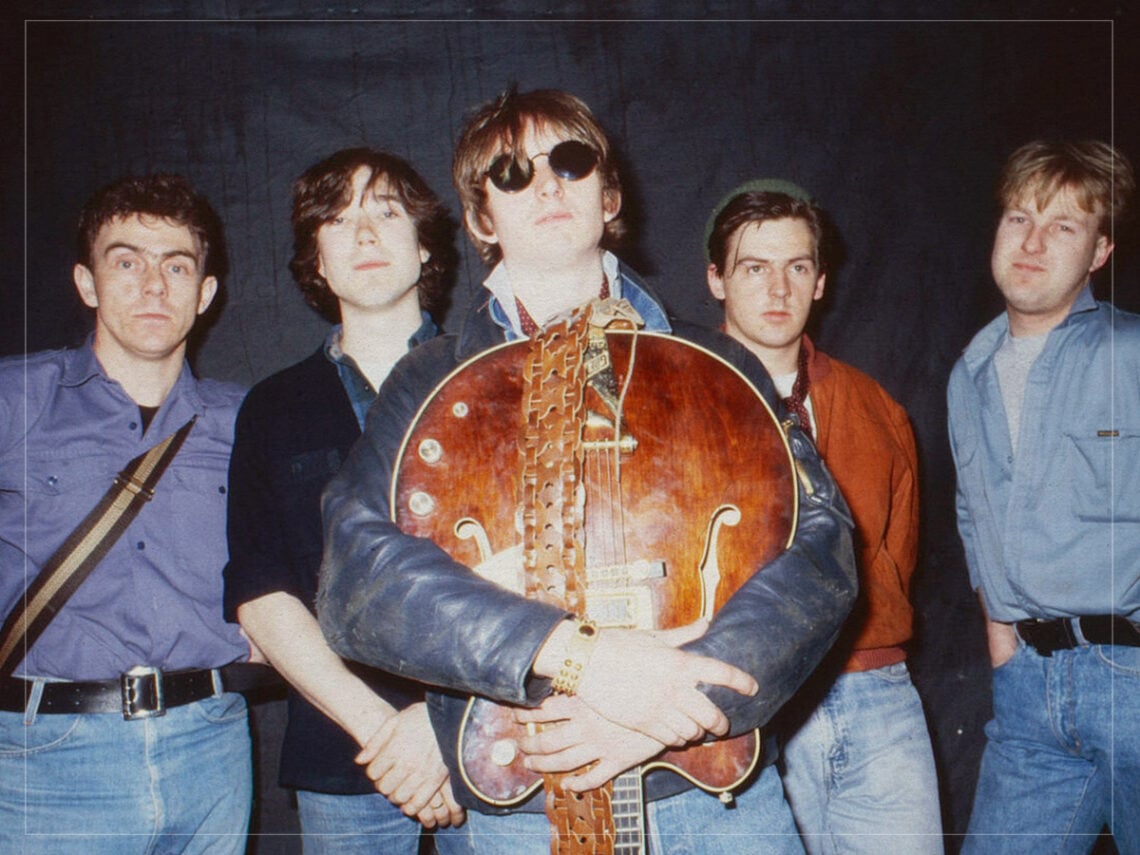
The “massive mistake” at the centre of Talk Talk’s most personal song

Upon their formation in 1981, London’s Talk Talk swiftly became associated with the synthpop explosion that dominated the UK charts and set its eyes on America as part of the decade’s second British invasion.
Always surging with an impassioned pop urgency yet bristling with post-punk spike, Talk Talk possessed a dramatic heft on early cuts such as their self-titled second single and ‘Today’—gallopingly electric pop numbers that shone with cinematic infection among the New Romantic bunch and their many reluctant orbiters. By 1984, Talk Talk was cracking the Billboard charts with ‘It’s My Life’, a monster hit that seemed to assure them global stardom.
Yet, frontman and principal songwriter Mark Hollis only ever saw synths as a means to an end. Armed with a love of Nuggets-era garage-psych and Miles Davis’ modal jazz before riding the synthpop wave, Hollis embraced a more progressive and organic direction for 1986’s The Colour of Spring.
He eschewed electronic shimmer for art-pop arrangements and a cheerful and inventive coating of thumping piano and warm organ washes. Led by the briskly radiant ‘Life’s What You Make It’, Hollis and frequent band collaborator Tim Friese-Greene had uncovered a sonic path Talk Talk would immerse themselves in deeper for their fourth album.
The Colour of Spring’s success yielded a bigger budget from the Parlophone label, affording Talk Talk more studio time, a wider instrument palette, and a vast roll-call of guest musicians for an infinitely headier and meditative sound Hollis was chasing.
Barring EMI executives from the Wessex Sound studio and spending as much as 12 hours a day recording, Hollis’ urge to evoke a work teeming with spiritual power involved ensuring a psychedelic environment, cancelling house lights in favour of strobes, candles, and oil wheels for the band and production team, to creatively lose themselves.
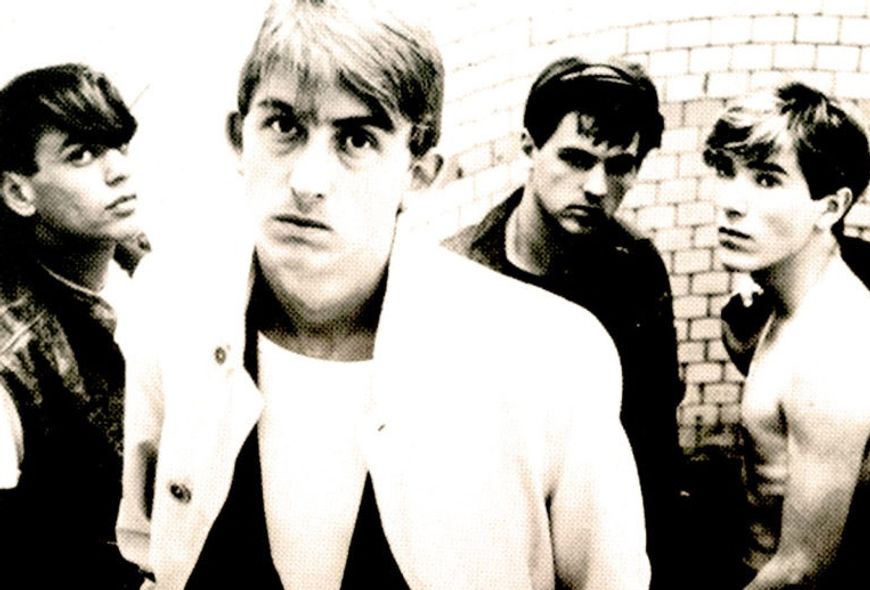
With the sessions taking up a year and released without any promotional tour, 1988’s Spirit of Eden was an entirely different beast than they had cut before. Assembled from hours’ worth of material across improvised jams and freeform experiments, the eventual six tracks that made their awaited fourth LP floated in a cerebral expanse of stirring ambience, jazzy glitter, classical awe, and gleaming blues, all held together by Hollis’ earnest but low-key vocals.
Spirit of Eden’s austere minimalism would enjoy modest commercial success, but its critical standing would ever grow, inspiring a host of 21st-century post-rock artists and providing a key, experimental template for Radiohead’s similarly nebulous wander towards Kid A.
Yet, EMI bigwigs were eager for something to market Spirit of Eden. Reluctantly, the frontman agreed to issue ‘I Believe In You’ as the album’s sole single. Already irked by the label’s edit from six minutes and 15 seconds to three minutes and 40 seconds, Hollis’ highly personal ode to his elder brother Ed’s gnawing heroin habit was set to be further blemished by the insistence of a music video, interrupting Talk Talk’s impressionistic canvas they’d worked so hard to conjure.
Recruiting Tim Pope to handle direction duties as he’d done for the biggest hits previously, ‘I Believe In You’ attempts to capture the pensive and acutely sensitive contemplation of the track, but never quite arrives at anywhere sensational, due to Hollis’ aversion to the whole pressured, promo chore.
“I really feel that was a massive mistake,” he told Q that year, noting, “I thought just by sitting there and listening and really thinking about what it was about, I could get that in my eyes. But you cannot do it. It just feels stupid. It was depressing and I wish I’d never done it.”
Hollis and the Talk Talk team were not ones for compromises. If their intuitions wanted Spirit of Eden to be kept pure in its sacred aura, then the big label push for a promo seems extra crass in the context of the album’s lauded stature today. The band would drop one more record with 1991’s Laughing Stock, before Hollis would live a largely reclusive life far away from the music business, save for a handful of guest appearances and one solo album in 1998, before passing away in 2019.
Always doing things their way, Talk Talk’s body of work still glows with an integrity that no EMI promo push can ever sully.
