


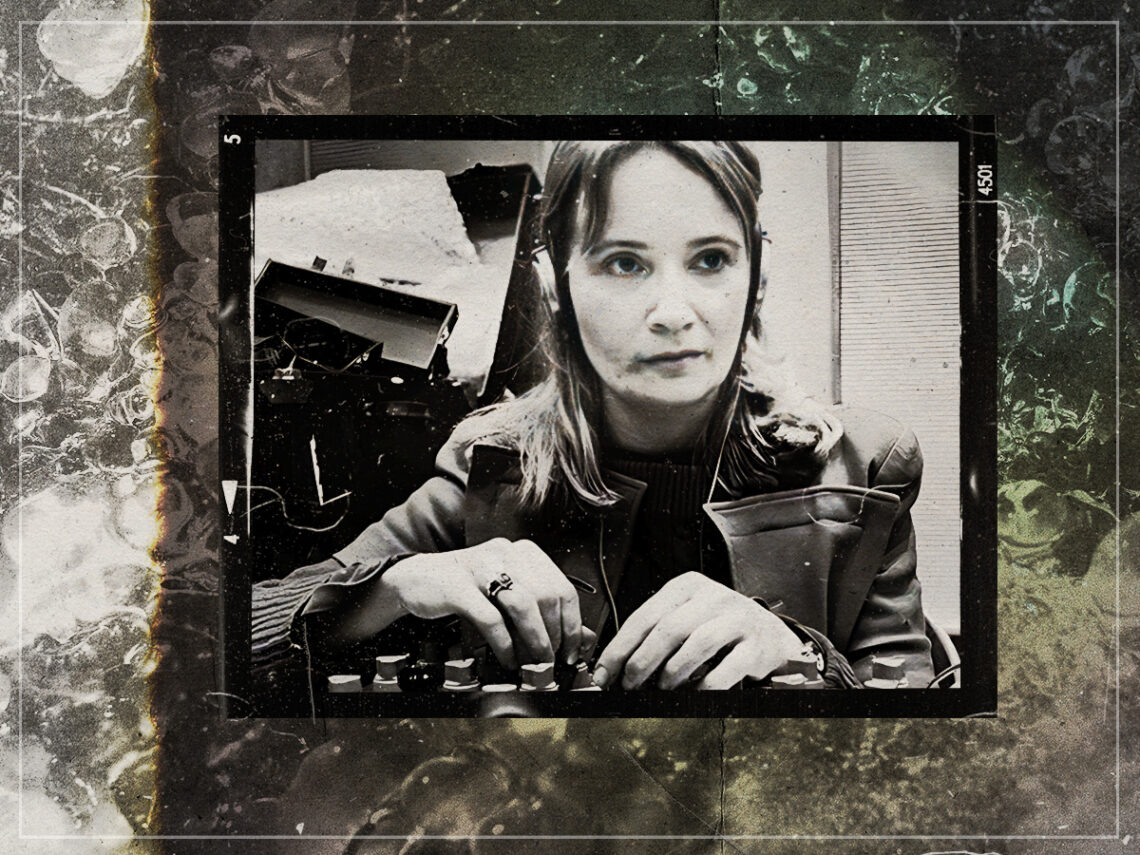
Maryanne Amacher and the strange study of psychoacoustic phenomena

Maryanne Amacher straddled the intersection of sound and science. By nature, the way we hear things has an inherently scientific explanation, one involving complex soundwaves and vibrations, but her revolutionary work encouraged listeners to think about the marvel of music without being passive in the experience.
One of her most intriguing preoccupations as a composer was “psychoacoustic phenomena”, otherwise known as “auditory distortion products”. Put simply, these are the sounds the ear generates inside the ear that are still audible to the listener. Apparently, these unique tones are hotly debated in the auditory science world. Amacher worked extensively with them, calling them “ear tones” until she discovered the work of Thomas Gold and David Kemp around 1992, and then took to referring to it as the far more lengthy “otoacoustic emissions”.
In a very rudimentary understanding of these emissions, the best way of explaining it is that in responses to two different tones in the ear, the tones seem to manifest in or around the head, supposedly like there was a tiny loudspeaker inside the ear. Amacher was the first to explore the use of this strange occurrence using electroacoustic sound – even her album Sound Characters (Making the Third Ear) was a nod to the tones.
“When played at the right sound level, which is quite high and exciting, the tones in this music will cause your ears to act as neurophonic instruments that emit sounds that will seem to be issuing directly from your head,” she once explained. “[People] discover they are producing a tonal dimension of the music which interacts melodically, rhythmically, and spatially with the tones in the room. Tones ‘dance’ in the immediate space of their body, around them like a sonic wrap, cascade inside ears, and out to space in front of their eyes.”
Amacher’s career was defined by her looking not only inwards – in regards to the inner ear – but consistently outwards. During a residence at Buffalo University, she created 1967’s City Links: Buffalo. Broadcast live on the radio, she placed five microphones across the city to create an interactive, textural sound over a 28-hour broadcast.
Most of her pieces have been site-specific in this way, often employing dozens of loudspeakers to create what she dubbed “structure-borne sound”, which took on a life and quality of its own, in opposite to typical airborne sound. With these sounds and their various sources, psychoacoustics would create the illusion of sound that had its own shape.
On the otherworldly, physical quality of her compositions, she warned audiences not to be alarmed. “Your ears are not behaving strange or being damaged,” she would assure. “These virtual tones are a natural and very real physical aspect of auditory perception, similar to the fusing of two images resulting in a third three-dimensional image in binocular perception. I want to release this music which is produced by the listener.”
