


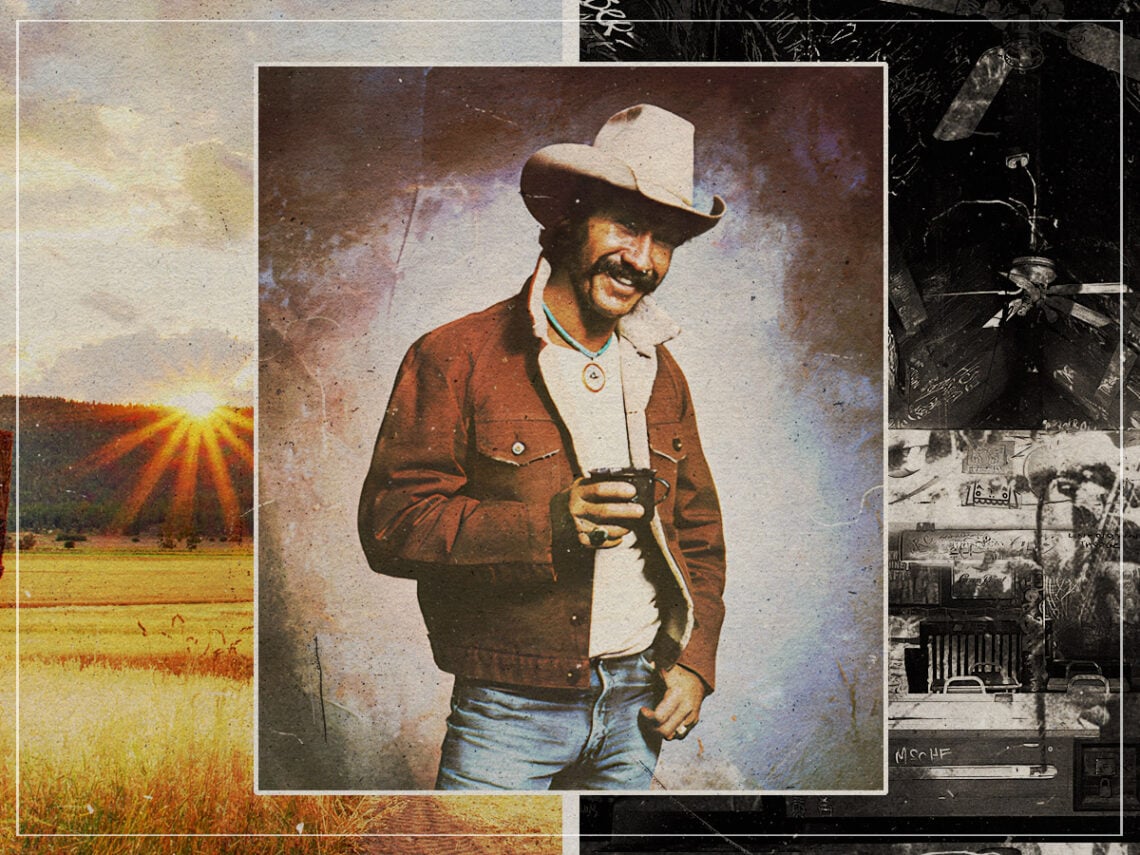
Marty Robbins: the country star who became the accidental Godfather of heavy metal

Tales of cowboys carrying big irons, singing drifters, and starred-crossed interracial love affairs were Marty Robbins‘ stock-in-trade. The crooning country star with a glint in his eye had no cause for head-banging; nobody did, for that matter. It was 1961, the President’s noggin was still firmly on his shoulders, and all told, although unimagined frontiers undoubtedly lay ahead, the American ideals of order and decency were still firmly in place.
Robbins’ country music reflected this; chords fell where they were supposed to, and the measure of a guitarist’s ability to make simplicity a dignified majesty was how close they could play the chords to the fret to ensure that the sound was crisp and annunciated. In a decade’s time, the opposite was largely true, as the unrest of the industrial world was reflected in the harsh sounds of distorted guitars. Ironically, Robbins was pivotal on this path.
All was going well for Marty. In 1960, he had six country number ones under his belt. These tunes were all pleasant ditties that still have a tale to tell today. However, none of them would be anywhere near as influential as his seventh country number one: ‘Don’t Worry’. The track was a crossover hit, applying touches of pop to his usual tones. But it soon became clear he was set to change pop forevermore.
Robbins had brought the song into the studio as a simple poor-me break-up track, crooning: “Don’t worry ’bout me, it’s all over now, though I may be blue, I’ll manage somehow.” Nothing exceptional there. But as is so often the case, a quirk of fate was set to cast his platitudes into the history books. While his guitarist, Grady Martin, strummed along, a faulty channel in the mixing desk rendered his lick distorted as a snag fuzzed the tone.
His Danelectro baritone six-string was supposed to be crisp and deep, but feedback gave it a haze; it went from Frank Sinatra to Tom Waits. Nashville’s Quonset Hut Studio was used to looking out for fresh occurrences in the changing world of music in order to keep pace with trends, and although Robbins was displeased with this accidental muddy sound, producer Don Law left it in. And so, the bridge section and final reprise lend ‘Don’t Worry’ a swampiness befitting of the lowdown spirit of the protagonist—the blues had just turned a dark shade of navy.
This fresh sound became a central part of the song’s success. A wider range of listeners were brought to Robbins’ usually conservative world by the accidental innovation of the guitar work. The instrument enterprise, Gibson, were drawn towards this hubbub over the haziness, and they set about reverse-engineering the mishap. A snag had slowed the riff down to a sludginess, and now technology was going to make that openly available. The result was the Maestro Fuzz Tone effects box, essentially the first distortion pedal released to the market.
Now, those looking to rock out with an aura of sonically inherent indifference that captured the harshness of the sounds of the industrial world, and all the chaos therein, didn’t have to take razorblades to amps or use beer bottles as slides, they had a reliable little device that brought attitude to their set with one simple step. Everything was now in place for the birth of heavy metal to begin. And if Robbins had had his way, he would’ve had it removed in favour of a re-take.
